Brazil Wins First Winter Olympic Gold for South America

Brazil’s first Winter Olympics medal marks a historic milestone for South America, highlighting a moment of regional achievement and national pride, which captures the reader’s interest in its broader significance.
A Finish Line That Sounded Like History
The moment lands the way big sports moments always do, first as a small, physical scene you can almost hold. A racer comes down clean. Skis chatter. A final carve, then the straight line to the finish, where the clock does not lie, and everyone’s eyes go there at once, as if it has gravity.
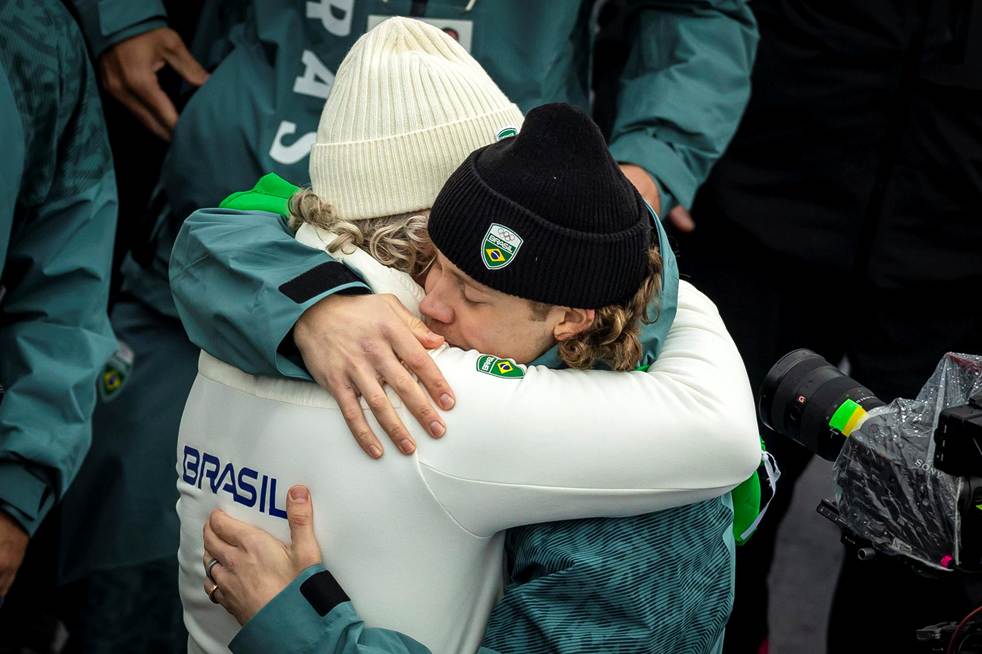
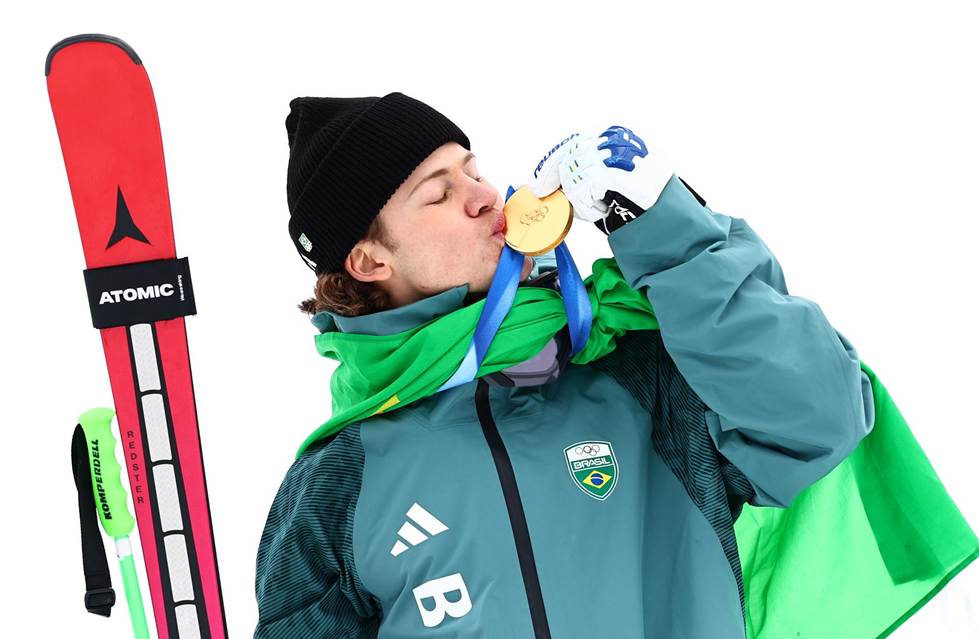
On Saturday, Lucas Pinheiro Braathen crossed that line with a combined time of two minutes twenty-five seconds flat. The margin was real, not symbolic, 0.58 seconds ahead of Swiss star Marco Odermatt, the defending champion. The upset was not the kind you argue about for days. It was the kind you watch, and then, quietly, you accept. Odermatt took silver. Loïc Meillard won bronze. Brazil took something it had never held before at the Winter Games, a medal of any kind, and by fate and by speed, it was gold.
It also landed bigger than Brazil. This was the first Winter Olympic medal for any country in South America, full stop. That line matters because it makes the celebration feel like more than one athlete’s peak. It feels like a continent being welcomed into a space that has long been closed, inspiring pride and hope for the future.
Braathen described it afterward as skiing by intuition, by heart, by being fully himself, rather than chasing a medal or the history attached to it. He talked about happiness as the ability to follow your own dream despite what you wear, how you look, or where you come from. You can hear a relief in that framing, not just pride. The trouble is, relief like that usually comes after a fight, and in his case, the fight was not against a mountain or a gate.
It was against a system that controls athletes’ rights and choices, raising awareness of ongoing systemic challenges in elite sport.
The Nationality Switch and the System Behind It
Braathen was born in Oslo to a Norwegian father and a Brazilian mother. He grew up speaking Norwegian and Portuguese. He skied young, stepped away, returned, and rose fast enough to win at the top level for Norway, including World Cup races and an Olympic appearance at Beijing 2022.
Then came the break. The notes around his switch to Brazil read like a case study in modern sport’s quiet leverage. Under the Norwegian Ski Federation, skiers do not control their marketing or personal image rights. That rule became the fault line. A dispute followed, along with a feeling, reported as the federation’s view, that he had lost his joy of living under the system. In October 2023, he retired.
That is the detail that makes Saturday’s micro scene feel sharper. A finish line is not just a line. It is sometimes a return.
Less than five months after his retirement, he announced he would come back, now representing Brazil, enabled by his mother’s Brazilian birth and dual citizenship. The Norwegian federation agreed to release his registration, which eased the International Ski Federation process for changing nationality. In March 2024, the change was made. In October 2024, he returned to World Cup racing for Brazil. He scored points in the season-opening giant slalom in Sölden.
This week in Milan, he arrived as a favorite, on the back of a strong season that included winning slalom in Levi and podium finishes in Alta Badia and Wengen. In the giant slalom on the Stelvio course in Bormio, he led after the first run and then held the second run together. The gold made him Brazil’s first Winter Olympic medalist and, in a separate historical note, the first athlete from the southern hemisphere to medal in Olympic alpine skiing since Zali Steggall of Australia won bronze in women’s slalom at Nagano 1998.
The wager here is what that arc means, and who gets to claim it. Brazil can call it a breakthrough, and it is. Norway can call it a loss of a star, and it is. But the underlying question is about ownership. Who owns the athlete’s face, their voice, their story, their market, their joy? The sport wants national flags because flags sell narratives. Federations want control because control protects brands. Athletes want room to breathe because breathing is how you race.
This gold makes that tension visible.
A South American Medal, and What It Asks Next
In a region where football saturates public imagination, winter sport has long felt like a distant channel, something you catch in clips, something other countries do. That is not an insult. It is a reality shaped by geography, infrastructure, and money. Yet the point of this medal is not to pretend Brazil suddenly became a snow nation. The point is that the story arrived anyway, through a person whose life already straddled borders.
The everyday observation, implied by how modern Olympic moments travel, is that identity becomes a shared possession quickly once a result hits a screen. The same clip gets watched twice. Someone rewinds the second run. Someone checks the time again, still disbelieving that the margin is only 0.58 seconds. Pride spreads through group chats and living rooms that have never held a pair of skis. History, now. History, now.
And then the policy dispute returns. If a federation’s rules over image rights can drive a top athlete into retirement, and then out of one national program and into another, the implications are bigger than one medal. Brazil’s gold becomes an argument about labor and autonomy in elite sport, about what athletes trade away when they accept the structure that gets them to the start gate. The continent’s first Winter Olympic medal becomes a mirror held up to the institutions that govern the games.
Gold is often treated as the final answer. This one feels more like a question that will not go away. Who gets to speak for a country? Who gets to speak for an athlete? Who gets to own the story once it starts winning?
Also Read: Colombian World Cup Travel Hits Visa Bottlenecks and Mexico Border Profiling