Chile’s Transfer Window Turns Argentine and Bets on Old-School Know-How
Chile’s 2026 league season is being built like a veteran’s locker room: familiar accents, seasoned legs, and a quiet suspicion of youth. With 18 Argentine signings out of 29, clubs are shopping for experience in a market that can’t afford many stars.
A League That Imports Certainty
Walk through the training grounds of Chile’s Primera División right now, and you can hear the logic behind the roster moves before anyone says it out loud. This is a league trying to protect itself from risk. The transfer market for the 2026 season has been dominated by Argentines—18 of 29 announced arrivals—followed by five Uruguayans, a pattern that reads like a regional habit but also like a financial strategy. When money is tight, clubs don’t chase dreams; they chase proofs. They choose players who have already survived bigger stadiums, harsher press, and the weight of expectation.
That instinct shows up in the positions clubs are targeting. Midfielders—10 new “volantes”—have been the most sought-after pieces, just ahead of forwards, with nine attackers brought in so far. In a low-profile economic market, control feels safer than improvisation; possession feels like insurance. And yet the story still bends toward the penalty area, because in South America, the most expensive thing is always the same: goals.
Underlying all of it is the league’s growing reliance on foreign labour. Almost 24% of players in Chile are foreigners, just three percentage points behind Peru’s top-ranking league for internationals in South America. A quarter of the workforce, essentially, arrives from elsewhere. It’s not just a soccer statistic; it’s a cultural mirror of the region’s circular migrations—of careers that cross borders because local economies, and local leagues, rarely offer stability for long.
Pratto Arrives, And the Libertadores Shadow Grows
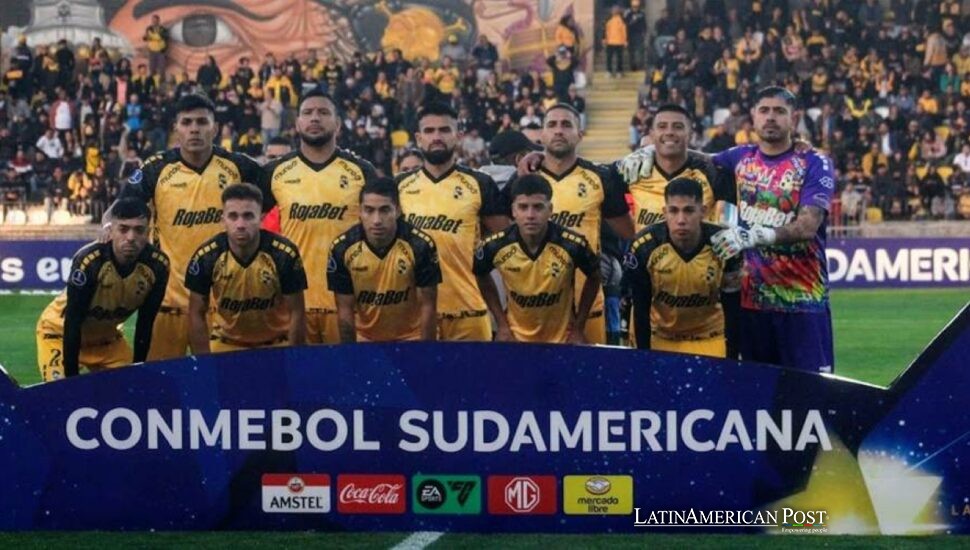
The transfer window’s headline is not a teenage prospect with resale value. It is Lucas Pratto, arriving at 37, a forward with the kind of résumé that still carries a certain gravity in Latin American football memory. His past is heavy with continental symbols: River Plate, the 2018 Copa Libertadores title, the aura of a player who has stood inside the biggest matches and come out intact. For Coquimbo Unido, the reigning Chilean champion, Pratto is less a gamble than a message—an attempt to harden the team for its second run at the Copa Libertadores, where naive optimism gets punished quickly.
Coquimbo’s plan is built around familiarity with pressure. Alongside Pratto, the club also added Argentine midfielder Guido Vadalá and Uruguayan defender Matías Fracchia, a trio that suggests the club is not trying to reinvent itself but to reinforce its spine. In a league where budgets rarely allow for glamour, prestige becomes a kind of currency—something you borrow from a player’s past to steady your present.
Another name with international weight is Gonzalo Escalante, 32, who arrived at Deportes La Serena after a decade in higher-powered environments: LaLiga in Spain with Eibar and Alavés, and Serie A in Italy with Lazio, including appearances in the Champions League. Escalante’s signing is the type that clubs in Chile tend to frame as “jerarquía,” not because he is a superstar, but because he brings evidence of survival at a level where mistakes cost you your place.
Even the big brands are moving with the same pragmatism. Universidad de Chile brought in Uruguayan striker Octavio Rivero, a forward with a history in Chile, Mexico, and Ecuador—the kind of regional journeyman profile that signals reliability over romance. And with the window open until February, the club still has space to raise the volume if it completes a move for Argentine striker Juan Martín Lucero, another name that would fit the same pattern: proven output, known profile, fewer unknowns.

Promotion Money, Big-Club Caution, And The Youth Question
If you want to see urgency, look at the newly promoted clubs. Deportes Concepción leads all Chilean teams in foreign recruitment, bringing in six players from abroad to rebuild the team’s “columna vertebral” in one stroke. Promotion is a celebration, but it is also a threat: the gap between divisions is where careers get exposed. So the newly arrived tend to spend like people who know the trapdoor is real, investing in bodies they believe can handle the first bad month.
The contrast is striking at Universidad Católica, which has added only Argentine forward Justo Giani from Aldosivi, despite returning to the Copa Libertadores after four years away. The restraint reads like confidence to some fans and like a risk to others. In Latin America, continental competition doesn’t just test talent; it tests depth, logistics, and the ability to survive two tournaments at once without splitting in half.
The third member of Chile’s traditional “big three,” Colo Colo, has moved quietly too—more departures than arrivals, and only two reinforcements so far: Uruguayan defenders Joaquín Sosa and Javier Méndez. The club has already lost midfielder Vicente Pizarro, who left for Rosario Central in Argentina, and the future of winger Lucas Cepeda, a standout in 2025, remains unresolved. For supporters, those uncertainties are never just sporting. In a region where clubs are political institutions as much as athletic ones, roster decisions become arguments about identity: who stays, who leaves, who gets sold, and what that says about power inside the boardroom.
Zoom out, and the league’s taste becomes clearer. Chile is leaning into age and experience, a choice embodied by Argentine striker Fernando Zampedri, the league’s top scorer across the last six seasons, newly naturalised, and still shining at 37 in a competition where foreigners dominate attacking roles. The average age across the 16 first-division teams is 27, placing Chile sixth in South America—an adult league, not an academy showcase. That number may look ordinary on paper, but in practice, it reflects a philosophy: in Chile right now, clubs are paying for craft, not potential.
None of this is a moral failure, and none of it is uniquely Chilean. It is the reality of a league negotiating the same old Latin American dilemma: develop youth and risk inconsistency, or import certainty and accept dependency. The 2026 transfer window suggests Chile’s clubs have chosen certainty. The question waiting behind that decision is the one fans always end up asking in July and August, when the winter rain starts to fall, and points start to disappear: how long can a league buy experience before it must start growing its own future?
All statistical claims and player/club details in this article are sourced from EFE reporting and interviews.
Also Read: Argentine Long Shot Turns Lima Playoff Into Three Major Passes