Colombians Face the Legacy of Lucho Herrera and a Dark Allegation
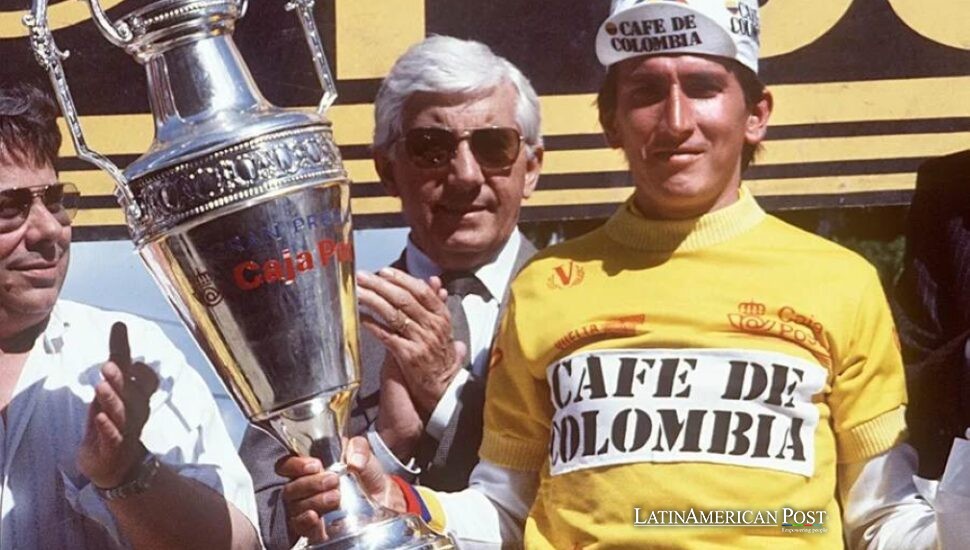
For decades, Lucho Herrera offered Colombians a rare form of relief, measured in climbs and silence. Now, an investigation into a rural disappearance case has cast that memory into legal uncertainty, forcing the country to weigh pride against suspicion and sport against a past that never fully closed.
A Climb Remembered, a Silence That Spreads
The climb was never loud. Radios hummed on kitchen counters. Newspapers lay folded on tables, the ink smudging fingers that had already worked a whole morning. Somewhere far away, in Europe, Lucho Herrera rode uphill alone. No theatrics. No excess. Just cadence.
That image still lives in Colombia, even as the ground beneath it shifts. Last week, the Colombian prosecutor’s office opened an investigation into Herrera and his brother, Rafael, over alleged involvement in a missing persons case from more than twenty years ago. According to the state prosecutor, the case centers on the involuntary disappearance of four people in a rural zone near Fusagasugá in two thousand two, possibly linked to paramilitary activity in the area.
That said, there is no indication yet whether either brother will face formal charges or whether the case will be archived. Herrera, now sixty-four, has consistently denied any implication. His insistence on innocence underscores the need for due process to ensure justice is fair and transparent.
The trouble is that Herrera is not just another former athlete caught in a legal process. For many Colombians, especially those who came of age in the nineteen-eighties, he embodies a sense of hope and resilience. Memory, timing, and emotional relief are intertwined with his image, making his story deeply personal.
A Country Seen Differently, One Climb at a Time
Herrera emerged at a moment when Colombia was known abroad almost exclusively through violence and instability. Drug trafficking headlines swallowed everything else. For Colombians watching from home, international attention felt humiliating and flat. The country existed as a problem to be explained.
Herrera arrived as a contradiction. He did it in a space Colombians barely occupied then: elite European cycling. He was a campesino climber. Literally, a former rural worker who was trained by riding Andean roads that most Europeans could not imagine, let alone race on. When he began winning mountain stages in the Tour de France and later the Vuelta a España, Colombians did not see luxury or fame. They saw endurance. Intelligence. Suffering converted into skill.
That conversion mattered. Daily life in Colombia was already defined by endurance. Long waits. Quiet calculations. The discipline of surviving without guarantees. Herrera’s victories unfolded slowly. Long climbs. Solitary attacks. No instant gratification. The pace matched the national temperament. You suffer quietly. You keep pedaling. You do not show off.
Herrera’s victory on Alpe d’Huez in 1984, Colombia’s first on that mountain, symbolized resilience and national identity, making the recent allegations a challenge to that legacy and Colombia’s collective memory.
There was also masculinity in that image. Herrera was not polished or charismatic. He was introverted, uncomfortable with spectacle, awkward with the press. Older Colombians recognized him instantly. He looked like a father, an uncle, a neighbor. Men who worked, endured, and did not explain themselves. In a media world increasingly shaped by personality, Herrera represented dignity without performance.
Timing sealed the bond. This was before social media, before fragmentation. Herrera’s victories were shared experiences. Radios on. Classrooms buzzing. Offices pausing. When he climbed, everyone knew. When he won, the country won together. That simultaneity etched itself into memory.
For decades, Herrera offered something rare in Colombian public life: pride without a moral hangover. No later revelations of corruption. No fall from grace that forced revision. Remembering him did not require qualifiers until now.

Allegations, Paramilitaries, and an Unfinished Past
The investigation traces back to a rural landscape shaped by fear long before Herrera’s name entered the file. In 2002, four people disappeared near Fusagasugá. Authorities say the case may be linked to paramilitary activity in the area.
Herrera’s involvement first surfaced last April, when a judge formally asked prosecutors to investigate possible links with the former cyclist. Two of the four missing people, smallholders from a farm near Herrera’s estate, were recovered by authorities in two thousand eight and returned to their families seventeen years later. The other two have never been located.
The allegations became public after a local television investigation revealed the sentencing of two convicted paramilitary fighters who admitted to killing the farmers. One of them, Luis Fernando Gómez, known as Ojitos, claimed he met with Herrera to receive instructions before the crime. He said Herrera gave them photographs of the farmers, describing them as leftist guerrillas, along with money to buy weapons and a motorcycle. He later said he realized the farmers were not guerrillas but had refused to sell land.
Another paramilitary, Óscar Andrés Huertas, known as Menudencias, said they buried the bodies on a farm. In his account, according to excerpts from the verdict, he described the killings in graphic terms. A judge sentenced both men to twenty-two years in prison.
Herrera has rejected these accusations with what he called absolute force. He said he learned of the judge’s decision to order an investigation through the press and said the claims seek to tarnish his name and career. He has also said he does not know the two paramilitaries.
“I have never belonged to criminal organizations nor have I ever intended to cause harm to anyone,” Herrera said in a statement when the allegations first arose. “I have dedicated my life to sport, and after I retired from professional cycling, to working honestly.”
The wager here is not about verdicts yet. It is about how a country conditioned by silence and trauma processes accusations. Paramilitary groups, emerging in the nineteen seventies, shaped rural life through land disputes, forced displacement, and disappearances, daily realities that continue to haunt Colombia.
Herrera’s own history intersects uneasily with that reality. In two thousand, he was kidnapped by a paramilitary force along with another former top racer, Oliverio Rincón. Both were later released. The victim and the accused now share the same biography. That does not resolve the case. It complicates it.
What Remains When the Climb Slows
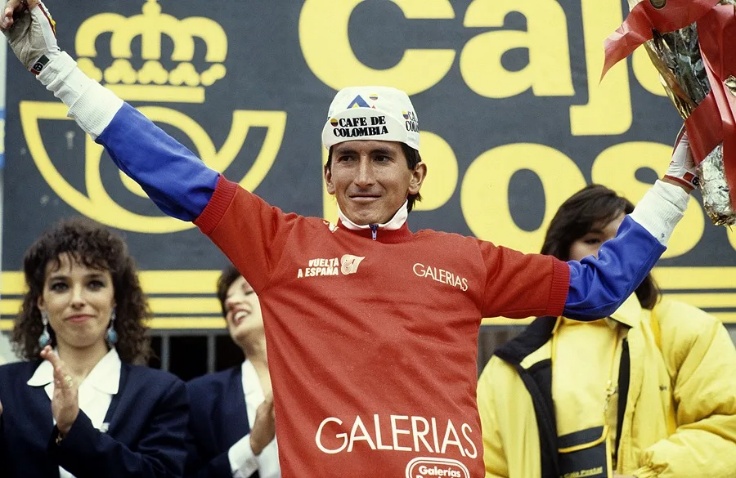
Herrera’s sporting record is undisputed. He was the first Colombian to win the Spanish Vuelta and one of his generation’s most excellent climbers. He opened doors that later riders, including Nairo Quintana, would walk through. Colombian cycling today exists on the terrain Herrera helped map.
The trouble is that heroes in Colombia are often asked to carry more than their sport allows them to. They become emotional infrastructure. Proof that the country can be something other than its worst headlines. When that infrastructure cracks, the impact spreads beyond the individual.
There is also the legal reality, which moves at its own pace. An investigation is not a conviction. Evidence is weighed. Files advance or close. That process matters, especially in a country where justice has too often arrived late or not at all.
Still, the investigation forces a reckoning many Colombians did not choose but cannot avoid, on how to honor what Herrera represented without turning memory into armor. How to listen to victims without collapsing history into certainty before the law does its work. How to sit with discomfort.
A line heard quietly among older fans captures the strain: the mountain never lied, but people sometimes do. The climb was real. The effort was real. The pride was real. So is the pain attached to unresolved violence.
When Colombians speak of Lucho Herrera now, the tone changes. It is no longer only nostalgia. It is something heavier. A conversation about whether a nation can hold two truths at once: that a man can embody collective relief in one era and collective doubt in another, that endurance does not exempt anyone from scrutiny. That memory is not a verdict.
Somewhere, old race recordings still play. The sound carries, thinner now. The climb continues, slower, burdened, not toward a finish line but toward understanding.
Also Read: Argentine Julián Álvarez Without a Goal in Ten Matches as Atlético Waits