Ferreira’s Libertadores Defeat Is Overshadowed by His Strong Rise at Brazilian Powerhouse Palmeiras
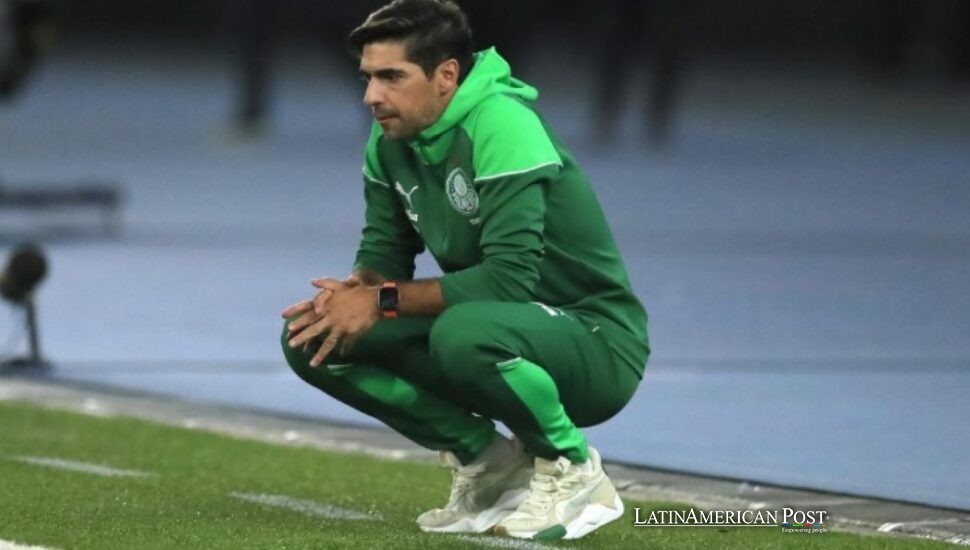
After losing the Copa Libertadores final to Flamengo, Palmeiras faces a crossroads: president Leila Pereira is doubling down on coach Abel Ferreira and director Anderson Barros, testing Brazil’s tradition of quick dismissals against a risky bet on continuity and patience.
After Defeat, A President Refuses the Easy Exit
In the hours and days after a lost final, Brazilian football usually falls back on the same script. The coach becomes the lightning rod, executives talk about “restructuring,” and someone pays with his job so that the institution can claim renewal. This time, in the green half of São Paulo, the response is different. After the setback against Flamengo in the Libertadores decider, president Leila Pereira has chosen not to sacrifice the usual suspects. According to reporting from Itatiaia, she still wants the contract renewal of Abel Ferreira and is backing the continued presence of Anderson Barros, her embattled director of football.
The plan is clear on paper. The proposal on the table would extend Abel Ferreira’s deal until the end of 2027, coinciding with the close of Leila Pereira’s second term at Palmeiras. The coach has already expressed a desire to stay and left the agreement verbally aligned, the kind of handshake understanding that carries weight in football dressing rooms and boardrooms alike. From the president’s point of view, the renewal now depends only on the Portuguese coach signing the new contract. For a fan base still stinging from a final loss to a rival in red and black, that missing signature becomes a symbol of unease.
Academic studies, such as those in Soccer & Society, highlight Brazilian club culture’s ‘immediateism,’ where coaches are often dismissed after brief downturns. Palmeiras’s choice to stick with Abel Ferreira after a high-profile defeat exemplifies a contrasting approach rooted in long-term planning, emphasizing resilience and cultural identity over quick fixes, which resonates with fans seeking stability.
Inside the club, the choice to “bank” Anderson Barros may be the most politically delicate. Directors of football rarely become popular heroes; they are more often faceless administrators blamed for every failed transfer. Yet research in the Journal of Sport Management has emphasized how stable front-office structures tend to underpin sustained success, even in volatile environments. By defending her director, Leila Pereira is implicitly telling supporters that Palmeiras’ recent trophy-laden era is not the product of one man on the sideline alone, but of an ecosystem she is not prepared to dismantle overnight.

From Penafiel to Palmeiras, A Different Kind of Boss
To understand why this bet on continuity feels so charged, it helps to trace Abel Ferreira’s story back to Penafiel, the small Portuguese city where he was born on December 22, 1978. His playing career as a right-back at clubs like Sporting de Lisboa and Sporting Braga was respectable but not legendary, cut short by injury and remembered more for reliability than glamour. Two years after hanging up his boots, he started over in the dugout, building his coaching career in youth teams and second-division sides in Portugal.
There, far from the lights of Allianz Parque, he earned a reputation as a meticulous and disciplined trainer, someone who studied games obsessively and believed in giving young players minutes. The profile that emerges from those early years is of a coach willing to rescue footballers who seemed destined for oblivion and to reimagine their roles. In many ways, those modest training grounds were his laboratory, long before his press conferences became headline material in Brazil.
His ascent to the main European stage came via PAOK in Greece, where budget constraints forced creativity. With Abel on the touchline, PAOK eliminated Benfica in the 2020 UEFA Champions League qualifying phase, a victory that rippled across the Lusophone world. It also reverberated in Brazilian boardrooms, especially among those still watching Flamengo after the departure of Jorge Jesus. Within weeks, Palmeiras moved to hire him as the replacement for Vanderlei Luxemburgo, closing a deal roughly a month and a half after that European upset.
What followed in São Paulo has been closer to a dynasty than a mere successful spell. Since arriving in 2020, Abel Ferreira has passed the 350-match mark in charge and has collected around 10 titles, including national competitions and international trophies. He became the coach with the longest uninterrupted tenure at Palmeiras, and the most decorated, whether in continental tournaments or domestic campaigns. Under his guidance, the Verdão has spent much of the current season among the top four of the Campeonato Brasileiro, still keeping alive the possibility of another league championship even after the pain of the Libertadores loss.
Those results have redefined how a foreign coach can wield power in Brazilian football. The labels that once accompanied his name, “exigent,” “combative,” often used in general prose to describe his sideline demeanor, have turned him into a central figure in debates about discipline, youth development, and tactical rigor. Scholars writing in the Journal of Latin American Cultural Studies have highlighted how football in the region often blends ideas of struggle and sacrifice with national identity; Abel’s public image, somewhere between drill sergeant and reflective professor, fits neatly into that narrative.
Renewal Talks as a Mirror of Brazilian Football’s Tensions
It is against this backdrop that the current contract saga takes on a broader resonance. The offer of a deal through 2027 is more than a personnel decision. It binds the fate of a president, a coach, and a sporting project to the same timeline in a club where electoral cycles and fan expectations rarely align. Leila Pereira stakes her second mandate on the idea that the man who led Palmeiras through an unprecedented stretch of stability and dominance is still the right one to navigate the next three years.
But the human dimension complicates any neat boardroom logic. Supporters who traveled to watch the team lose the Libertadores final to Flamengo do not feel it in time spent on pet projects or governance cycles; they think it in missed chances and rival taunts. For them, the sight of Abel Ferreira hesitating to put pen to paper can feed a sense of abandonment, or at least uncertainty. Is the coach still emotionally invested? Is he weighing offers from Europe or the Middle East? In a media ecosystem hungry for drama, every delay becomes a story.
Academic work in the Journal of Latin American Studies has long noted how institutions across the region struggle to escape personalism, the tendency to concentrate expectations and blame on charismatic individuals rather than structures. Palmeiras is no exception. The debate over Abel’s renewal reveals fault lines that go beyond tactics: Is the club strong enough to absorb his eventual departure when it comes, or has it allowed one coach to become the entire project? By backing Anderson Barros and insisting on structural continuity, Leila Pereira is arguing for the former, even as public emotion clings to the latter.
On the pitch, the numbers still speak in Abel’s favor. Under his leadership, Palmeiras has not only lifted trophies but also integrated young talents, maintaining sporting competitiveness and financial health in a league where many giants are crushed by debt. Those achievements make the current moment feel less like the end of an era and more like a dangerous crossroads: a point where a rushed decision could break a rare cycle of stability.
From a broader Latin American perspective, the story echoes familiar tensions. Clubs across the region oscillate between grand projects and improvisation, between safeguarding their future and bowing to the fury of the present weekend’s result. Journals such as Soccer & Society have emphasized that those swings often reflect broader political and economic volatility, in which institutions must constantly prove their legitimacy. In that sense, Palmeiras’s insistence on renewing a successful coach and protecting a sporting director after a painful defeat can be read as an attempt at maturity, an effort to behave like a long-term project in a short-term culture.
For now, everything hinges on a pen stroke. Until Abel Ferreira signs, uncertainty will hang over Allianz Parque like a stubborn cloud. Yet Leila Pereira’s decision to keep her bet on him and Anderson Barros already tells its own story. It suggests that, in the wake of a bitter defeat, one of Brazil’s most powerful clubs is willing to confront its own instincts and, at least for a moment, side with patience over panic. In the emotional economy of South American football, that alone is newsworthy.
Also Read: Brazilian Star Vinicius Junior Contract Standoff Rattles Real Madrid Hierarchy