Mexico Bets on World Cup Calm While Mencho Fallout Spreads
With the 2026 World Cup three months away, Mexico insists its thirteen matches are safe. After the killing of cartel leader El Mencho, Jalisco locked down, and games were postponed. FIFA and President Claudia Sheinbaum say visitors face no risk.
Jalisco Locks Down as the World Cup Clock Ticks
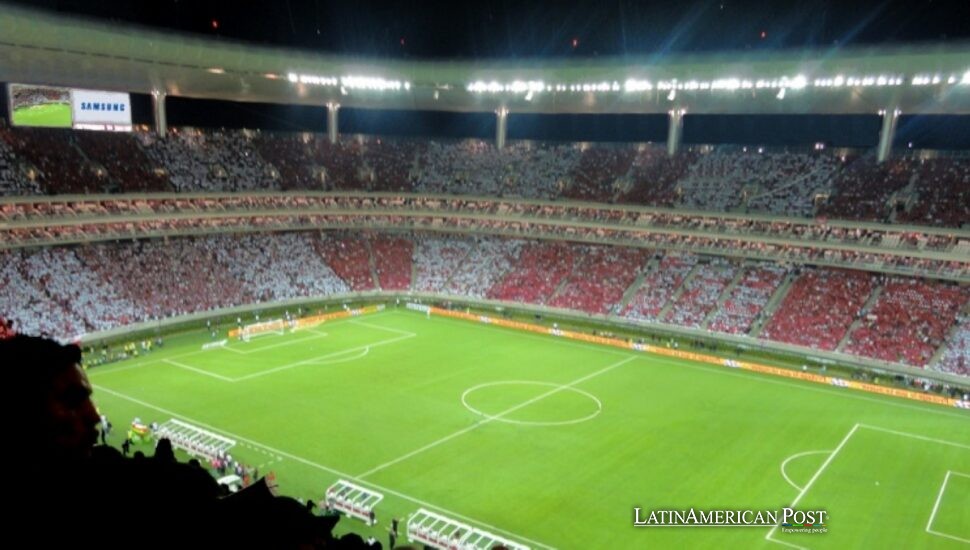
On a red alert Sunday in Jalisco, the routines that make a city feel ordinary were the first things to disappear. Public transportation was suspended. In-person classes were suspended. Mass events were suspended. The decision came from Jalisco governor Pablo Lemus, and it landed like a hard stop across the metropolitan area of Guadalajara, including Zapopan, where Estadio Akron sits, waiting for the late March playoff games and four World Cup group matches scheduled for June 11 through June 26.
The smoke was the sensory fact no press line could tidy up. Cars were set on fire, roadblocks appeared, and businesses were set ablaze as chaos spread through the city after Mexican authorities killed Nemesio “El Mencho” Oseguera Cervantes, identified in the notes as the leader of the Jalisco New Generation cartel, CJNG. There were armed standoffs with the Mexican army. There was also a prison riot in Puerto Vallarta. For residents, the everyday observation was simpler and sharper: when buses do not run, and schools do not open, you feel the crisis in your hands, in your calendar, in the small improvisations that follow.
This is the backdrop to the question that has been forced into the open, even if no one in power wants to entertain it out loud. Can Mexico guarantee security for teams, officials, and fans when the world arrives for June and July, when Guadalajara is set to host, and when the country is slated to stage thirteen games in total?
To take the two leading stakeholders at their word, the answer is yes. FIFA says it has “full confidence” in Mexico’s ability to stage those matches securely. President Claudia Sheinbaum has gone further, insisting there will be “no risks” to anybody travelling there for the tournament, including visitors to Guadalajara.
The trouble is that they are having to say it at all.
The timing explains the confidence. The opening fixture of the 2026 World Cup is just over three months away. Any change of host city or host nation at this stage would trigger organizational chaos for FIFA, and for Mexico, it would carry reputational damage that is hard to overstate. Both sides have incentives to stay the course. Both sides, as the notes put it, will fight tooth and nail.
But the volatility inside Mexico has made reassurance part of the event planning. TAFC reported widespread unrest that followed the killing of Oseguera Cervantes last week, and the notes describe violence and reprisals from cartel members that took authorities days to quell. Much of the most serious violence, the notes say, occurred in Jalisco, one of the three Mexican World Cup host areas, along with Mexico City and Monterrey. More than sixty people were killed, including at least twenty-five members of the Mexican National Guard.
In the language of sport, a tournament is supposed to be a calendar. In the language of a crisis, a calendar becomes a liability.
Football felt it immediately. Various fixtures were postponed, including a Liga MX meeting between Queretaro and FC Juarez on Monday. The Liga MX Femenil postponed the Sunday night derby between Chivas of Guadalajara and Club América at Estadio Akron. These were not symbolic decisions. They were practical ones, made under the highest level of security alert described in the notes.
And those postponements did what gunfire and flames already do. They turned a local security emergency into an international debate over whether Mexico’s selection as host nation should be reconsidered.
Full Confidence in Public and Anxiety in Private
FIFA’s public posture has been deliberately unambiguous. A spokesperson said it would be inaccurate and misleading to suggest there are significant concerns, and insisted FIFA had “full confidence” in all three host countries, Mexico, Canada, and the United States. Another FIFA spokesman offered a broader framing: “Mexico is approaching World Cup planning as a matter of national security and national pride, and they have resourced the planning accordingly. FIFA is confident in the intelligence and operational capabilities of its Mexican partners.”
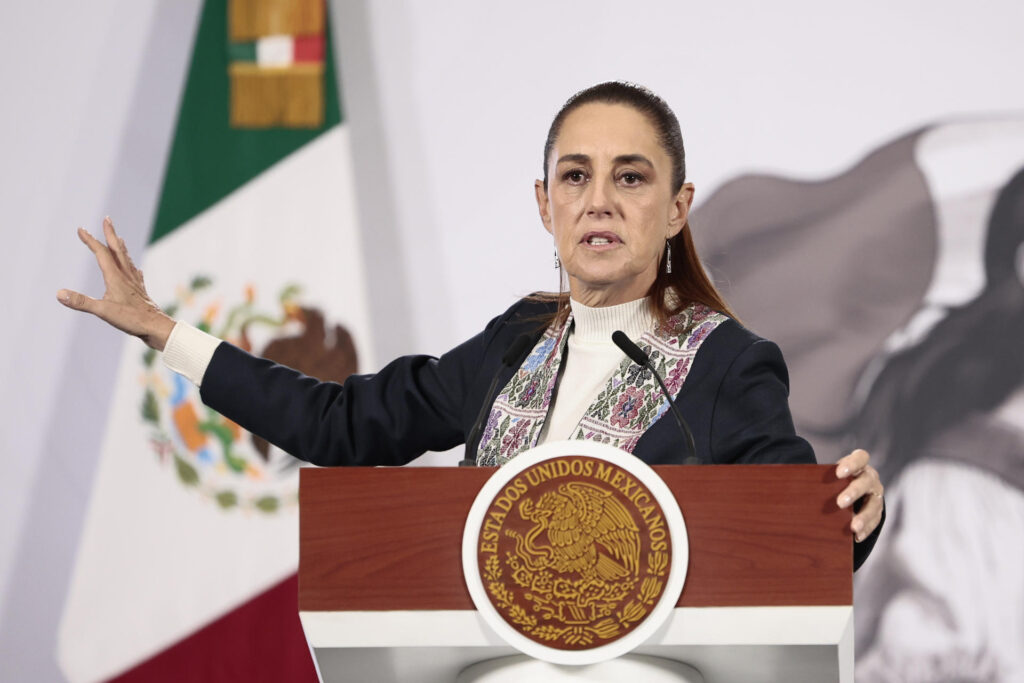
Sheinbaum’s framing, too, is built to project steadiness rather than drama. “The most important thing is that our objective is security and peace, and that’s what we are working on,” she said. There would be, she added, “no risks” to any visitors to Guadalajara.
FIFA president Gianni Infantino leaned into institutional logic. “That’s why we have governments, police, and authorities who will ensure order and security,” he said. “The World Cup is going to be an incredible celebration.”
Yet the notes also include a second, quieter track. One figure inside FIFA, speaking on condition of anonymity, told The Athletic that FIFA was privately worried about developments in Mexico and concerned that a World Cup qualifying playoff event due to be held in Jalisco next month might have to be relocated. FIFA has denied those suggestions. Even so, the anxiety is not difficult to understand if you read the schedule alongside the headlines. Late March is not far away. Neither is June.
The organization’s own statement left a crack in the door, not in what it said, but in what it refused to confirm. “At FIFA Mexico, we are closely monitoring the situation in Jalisco and remain in constant communication with the authorities,” the spokesperson said, adding that FIFA would not comment on “hypotheticals and speculation.” The message was collaboration and vigilance, yes. It was also an acknowledgement that, for now, the plan depends on how quickly “normalcy” can be restored.
A senior figure in the German Football Association put the mood more bluntly, saying the unrest was leaving “little room for World Cup anticipation.” That line carries its own small truth. Anticipation requires an emotional surplus. Red alerts leave little surplus behind.
What this does is put Mexico in a familiar bind, one that is political and cultural at once. The state has to demonstrate control without admitting vulnerability. It has to promise safety without turning the country into a security theater. It has to persuade the world without flattening the reality that its own citizens are living through.
Mexico’s National Guard special forces have been deployed amid a state of high alert, according to the notes. That deployment, in official terms, is meant to reassure. In human terms, it also signals how seriously the government is taking the threat of spillover violence around greater Guadalajara.
A Tournament Plan Built on Restoring Normalcy
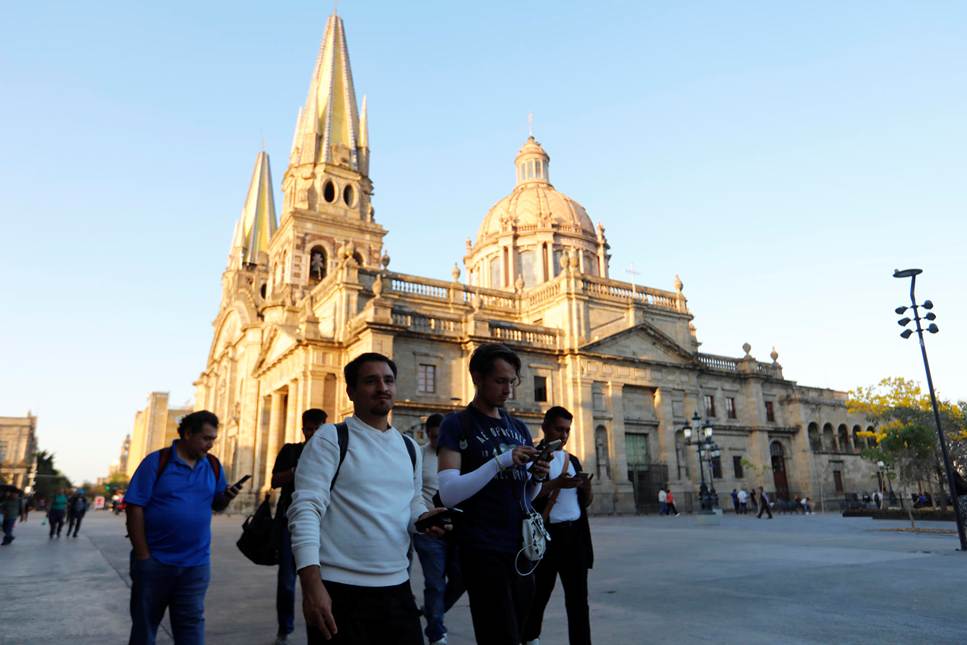
By Monday evening, Mexican authorities had begun to restore order, the notes say. Local media reported Monday night that some businesses would reopen and school would resume on Wednesday, even as the suspension protocols continued through Tuesday. It is a narrow kind of progress, the kind that shows up as a reopened door and a resumed commute rather than a dramatic declaration.
In football terms, Mexico is attempting to continue business as usual. And the phrase is doing heavy work here. Business as usual. Business as usual. The notes point out that an international friendly between Mexico and Iceland is still scheduled to go ahead in Queretaro, even as matches elsewhere were postponed.
That choice, to keep something on the field, is part message and part necessity. Mexico needs to show it can host an ordinary match under scrutiny, because the World Cup is not just one match. It is an ecosystem of teams, staff, media, sponsors, transportation, and crowds moving through a city at scale. Estadio Akron, in particular, is not an abstract venue. It is a place with dates attached: the late-March qualifying playoff, then four World Cup matches from June 11 to June 26.
The wager here is not only about whether violence can be contained. It is about whether confidence can be maintained long enough for containment to become visible, repeatable, and boring. The kind of security that does not need a press quote.
FIFA and Mexico are aligned on the headline outcome: keep the tournament, the calendar, and the global narrative intact. But the same notes that carry their reassurance also show why the reassurance feels necessary. When a city has seen armed standoffs, burning cars, roadblocks, and businesses set ablaze, and when a governor suspends transport, school, and mass events, the question is no longer theoretical. It becomes logistical. It becomes personal.
For now, Mexico’s status as a host nation stands, and FIFA says it has “full confidence.” But the eyes of the world are on Mexico, and not only because the World Cup is coming. The eyes are on Mexico because the story of whether order can be restored in Jalisco is no longer just a domestic fight. It is a test happening in real time, with a stadium on the schedule and a country on the clock.
Also Read: Paraguay Gets World Cup Fever as Fans Touch Football History