Mexico’s Liga MX Keeps Turning Fading Legends into Unforgettable Folklore
ESPN’s coverage of Liga MX’s imported stars reveals a league that seldom signs players at their peak. Instead, it often brings in something more unusual and lasting: final chapters, flawed brilliance, brief comebacks, and memories that stay with Mexico long after the trophies are gone.
Where Great Names Go to Be Tested
Liga MX has never been known as the obvious destination for the world’s brightest football stars. That’s part of what makes it interesting. ESPN reports that Mexico’s top league isn’t usually linked to the biggest names or the purest talent. Still, over the years, it has attracted legends. Not always in their prime. Sometimes far from it. But legends nonetheless.
This difference is important. Mexico has often had to prove itself in football by comparison, looking north or across the Atlantic for approval. But these players show something else. Liga MX isn’t just a place where careers go on. They get redefined. Sometimes old myths are broken down, and sometimes new ones are born.
In most cases, as ESPN notes, the stays are brief. Former stars arrive with heavy reputations and leave before those reputations can fully settle into the local ground. Some fail. Some disappoint. A select few manage something more difficult. They become part of the league’s folklore.
That’s the real connection between these players. It’s not just about fame or marketing. It’s about folklore—the kind that sticks around because it’s imperfect, unlikely, or emotionally charged in ways that straightforward success stories rarely are.
Landon Donovan is one example of that strange poetry. He finished his career with Club León after nearly two years of inactivity. The numbers were bleak. Just 156 minutes across eight games, one start, no goal contributions, then retirement. He looked, by ESPN’s account, like a shell of himself. And still, something was fitting about it. One of Mexico’s historical villains on the international stage ended his playing life on Mexican soil. The football itself was faint. The symbolism was not.
The Weight of Glory After Europe
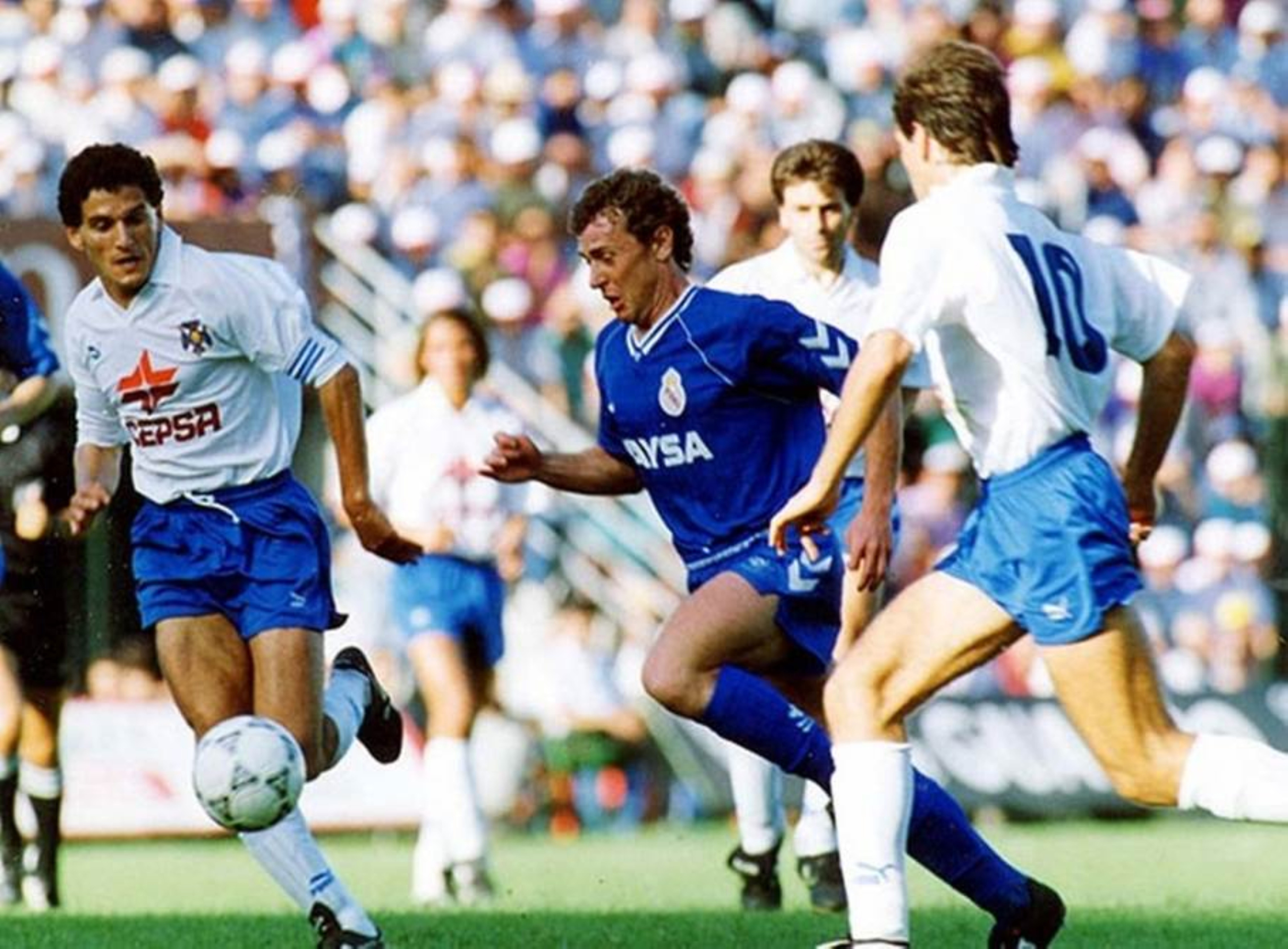
If Donovan’s chapter felt like an epilogue, Emilio Butragueño’s was something fuller, sadder, richer. After twelve brilliant seasons with Real Madrid, he spent the final three years of his career with Atlético Celaya. That alone still sounds slightly unreal. One of the defining figures of Spanish football in Mexico, staying long enough not to feel like a publicity stunt.
He nearly led Celaya to glory in the 1995- 1996 campaign before losing the final against Necaxa. ESPN notes that he later revealed one missed chance from that match remains an action that will haunt him for the rest of his life. That is the detail that gives the story weight. Not nostalgia, but regret. Not a ceremonial farewell, but a wound that stayed open.
He scored 21 goals in 91 games and became a cult hero for a club that later disappeared. That, too, feels unmistakably Latin American in its football sadness. Institutions vanish. Names change. Divisions shift. But memory keeps its own table. A returned club now plays in the third tier, and the old story still survives. Once, one of Real Madrid’s greatest players wore our shirt.
Then there’s Eusebio, maybe the most symbolically important arrival of all. ESPN calls him arguably the best player ever to join Liga MX. In 1975, he became the first truly world-class star to play there. Even injured and limited to ten games with one goal for Monterrey, his presence marked a turning point. He later said his time in Monterrey was fantastic, phenomenal, and magnificent from the start. That kind of praise matters because it challenges the old idea that Mexico was just a lesser stop. For Eusebio, it was an experience to treasure.
And for Monterrey, it seems in For Monterrey, that moment now feels like a beginning. ESPN links it to the club’s later reputation as a place for star players. Not copying others, but evolving.

Why Mexico Remembers the Flawed Icons Best
Pep Guardiola’s six months with Dorados de Sinaloa hardly match the brilliance he showed later as a coach. Ten games. One goal. Relegation. Retirement. On paper, it was a small chapter. But looking back, it was a turning point. ESPN says Guardiola later named Dorados manager Juan Manuel Lillo, along with Johan Cruyff, as one of the two coaches he learned most from. Lillo even treated him like an extra assistant coach. Two years later, Guardiola was managing Barcelona. The rest, as they say, is history.
That’s what makes Liga MX so interesting in these stories. It’s not always where greatness shines the brightest. Sometimes it’s where greatness changes, pauses, or starts to think about what’s next.
And then there is Ronaldinho, the most iconic case because he gave Mexico what football crowds crave most: not perfection, but spectacle touched by truth. Querétaro was a modest side. Ronaldinho arrived with disciplinary baggage, missed sessions, suspensions, and a body no longer at its peak. Yet he still produced eight goals and eight assists in 29 games. He scored a free kick on his debut against Chivas. He delivered that famous brace in a brief appearance against Club América and danced as a full Estadio Azteca rose for him.
That standing ovation means a lot. It shows something about Mexican football culture. It’s demanding, sure. It can be skeptical, harsh, and loud. But it also knows how to celebrate beauty when it appears on the field, even if only for a moment, even from a rival, even from a player past his prime.
Ronaldinho then helped Querétaro reach its first Liga MX final, only to lose to Santos Laguna. It was brief. It was messy. It was unforgettable. ESPN is right to call it one of Liga MX folklore’s most iconic stories.
Maybe that’s Mexico’s real gift in football. Not keeping legends frozen in time, but testing them and humanizing them and letting them come with scars, pride, weariness, longing, and fading brilliance. Some leave diminished. Some leave redeemed. But almost all leave changed, because Liga MX doesn’t just host famous names. It weaves them into memory, where football becomes something bigger than reputation and closer to myth.
Also Read: Latin American Ballplayers Face Fear as Baseball Meets Immigration Pressure