Brazil Election Scandal Gives Banco Master Top Billing and Voters the Bill
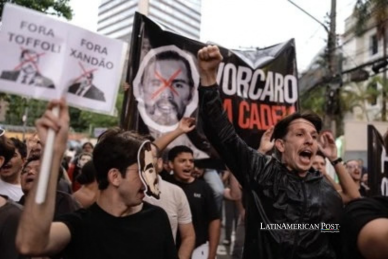
Brazil’s presidential election has an uninvited headliner: Banco Master. As Lula and Flávio Bolsonaro trade accusations before the October 4 vote, a banking scandal exposes something deeper than damaged reputations: the dangerous intimacy between private fortunes and public power itself.
The Bank Behind the Ballot
Daniel Vorcaro is not seeking office. He is in pretrial detention. Yet Banco Master’s owner dominates Brazil’s October 4, 2026, presidential campaign through a scandal described as the country’s biggest financial fraud. Arguments about hospitals and neighborhood safety struggle for attention. For voters weighing another chance, the election resembles a hearing without a verdict.
Master’s ascent was built on aggressive acquisitions, investments in struggling companies, and fixed-income securities offering returns above the market. Its balance sheet expanded over five years. But promised interest requires cash, while troubled assets may take years to recover. Growth alone cannot demonstrate that a bank can honor its promises.
To someone saving for retirement, a fixed return is not an abstraction. It is a plan for groceries, medicine, or helping a child. The question is not why ordinary customers wanted better interest. It is why professionals entrusted with checking the promises apparently failed to stop the danger from spreading.
Investigators suspect that favors, including money, travel, and expensive cigars, helped cultivate legislators across party lines, central bank officials, and Supreme Court justices. The alleged network matters more than its luxury accessories. If oversight depended on personal relationships, changing presidents would not necessarily dismantle the machinery that allowed the bank to flourish.
Polling captures the distrust, not its cause. In a September Quaest survey of 2,004 voters, 49% considered President Luiz Inácio Lula da Silva dishonest; 42% said the same of Flávio Bolsonaro. That seven-point gap is neither a prediction of victory nor a measure of criminal responsibility. Without comparable earlier results, it cannot establish how much damage Master caused.
Brazil’s 2025 corruption perceptions score supplies another warning: 35 out of 100, its second-worst result, placing it 107th among 182 countries. The index measures perceived public sector corruption, not stolen money. Its significance is institutional. The scandal has landed where confidence was already fragile, making each fresh disclosure easier to absorb as confirmation that nothing changes.
A Family Film With Political Costs
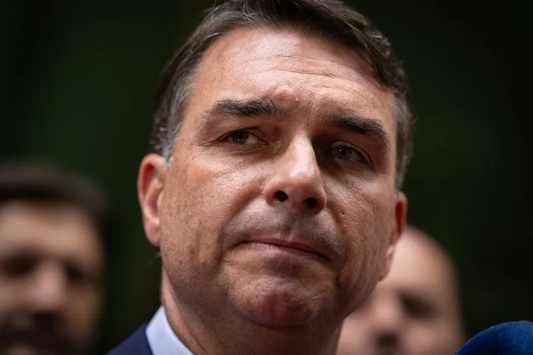
Flávio Bolsonaro’s predicament has a particularly cinematic quality. He reportedly sought roughly $12 million from Vorcaro to finance a film about his father, former president Jair Bolsonaro. Messages recovered from the banker’s phone show the senator addressing him as “brother” and chasing overdue payments. Police are investigating suspected corruption, money laundering and illegal foreign currency transfers.
The candidate says this was “private money.” That describes a claimed source, not a complete explanation. Investigators still need to establish where funds originated, how they moved, and whether anything was expected in return. A request is not proof of every alleged offense. Nor does private financing automatically settle questions about influence.
The political stakes exceed a film budget. A favorable portrayal of Jair Bolsonaro could strengthen the family’s public image while his son seeks the presidency. That potential benefit does not, by itself, prove an unlawful campaign contribution. It does explain why voters deserve more than an assurance that taxpayers did not write the check.
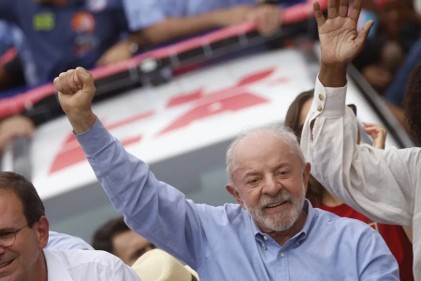
Lula, meanwhile, claims credit for Vorcaro’s imprisonment, contrasting the banker’s rise under his predecessor with his detention under the current government. But the Federal Police investigate autonomously under Supreme Court supervision. Taking personal credit for an arrest weakens the very distinction Lula needs to defend: investigators should follow evidence, not presidential instructions.
When the Referee Needs Scrutiny
Lula also acknowledges meeting Vorcaro at the presidential palace, saying he defended the central bank’s conduct against the banker’s complaints. A meeting is not proof of protection. Its political cost lies in the access it reveals, precisely when voters are asking how that access was used.
The questions surrounding Justice Alexandre de Moraes are more corrosive. Messages reportedly show Vorcaro seeking information about police operations and advice about leaving Brazil. Moraes helped lead the case that brought Jair Bolsonaro a 27-year prison sentence for an attempted coup. Allegations concerning the judge do not erase that separate judgment.
Defending that judgment should not require shielding the judge. Brazil needs both propositions to survive together. Otherwise, supporters can dismiss scrutiny as persecution while opponents treat every institutional failure as permission to discredit the courts altogether. Accountability becomes another team sport, with the public expected to choose a jersey.
A separate influence-peddling investigation involving Lula’s son, Fábio Luís, adds another vulnerability. Lula says his son must face consequences if wrongdoing is established. The condition matters: an investigation is not a conviction, and family connection does not establish the president’s involvement.
Lula’s own record illustrates how legal history becomes campaign ammunition. He spent 580 days imprisoned after corruption convictions that were later annulled in 2021 over procedural failures. Those convictions cannot honestly be presented as still valid. Their annulment, however, cannot compel voters to forget either the imprisonment or the scandals surrounding his earlier administrations.
That is the bill facing Brazil: a campaign in which exposure threatens to replace explanation. Regulatory contacts need auditable records. Political financing needs a traceable origin. Otherwise, voters may change the name on the presidential door without changing who gets through it or what those visitors ultimately expect their money to buy.