Mexico Truckers Deliver the Goods While Armed Robbers Collect a Different Toll
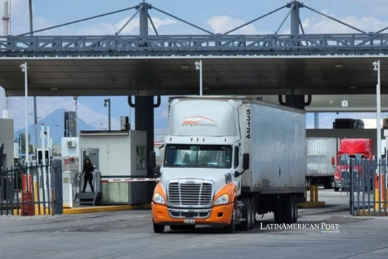
Mexico’s truckers are skipping rest stops, fearing ambushes more than missed deliveries. With industry groups reporting dozens of daily robberies, their accounts reveal how highway violence can empty drivers’ seats, strain family businesses, and threaten the journeys keeping commerce moving.
The Rest Stop That Disappeared
Eduardo remembers sleeping with the truck windows open.
After 28 years behind the wheel, that ordinary freedom has become his measure of how much the road has changed. Speaking to EFE on September 29, the driver described avoiding stops on routes including the Mexico City-Puebla highway. “Now you don’t stop anymore,” he said.
That is not simply nostalgia for an easier working day. His account exposes a dangerous calculation: stopping feels unsafe, but exhaustion does not disappear because a delivery is urgent. The threat of robbery can turn the most basic precaution, taking a break, into something a driver feels unable to afford.
Jonathan, who has spent a decade operating heavy tow trucks along the same route, carries evidence on his vehicle. Bullet marks remain from an attack. He told EFE that he and relatives working in transport have suffered repeated robberies. For a family business, another trip means returning to the place where work previously became violence.
He also alleged that attackers kill drivers to avoid problems with police. EFE reported criminals ramming moving trucks to force them to stop, then holding operators briefly while dismantling their vehicles. These accounts describe more than stolen merchandise. The person entrusted with the shipment becomes a target, too.
What the Robbery Numbers Reveal
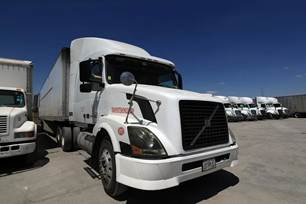
The National Association of Transporters, ANTAC, estimates 30 to 40 robberies against transport operators daily, with more than 70% involving violence. Across the country, that averages one robbery every 36 to 48 minutes. It is an arithmetic illustration of the reported volume, not a timetable of attacks.
Sustained for a year, that daily range would imply 10,950 to 14,600 incidents. Those are projections, not verified annual totals. The violence percentage also matters: recovering a truck cannot by itself demonstrate that its driver was protected. Counting recovered property and counting people brought home safely answer different questions.
The State of Mexico, Puebla, and Guanajuato account for nearly half of cargo robberies, according to the figures cited by EFE. That concentration shows where many offenses occur, but not how likely an attack is on any individual journey. Establishing that would also require traffic volumes, reporting coverage, and comparable periods.
The federal government launched Cero Robos in July 2025, initially deploying more than 1,180 security personnel across the Mexico City-Puebla, Mexico City-Querétaro, and Culiacán-Mazatlán corridors. EFE identifies those routes as accounting for roughly a third of robberies against transporters. Concentrating resources there addresses a documented cluster of offenses.
But three corridors are not the entire road network. Their share and the three states’ share describe overlapping geographies, not separate blocks that can be added together. Nor does an initial deployment total establish how many officers are available on a particular stretch when a driver needs help.
The drivers interviewed consider protection insufficient. Their testimony alone cannot establish whether the operation reduced robberies overall. A meaningful assessment would compare incidents before and after deployment, examine whether attacks shifted elsewhere, and assess whether drivers became more willing to report them.
An Empty Seat Has Consequences
Marco’s concern goes beyond patrol coverage. After more than four decades in transport, he told EFE that approaching police can itself feel dangerous because an officer might be involved. That allegation is not proof against an entire force. It does, however, reveal the distrust any emergency response must overcome.
Miguel Ángel Santiago Solís, national coordinator of the transport organization AMOTAC, similarly told EFE that members’ complaints extend beyond theft to everyday extortion and alleged abuses by local and federal authorities. Where workers fear the people receiving their complaints, additional uniforms alone may not resolve the problem.
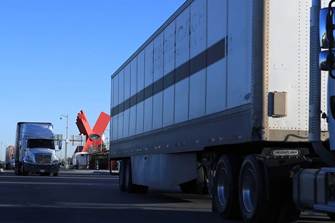
Santiago attributes driver shortages directly to highway insecurity, saying some operators leave the profession or migrate. The report describes thousands of vacancies, although it supplies no breakdown separating violence from other possible causes. The narrower conclusion remains substantial: industry representatives identify personal safety as an obstacle to keeping experienced workers.
For Jonathan’s family, the implications are intimate before they become economic. Relatives share an occupation in which several have already been robbed. Leaving can mean giving up accumulated experience and income; staying means accepting another journey with memories of the last attack.
A vacancy can signal that someone has decided the bargain no longer works.
For Mexico, the exposure extends beyond export schedules. A family hauler losing a vehicle can lose both its main asset and its income. When experienced drivers leave, replacing equipment is not enough to restore capacity. Businesses still need someone willing to take that truck onto the same road tomorrow.
Drivers have turned to GPS tracking, panic buttons, and networks of colleagues. These tools can communicate a vehicle’s location or signal distress. They cannot, by themselves, guarantee that trustworthy help will arrive. Tracking cargo and protecting the person carrying it are related tasks, but they are not interchangeable.
Eduardo’s missing rest stop is therefore more than a roadside detail. It is a practical test of whether moving goods remains compatible with an ordinary working life. A shipment arriving on time tells one story. A driver who can stop, sleep, and return home tells another.