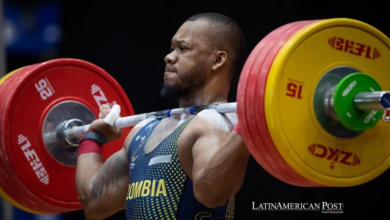
Mexican Swimmer Paulo Strehlke Finds His Fast Lane Out in Open Water
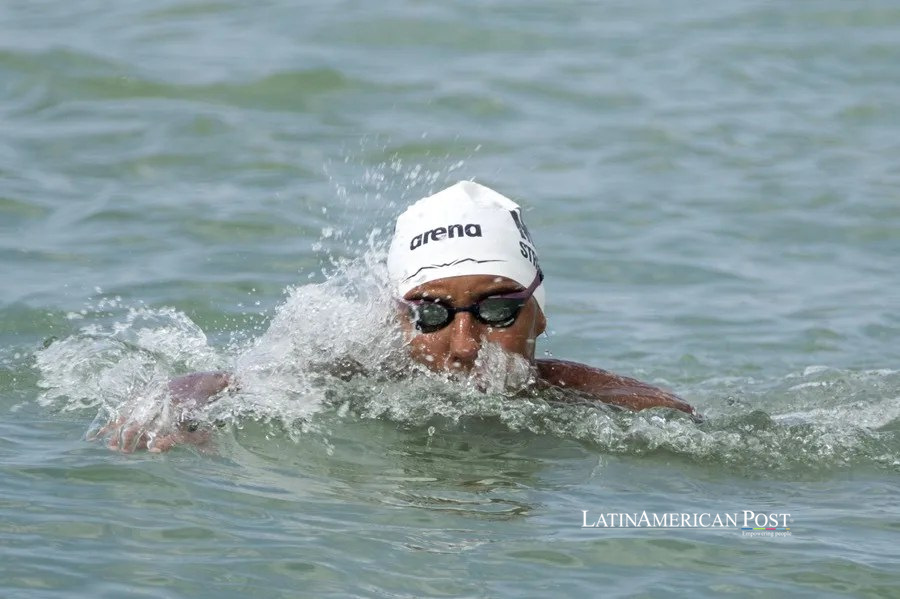
Paulo Strehlke once thought he was slow in a pool. The Mexican swimmer holds a national freestyle record and a World Cup silver medal. In Cancún, after nearly two hours at sea, he finished within 15 seconds of the winner.
A Wrong Turn in Morelos
The first time Paulo Strehlke raced on Lake Tequesquitengo, somebody had to go and fetch him. He was 9. His mother, Sara Delgado, recalled before the Paris Olympics that he had swum well off the course. His father and older brother already raced in open water. The boy from Cuernavaca had been taking swimming lessons since he was 2. He liked competing against his friends, though he couldn’t understand how he kept losing when he practiced every day.
Being skinny ought to have helped, he remembered thinking. He was 13 or 14 before he came to enjoy training. Even on his way to the Olympics, he could name the things he missed. His friends went to parties. They got together at somebody’s house to work on school projects. He would have liked to go along for the school projects, too.
At 16, he won world junior silver over 7.5 kilometers. At 18, he finished 12th in the Olympic 10 kilometers in the Seine. Then came two surgeries in 2025 and a stretch when he couldn’t swim at all. “Don’t obsess. Everything is temporary,” he said of his outlook in EFE’s profile. By the time he returned to the World Cup in Sardinia this May, he had been away from the circuit for nearly two years.
At Golfo Aranci, Strehlke won Mexico’s first World Cup medal in the 3-kilometer knockout sprint. Hungary’s Dávid Betlehem beat him by 1.3 seconds. Italy’s Gregorio Paltrinieri finished 1.1 seconds behind him. Strehlke’s sporting heroes include the UFC fighter Ilia Topuria and Paltrinieri himself. He had even told the Italian he was his favorite swimmer. Now Strehlke was standing one step above him on the podium.
Fifteen Seconds and Ten Places
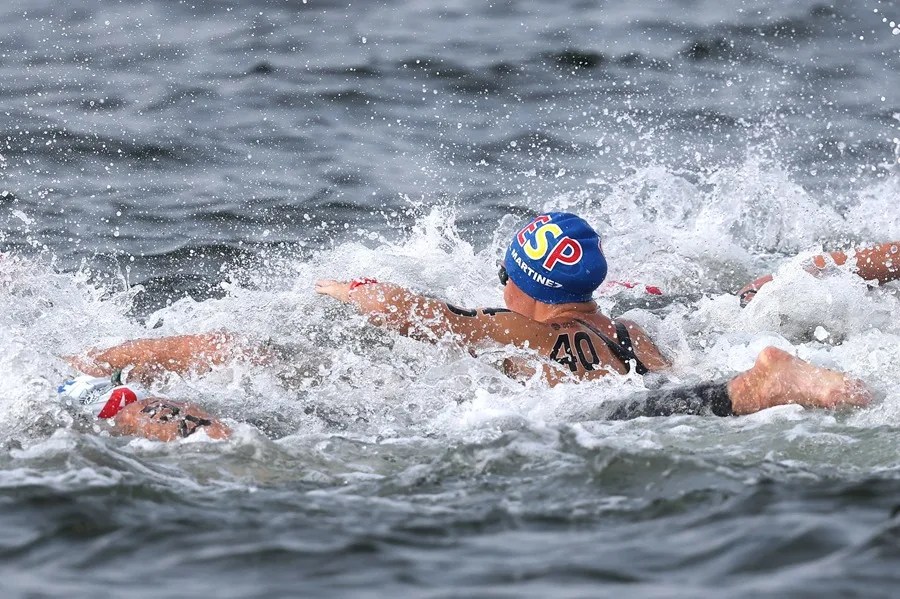
Off Playa Langosta in Cancún on November 6, short waves kept the men bunched together in the 10-kilometer opener of the 2026-27 World Cup season. Swimmers could tuck in behind a rival and ride his wake. Germany’s Florian Wellbrock won in just under an hour and 54 minutes. Strehlke finished 11th, 14.9 seconds later. Brazil’s Victor Moreno, 19, took seventh, only 5.3 seconds ahead of Strehlke. Argentina’s Lucas Alba, tied for ninth, beat the Mexican by four tenths of a second.
The next day came the knockout, which made its world championships debut in Singapore in 2025. Swimmers have to advance through 1,500 meters, then 1,000, to earn a place in a 500-meter final. Betlehem won the semifinal and got first choice of starting position. The clock started over. Wellbrock reached the first buoy ahead of him and pulled clear on the last turn. Strehlke came sixth, 3.9 seconds off bronze.
Back in a pool in Santo Domingo in July, Strehlke swam the 1,500-meter freestyle in 15 minutes, 3.87 seconds. That Mexican record works out to a shade over 30 seconds per length of a 50-meter pool, 30 lengths in a row. Wellbrock knows the value of that speed. In 2019 he won world titles in the pool 1,500 and the open-water 10 kilometers at the same meet.
Strehlke splits his own training between Mexico and Munich. Wellbrock and Australia’s Moesha Johnson train together in Magdeburg. At 29, each won both races in Cancún. Spain’s Ángela Martínez, 22, had finished second to Johnson in Ibiza in April. In Mexico, Japan’s Airi Ebina, 20, finished 13 seconds behind the Australian over 10 kilometers. “I never expected anything like this,” Johnson told EFE of going unbeaten in 2026.
From Coronda to Cancún
In December 1960, Carlos Larriera sat down with neighbors at a bar beside a sandy street in Coronda, Argentina. The swimmer wanted to stage a river race from Santa Fe to their town. Money was tight. A race that brought visitors to Coronda might be worth the expense. Eight swimmers finished the inaugural 58 kilometers in January 1961. Larriera won.
Thirty years later, when open water entered the world championships in Perth, men and women raced 25 kilometers. In 1994, Mexico’s Nora Toledano became the first Latin American woman to swim the English Channel out and back. Like Larriera, she helped organize races. She coached Mexicans attempting the crossing and helped bring the marathon swimming World Cup to Cancún.
Strehlke was 2 when the Olympic 10 kilometers debuted in Beijing in 2008. That same year in Mexico’s Sumidero Canyon, Iván López won a 15-kilometer Grand Prix race so close that officials consulted the cameras. Mexico’s Alejandra González took silver in the women’s race. Brazil’s Poliana Okimoto later won Olympic bronze off Copacabana in 2016, and her compatriot Ana Marcela Cunha won gold in Tokyo five years later.
This November the circuit returned to Mexico after more than a decade away. The home team entered 24 swimmers, its largest contingent ever. For most, it was their first World Cup. Until Cancún, getting to that starting line had meant finding the money for a trip abroad. Strehlke was particularly pleased for the newcomers. At his first World Cup, he remembered, he had learned by watching the other swimmers. At 20, he was the one they could watch.