Latin America Braces for Thousands of Deaths as Super El Niño Intensifies
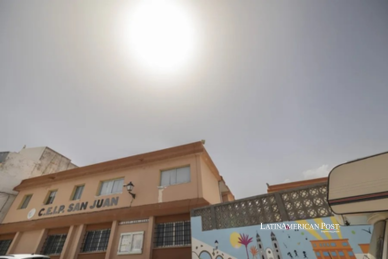
El Niño could bring thousands of additional heat deaths to Brazil, Colombia, and Venezuela, exposing a regional fault line: surviving hotter days depends not just on the temperature but on housing, working conditions, and whether cooling remains within financial reach.
The Cost of Staying Outside
A heat warning does not pay the rent.
For a street vendor or farmworker, avoiding the hottest hours can mean surrendering income. That is where Latin America’s climate emergency becomes something more intimate than an ocean temperature: a calculation about paying for tomorrow’s food and the electricity bill.
The Climate Impact Lab, based at the University of Chicago, projects 451,000 additional heat deaths worldwide between June 2026 and February 2027 compared with a normal year. These are modeled losses, not a confirmed body count, and do not include the full consequences of flooding, fires, or drought.
The country figures require a different calendar. Brazil’s projected 13,300 additional deaths cover September through February, not the entire nine months. Over that same six-month window, the report estimates 2,300 additional deaths in Venezuela and 2,200 in Colombia.
Together, those three countries account for 17,800 projected additional deaths. That is a subtotal, not Latin America’s entire burden. Brazil accounts for roughly three-quarters of it, but absolute numbers cannot show which country’s residents face the highest individual risk. Population size, exposure, and vulnerability also matter.
For Brazil, timing gives the warning particular urgency. Around 8,000 of its projected deaths fall between December and February, approximately 60% of its six-month total. The concentration during southern summer leaves time for preparation, but only if resources reach communities before that dangerous stretch. The projections compare conditions with the matching months of the 1996-2025 average and account for local vulnerability and capacity to adapt. They estimate what could happen under forecast temperatures, rather than identifying particular people who will die.
One Ocean, Different Emergencies
The report anticipates global land temperatures around 1.2 degrees Celsius above normal and 44% more extremely hot days. That percentage means roughly 14 such days where 10 would otherwise be expected, not 44 additional days everywhere. Repeated exposure can leave bodies with less opportunity to recover.
The researchers compare these conditions with temperatures projected roughly two decades ahead. That does not mean every future season will resemble this one. It means an exceptional episode is testing protections against heat that may eventually become commonplace.
NOAA’s September outlook assigns a probability above 90% to a very strong El Niño through the coming months. But ocean intensity is not a neighborhood forecast. Even a powerful event does not guarantee identical consequences across a continent.
Brazil illustrates that distinction. An October 1 bulletin from its monitoring agencies anticipates drier conditions and greater fire risk across the center-north, alongside above-average rainfall and possible flooding in the South. Heat is expected across much of the country. Emergency planning therefore faces simultaneous problems, not one national weather pattern.
In northern South America, including Colombia and Venezuela, heat can bring drought and water shortages. Across the Pacific coasts of Ecuador and Peru, the concern also includes extreme rainfall and flooding. The same climate disturbance can leave one community struggling to obtain water while another tries to escape it.
Mexico’s Pacific coast faces another contrast. El Niño generally favors hurricane activity in the eastern Pacific while suppressing it in the Atlantic. That does not predict where storms will strike, or make Caribbean communities safe. A quieter ocean basin can still produce a local disaster.
For Latin American households, these overlapping hazards complicate what adaptation means. A functioning clinic needs more than a heat forecast if access roads flood. A cooling space needs electricity, and advice to drink water assumes that safe water remains available.
Cooling Is Also a Paycheck
The International Labor Organization warns that this El Niño could disrupt livelihoods across the region, particularly for informal, rural, and outdoor workers. Nearly half of Latin American and Caribbean workers are informally employed, often with limited social protection. Losing working hours can therefore erode the same household budget that protection is meant to support.
The resulting pressure is straightforward. A worker paid by the day may understand a heat warning perfectly and still be unable to act on it. Information can identify danger without removing the financial penalty for getting out of its way.
Heat also reaches people indoors. The World Health Organization identifies poor housing and limited access to cooling as sources of unequal exposure. High temperatures can worsen existing heart and kidney problems, making an elderly relative’s hot bedroom part of the emergency even when nobody collapses outdoors.
Regional responses are not starting from nothing. La Isla Network and the Rockefeller Foundation announced projects this year involving sugarcane workers in El Salvador and women in Rio de Janeiro’s informal economy. Their focus recognizes that an agricultural shift and an urban working day require different protections.
The researchers identify early warnings, outreach to vulnerable residents, and access to cooling as measures that can reduce losses. But effectiveness depends on practical access. A distant cooling center offers little to someone who cannot leave work or travel there.
The forecast’s most important word is additional. These are losses above an already warm baseline, not an unavoidable seasonal ritual. Across Latin America, the difference between a prediction and a death toll will be measured in whether people can afford, and actually reach, protection.