Chilean Journalist Draws Out Soccer Legends and the Goals That Changed Everything
A Chilean journalist asked soccer legends to draw the goals they never forgot. Their sketches became a book about memory, with Latin American stories showing how one strike can change a career, a club, and the way families remember Sundays.
A Notebook Instead of a Replay
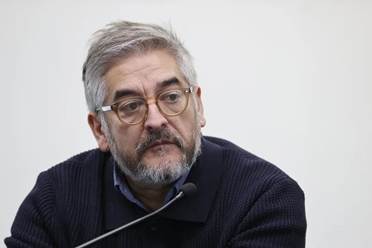
Javier Cáceres could not quite picture the goal. It was 2005, and the Chilean reporter had returned home to research the 1962 World Cup. Leonel Sánchez was explaining a play. Cáceres offered his notebook and asked him to draw it. A stalled interview had found another language.
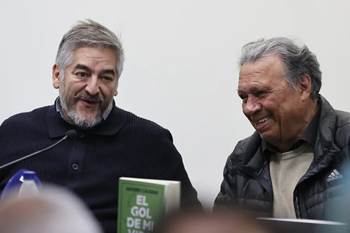
Two decades later, that request has become El gol de mi vida, published in Spanish by Libros Cúpula in 2026. More than 100 players tell their stories and supply their own drawings. At its Valparaíso presentation, Cáceres put the premise: “Some goals really do change your life.”
Sánchez’s free kick against the Soviet Union in 1962 shows why. His shot beat Lev Yashin, helping Chile win 2-1 and reach the semifinals of its home World Cup. Chile eventually finished third. One movement of a left foot became part of how a country remembered welcoming the world.
The crucial distinction, though, is between beautiful and personally important. A spectacular finish and a career-changing one need not be the same goal. Asking players to choose shifts authority from highlight editors to the people who remember what was at stake.
The collection’s size establishes breadth, not completeness. Cáceres gathered drawings through interviews over years rather than systematically sampling soccer history. Its gaps reflect access and circumstance. That makes it a personal archive, not a definitive ranking dressed up as one.
Cáceres knows something about memory crossing borders. His family’s life in Germany followed his father’s exile after Chile’s 1973 military coup. His professional travels eventually brought him back to Chile carrying other people’s recollections.
A Chilean Journalist Draws Out Soccer Legends and the Goals That Changed Everything
A Chilean journalist asked soccer legends to draw the goals they never forgot. Their sketches became a book about memory, with Latin American stories showing how one strike can change a career, a club, and the way families remember Sundays.
A Notebook Instead of a Replay
Javier Cáceres could not quite picture the goal. It was 2005, and the Chilean reporter had returned home to research the 1962 World Cup. Leonel Sánchez was explaining a play. Cáceres offered his notebook and asked him to draw it. A stalled interview had found another language.
Two decades later, that request has become El gol de mi vida, published in Spanish by Libros Cúpula in 2026. More than 100 players tell their stories and supply their own drawings. At its Valparaíso presentation, Cáceres put the premise: “Some goals really do change your life.”
Sánchez’s free kick against the Soviet Union in 1962 shows why. His shot beat Lev Yashin, helping Chile win 2-1 and reach the semifinals of its home World Cup. Chile eventually finished third. One movement of a left foot became part of how a country remembered welcoming the world.
The crucial distinction, though, is between beautiful and personally important. A spectacular finish and a career-changing one need not be the same goal. Asking players to choose shifts authority from highlight editors to the people who remember what was at stake.
The collection’s size establishes breadth, not completeness. Cáceres gathered drawings through interviews over years rather than systematically sampling soccer history. Its gaps reflect access and circumstance. That makes it a personal archive, not a definitive ranking dressed up as one.
Cáceres knows something about memory crossing borders. His family’s life in Germany followed his father’s exile after Chile’s 1973 military coup. His professional travels eventually brought him back to Chile carrying other people’s recollections.
An illuminated goal.
Figueroa told EFE that people subsequently brought sick children for him to touch, hoping they would improve. That is his account of what supporters expected, not evidence of healing. It reveals how quickly a decisive athlete can become, in strangers’ imaginations, responsible for something far beyond sport.
Header Bigger Than the Score
Elías Figueroa’s memory arrived with sunlight.
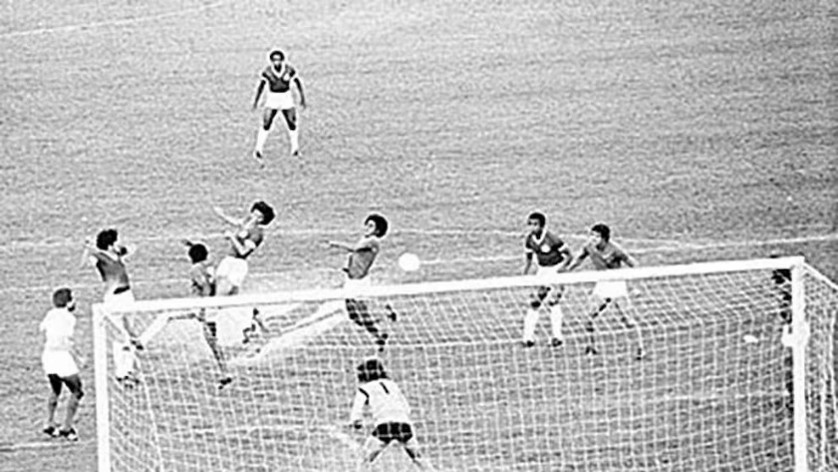
On December 14, 1975, the Chilean defender headed Internacional to a 1-0 victory over Cruzeiro at Porto Alegre’s Beira-Rio stadium. It secured the club’s first Brazilian championship. The beam of sunshine illuminating him helped turn the winning header into the Gol Iluminado, the illuminated goal.
Figueroa told EFE that people subsequently brought sick children for him to touch, hoping they would improve. That is his account of what supporters expected, not evidence of healing. It reveals how quickly a decisive athlete can become, in strangers’ imaginations, responsible for something far beyond sport.
The scoreboard records one goal. It cannot record the transformation from defender to figure of popular devotion. Nor can it fully describe the regional connection: a Chilean becoming inseparable from a Brazilian city’s sporting memory. Here, the decisive journey across a border remained entirely South American.
Mexico supplies a revealing parallel in Hugo Sánchez’s bicycle kick against Logroñés in 1988. He later described that Real Madrid goal as fulfilling a childhood dream and honoring his father. Its value wasn’t just the acrobatics. The family story traveled inside the finish, across an ocean, into a stadium in Spain.
Argentina’s José Luis Brown, another contributor, offers a different lesson in numerical understatement. He scored once in 36 international appearances. That solitary goal was the opening header in the 1986 World Cup final, which Argentina won 3-2 against West Germany in Mexico City.
A scoring average would obscure almost everything that matters about that return. Brown was a defender; scoring was not his principal job. Yet he scored his only goal when the title was being decided. The book’s central territory is the distinction between frequency and consequence.
The Goal That Never Reached Paper
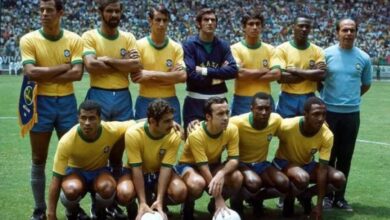
Pelé resisted reducing a life to one moment. According to Cáceres’s account, he drew a goal and wrote 1,282, his own reckoning of his career total. Whatever the debates over scoring records, the gesture answered a request for a favorite with an entire lifetime.
His 1958 final goal against Sweden offers one possible entry into that abundance: the teenager lifted the ball over a defender before finishing. Brazil won 5-2 and its first World Cup. Technique and national consequence met in the same passage of play, without becoming the same.
But the most conspicuous absence belongs to Diego Maradona.
Cáceres wanted his drawing of the second goal against England at Mexico 1986, the run from his own half that became the Goal of the Century. He never obtained it before Maradona died in November 2020. The footage survives. The requested testimony does not.
That distinction prevents the notebook from becoming merely an illustrated highlights package. We can watch the route Maradona took. We cannot assume that the moment everyone remembers was the one he would have chosen or know how his hand would have reconstructed it.
There are quieter absences, too. Cáceres recalled Brazilian forward Grafite becoming tearful while drawing a goal for Wolfsburg. They resumed later, but not in time for the book. The missed deadline says something a finished diagram could not: remembering can interrupt even the person who owns the memory.
A phone could have solved Cáceres’s original problem within seconds. It could have shown where the ball went. The notebook preserved something less immediate: what stayed with the player after the crowd went home. In these pages, Latin American soccer is not simply replayed. Its protagonists get to remember it themselves.