Argentina Opens Secret Files Amid Regional Memory Conflicts
Argentina’s recent declassification initiative revisits dictatorship-era archives, yet its primary impact concerns contemporary issues. Throughout Latin America, this release raises a critical question: can states that address terrorism and impunity reveal the truth without altering it?
Opening the Vault, Not the Wound
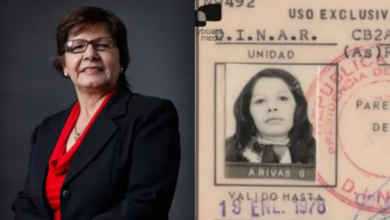
Argentina has initiated the declassification of intelligence documents spanning 1973 to 1983, encompassing the final military dictatorship and the years immediately preceding it. The initial release, announced by the Secretaría de Inteligencia del Estado, comprises 26 documents totaling 492 pages, published via official government channels with an accompanying guide detailing the declassification process. While this appears to be a significant archival disclosure, its political implications are more complex.
This initial phase excludes information regarding the dictatorship’s crimes, a significant omission. Argentine human rights organizations have long sought intelligence files that could clarify the fate of victims whose whereabouts remain unknown. Instead, the released documents primarily consist of SIDE’s organizational rules, amendments, manuals on regional intelligence delegations, and resolutions concerning agent nomenclature, functions, cover mechanisms, and pay structures. Additionally, materials from the Dirección de Comunicación Social, responsible for psychosociological strategies to influence the population, and files from the Comisión Asesora de Antecedentes, which surveyed social and political organizations of the era, are included.
In other words, Argentina has revealed the operational mechanisms before disclosing the details of the victims.
This disclosure is significant. In a region where intelligence systems often persist through democratic transitions with their practices intact, revealing their structure, agent nomenclature, concealment methods, and strategies for influencing the public holds political importance. It exposes state logic beyond mere state violence. However, this context also explains the ambivalence surrounding the release. The declassification occurs shortly before the 50th anniversary of the coup and under a government that has simultaneously reduced funding for memory institutions while promoting the concept of “memoria completa,” which integrates not only the dictatorship’s crimes but also those committed by guerrilla organizations before and during that period.
This framing is central to the current moment. The files and their release are genuine; however, the political contest over the type of memory they construct is equally real.
SIDE characterized the release as “a profoundly ethical, political, and social act” that promotes transparency, counters disinformation, demystifies conspiracy theories, and demonstrates a commitment to truth. While these are powerful assertions, in Argentina, truth has never functioned as a neutral archive; it has consistently been a contested terrain.
The Long Shadow of Partial Justice
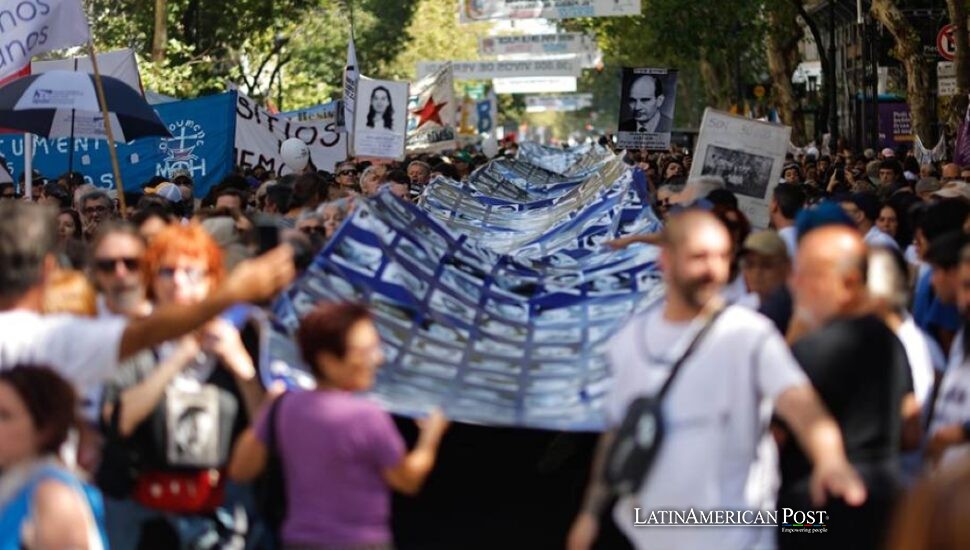
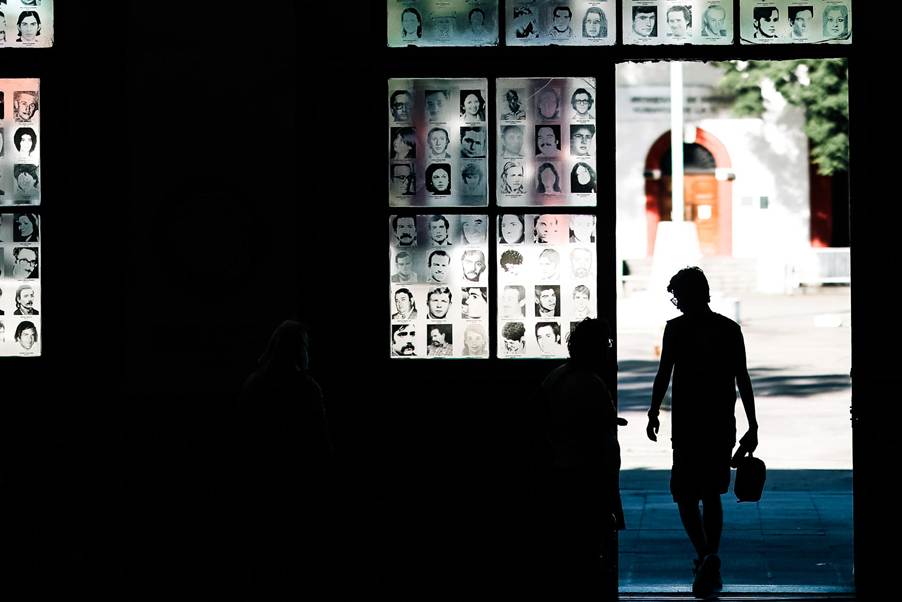
Understanding this requires recalling Argentina’s established knowledge regarding documents, trials, and democratic reparations. Between 1976 and 1983, the military dictatorship engaged in torture, extrajudicial executions, and mass imprisonment without trial. Its defining characteristic was enforced disappearance. Individuals were abducted in unmarked vehicles, often Ford Falcons, from homes and workplaces, transferred to clandestine detention centers, subjected to torture, murdered, and made to vanish. The Nunca Más report by the Comisión Nacional Sobre la Desaparición de Personas documented 8,960 disappearance victims. More recent official estimates approximate 14,000, with many experts suggesting even higher figures. Nunca Más identified 365 clandestine detention centers; subsequent government data lists over 600.
Argentina also demonstrates that accountability can commence decisively but subsequently be weakened under pressure. Five days after assuming office, Raúl Alfonsín ordered the prosecution of the first three military juntas, an extraordinary action nearly unprecedented in the region at that time. However, even amid this boldness, political balancing was evident. In a concurrent decree, Alfonsín mandated trials for leaders of the Montoneros and the Ejército Revolucionario del Pueblo, partly to indicate that the new democracy was not initiating an anti-military campaign.
This approach evolved into the doctrine of partial justice. Initially, military courts were permitted to try the juntas. The concept of due obedience was introduced to differentiate between those who issued orders, those who followed them, and those who committed excesses. The Federal Court ultimately sentenced Videla and Massera to life imprisonment, imposed prison terms on others, and acquitted some members of subsequent juntas. However, these prosecutions did not follow a straightforward moral trajectory. Military resistance intensified. The full stop law abruptly terminated new cases. The due obedience law transformed a rebuttable presumption into near-automatic immunity. Officers accused of torture, murder, and operating detention centers evaded prosecution. Subsequently, Menem issued pardons, initially broad and then more extensive, so that by the early 1990s, only ten convictions for human rights abuses had been secured, all of whom were pardoned and released.
This history is significant because it reveals a central lesson from Argentina for Latin America: a democracy can initiate prosecutions and subsequently retreat; it can disclose the truth and then restrict it; it can honor memory while negotiating impunity. Therefore, the current declassification should not be interpreted as mere transparency. Argentine society has witnessed too much to accept archives without critically examining what is omitted, delayed, and which political narratives may be subtly emerging around the release.
What Argentina Is Teaching Latin America Now
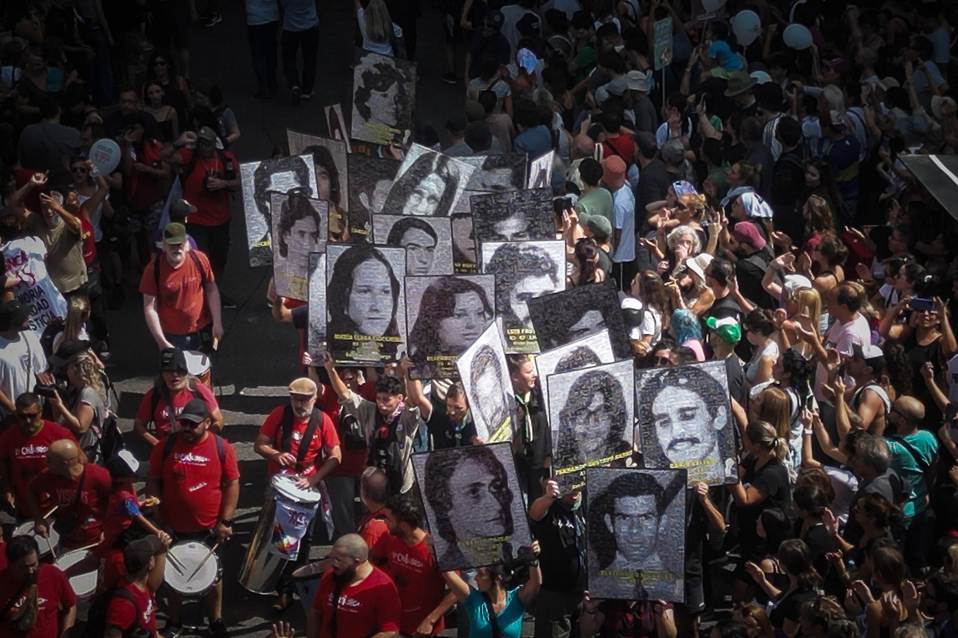
For Latin America, Argentina once again serves as a regional mirror. Although no country in the region has addressed the legacy of dictatorship identically, all confront the same fundamental dilemma: how can a democracy inherit the files, practices, and silences of a security state without becoming captive to them? How can it open records without erasing moral distinctions? How can it incorporate complexity without undermining responsibility?
In March 2025, Milei’s government announced that all information and documentation held by SIDE concerning the armed forces’ actions during the dictatorship would be declassified and transferred to the public domain under the Archivo General de la Nación. This commitment retains significant potential. However, the initial phase indicates that Argentina is beginning with a bureaucratic structure rather than criminal disclosures. Politically, this approach has dual implications: it may enhance institutional understanding of intelligence operations, but it may also delay the release of more sensitive materials urgently sought by human rights organizations.
This ambiguity is not unique to Argentina. Across Latin America, governments increasingly portray transparency as an achievement in itself, even when deeper issues of accountability remain insufficiently addressed. While opening files can support democratic processes, it can also facilitate narrative control, particularly when administrations attempt to revise the moral framework through which the past is remembered.
The term “memoria completa” lies at the heart of this risk. Although it appears inclusive, in practice, it may serve to equate histories that were never symmetrical. The dictatorship was a state entity equipped with planes, prisons, clandestine centers, an intelligence apparatus, and the power to enforce disappearances. This distinction is not rhetorical; it underpins the specific form that democratic memory in Argentina has assumed.
What does this new declassification signify for Latin America? It indicates that the region is observing Argentina’s return to its oldest democratic debate—not about whether the past matters, but about who controls its interpretation. The archives are opening; the wound remains closed. Within this gap, as is often the case in this region, politics takes precedence.
Also Read: Mexico Reveals How Historical Wounds Continue to Influence Contemporary Atlantic Diplomacy