Colombia Drone Narco War Turns Cheap Tech into City Terror

Explosive drones now stalk Colombia, from jungle checkpoints to the streets of Cali, giving cocaine militias a low-cost edge over weary soldiers and police. As Gustavo Petro faces Donald Trump’s pressure, civilians wonder who controls the sky this holiday season.
A Battlefield Without a Front Line
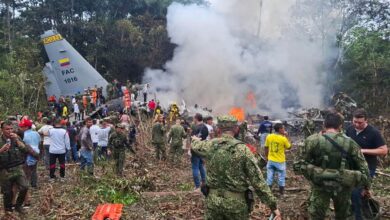
Shortly before Christmas, drones slipped over a military compound in northeastern Colombia and detonated above soldiers who believed they were briefly safe. Seven soldiers died where they were resting. Reporting by The Wall Street Journal correspondent Juan Forero linked the strike to the National Liberation Army, or the ELN.
The fear has moved fast from the periphery to the cities. The Journal described officials in Cali scrambling to keep gangs from dropping explosives onto police stations, and reported that an assault in eastern Colombia killed 80 people and uprooted tens of thousands earlier this year. Since April 2024, the military says it has counted about 400 drone attacks; President Gustavo Petro has said those strikes killed 58 soldiers and police officers and wounded nearly 300. Senior army officer Maj. Gen. Juan Carlos Correa, cited by the Journal, said the drones arrived as a surprise capability and that the countermeasures so far have not been enough.
Outside Colombia, drone warfare is often told through Ukraine and Russia, but here it is stitched into the cocaine economy. Military officials told the Journal most attack drones are commercial models—often made in China—bought online for a few hundred dollars and modified to carry homemade explosives.

Cheap Flight, Costly Shield
Engineer Cesar Jaramillo of the state-run Colombian Aeronautical Industry told the Journal how quickly armed groups can turn off-the-shelf drones into weapons. The same adaptation is spreading across Latin America. In western Mexico, the Jalisco New Generation Cartel drops C-4 to drive villagers out and seize territory. In Rio de Janeiro in October, the Red Command gang used drones to bomb police from above. In Ecuador, authorities say prison-based kingpins use drones to smuggle in phones and drugs, keeping command alive behind bars.
Researcher Henry Ziemer of the Center for Strategic and International Studies in Washington told the Journal the region’s drone challenge can be harder than on conventional battlefields because there is no frontline to fortify. Organized-crime groups are embedded in society, so governments must defend bases, highways, ports, and neighborhoods at once.
The drone war is also political. Trump calls Colombia’s resurgent militias narco-terrorists for shipping drugs to the U.S. and has attacked Petro for letting the trade expand, even as his administration carried out airstrikes against alleged drug boats in the Caribbean and the Pacific to pressure Nicolás Maduro’s regime in Venezuela, the Journal reported. Petro says his government is fighting the gangs while acknowledging that United Nations monitoring shows more coca than ever. Military data cited by the Journal show the biggest armed groups have roughly doubled to 25,000 members in three years after cease-fires gave them room to recruit and invest. The ELN is now estimated at 6,700 members, and the drone tempo has climbed from roughly a dozen strikes a month in 2024 to nearly double that pace this year.
Grief Under The Propellers In Cali
Luz Rivas told the Journal her nephew, Sgt. Wilmar Rivas, feared being killed by an explosive dropped from a drone he could not even see. He was killed in August at a river checkpoint along a major cocaine corridor when a drone targeted his unit. Beforehand, he texted home, “Pray for me, hopefully they’ll get us out of here soon.”
Colombia is trying to buy time. At Aeronautical Industry, engineers are designing rugged unmanned vehicles for surveillance and real-time intelligence, while contractors develop jamming systems for a new antidrone battalion. Engineers told the Journal there is no single counterdrone system that works against every attack, and a single unit can cost more than $100,000. Electronics engineer Andres Gomez said options like nets or lasers can exist on paper but are difficult to deploy in jungles and mountains where troops often operate. Evan Ellis of the U.S. Army War College told the Journal that drones, like landmines before them, have forced everyone to assume they are exposed.
In Cali, Mayor Alejandro Eder has weighed the threat since an antidrone system was temporarily installed for a United Nations-led summit. The city lies near mountains where drug crops grow and close to trafficking corridors, and gangs fight for control in its outskirts and poorest barrios. Eder said gangs have twice dropped explosives from drones that failed to detonate, and he has consulted antidrug officials from the U.S. embassy about jamming options. He warned it is only a matter of time before a major city suffers a successful strike, and added, “And that city will be Cali.” The sky is contested.
Also Read: Venezuela’s Dancing Strongman Bets Oil, Memory, and Defiance Against Trump