Hegseth Takes a Jog Where U.S. Bombs Fell in Venezuela
A year ago, Venezuela mobilized troops as an American aircraft carrier approached. This week, Defense Secretary Pete Hegseth jogged through a Caracas base and announced a partnership with the woman who served as Nicolás Maduro’s deputy when the bombs fell.
Last November, the Americans Were Offshore
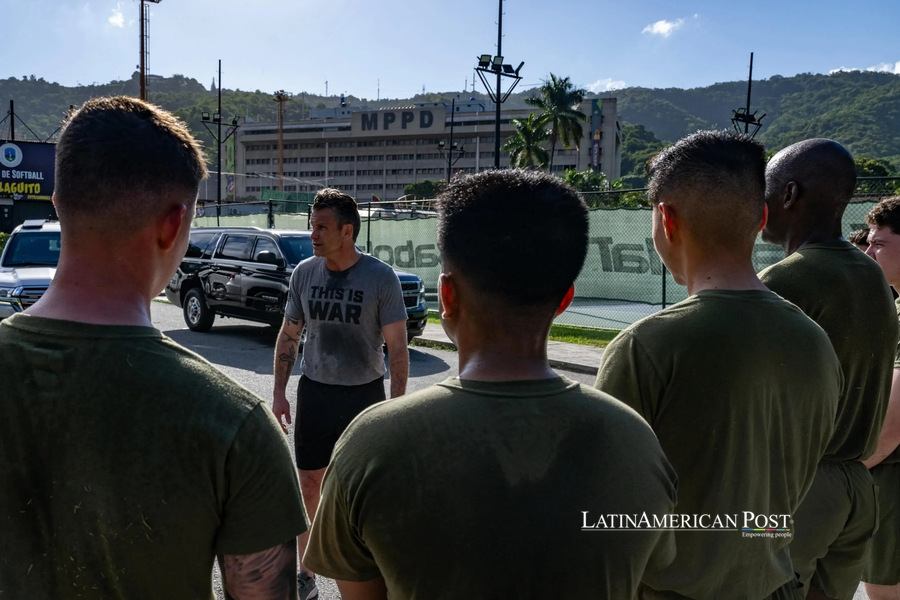
Behind Pete Hegseth in one of the photographs he posted Thursday stands Venezuela’s Defense Ministry. He had gone for a jog in a T-shirt that read “This is war.” Other men were out exercising, and he stopped to talk. The pictures, reported by EFE, were taken Wednesday at the Círculo Militar in Caracas, inside the Fuerte Tiuna complex that American forces struck on January 3.
Hegseth is the U.S. secretary of defense, the title federal law gives the official who heads the Pentagon. President Donald Trump authorized “secretary of war” as a secondary title in September 2025 for uses including public statements and ceremonies. Pentagon chief is the ordinary shorthand for the same job. The man Venezuela accused of warmongering last year had come to its military headquarters as a guest.
On October 2, 2025, Caracas accused American combat aircraft of flying about 47 miles from its coast and lodged its complaint with the United Nations. On November 11, Venezuela began two days of military exercises in response to the American buildup. Five days later, the aircraft carrier USS Gerald R. Ford entered the Caribbean, bringing the American deployment in the region to roughly 12,000 personnel and nearly a dozen Navy ships.
Trump was already saying he might talk to Maduro. A negotiation was imaginable, as was a clash. A much harder forecast would have put Maduro in U.S. custody and his vice president at Miraflores Palace, welcoming the American responsible for the forces that took him away. Harder still would have been naming the Venezuelan official who would sign the agreement.
The Man Across the Table
Defense Minister Gustavo González López signed opposite Hegseth. Eleven years earlier, President Barack Obama had imposed sanctions on González López, then head of Venezuela’s civilian intelligence service. The White House cited surveillance of opposition leaders and abuses against demonstrators under his command. The institution Washington now wants to help train is led by a man Washington once singled out for the way his officers treated civilians.
The break in military ties goes back to 2005, when Hugo Chávez ended a 35-year exchange program and sent American instructors away. They had taught Venezuelan officers to fly and operate communications equipment. A Venezuelan who enlisted the year they left could have served 21 years without encountering an American instructor under that program. Now an officer young enough to be that veteran’s son or daughter could train alongside Americans, with the blessing of Chávez’s political heirs.
By the time the ministers signed, their forces had already begun working together. In May, American Marines held an emergency exercise at the U.S. Embassy in Caracas. In June, both governments reported the death of Héctor Rusthenford Guerrero Flores, known as Niño Guerrero, the leader of the Tren de Aragua criminal organization, in a joint operation in Bolívar state. Hegseth said the new agreement covered joint training and intelligence sharing. Rodríguez emphasized equipment and the capacity to confront threats both countries face.
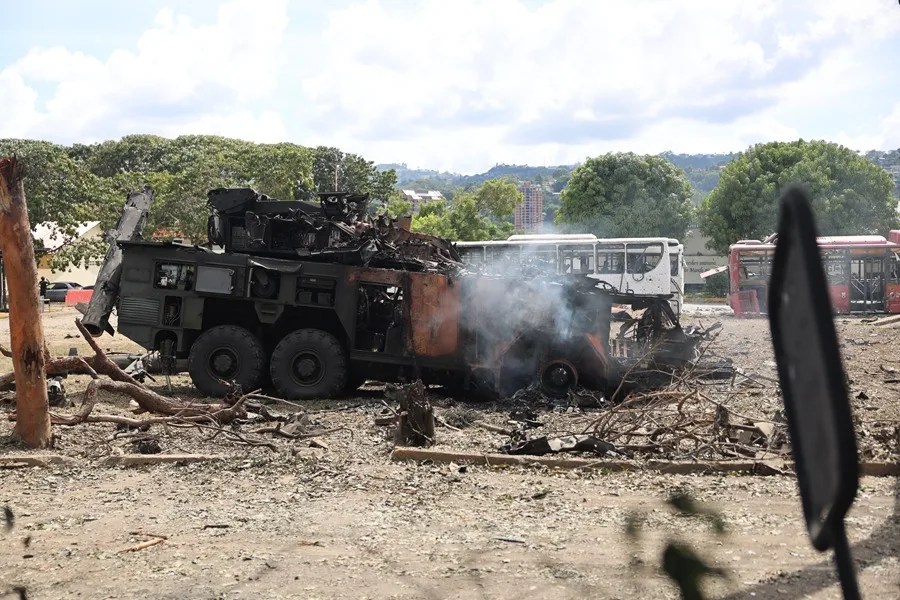
At the U.S. Embassy, Hegseth said the raid that captured Maduro and his wife, Cilia Flores, had lasted 48 minutes. A resident of Ciudad Tiuna, the civilian neighborhood at the base, remembered waking as everything shook that January morning. She went to the window because the power had failed. Outside, she saw dark shapes she thought were helicopters. A house struck in her neighborhood happened to be empty.
What Washington Means by Partnership
In its report, the United Nations’ independent fact-finding mission on Venezuela cited the authorities’ toll of 83 dead in the January strikes. The mission concluded that the intervention violated international law. It also documented a sharp decline in prolonged political detentions under Rodríguez alongside a pattern of shorter arbitrary arrests. Opposition politician Juan Pablo Guanipa spent part of February 8 free before being detained that same day again. He left house arrest on February 20. For an opposition organizer, intelligence sharing raises a question the ministers left open. If a Venezuelan agency uses information from an American partner to monitor a political meeting, who gets to look at the file?
Hegseth described Venezuela as a “compliant security partner.” Venezuela’s Defense Ministry insisted that cooperation would respect the country’s sovereignty and constitution. Oil money gives some measure of what each side means. In the first nine months of 2026, Washington handled more than $12 billion in Venezuelan oil revenue. The Trump administration says it returned nearly 99 percent. Venezuelan businesses and households could receive the dollars, but Washington managed the account and vetted the buyers.
Hegseth invoked the Monroe Doctrine in Caracas before flying on to Colombia, a longstanding American military partner. For Washington, putting both capitals on the same itinerary advertised its reach across the Caribbean and the northern Andes. For Rodríguez, an agreement brought access to training and equipment while leaving her government in charge of the armed forces. Neither outcome required the people who built Chávez’s security apparatus to surrender their posts to the opposition.
Last November, a Venezuelan officer had good reason to expect Hegseth’s name to come up at a briefing about the ships offshore. What would have taken some explaining was seeing him on the jogging path. Even on Wednesday, the photograph caught only half the change. Hegseth could go home with a picture of himself exchanging greetings at Fuerte Tiuna. The woman who went to her window in Ciudad Tiuna had already seen what American power looked like from the other side of the glass.