Colombia Knows the Drill as Washington Rallies Regional Allies Against Drug Trafficking
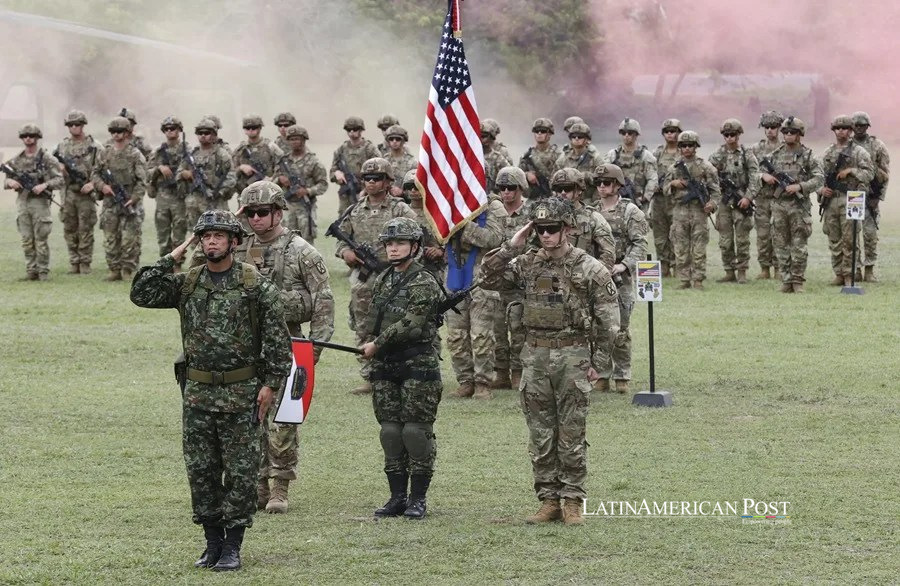
Colombia and the United States brought 620 soldiers to Tolemaida for counterdrug training. Where those troops go next matters to Colombians who live along trafficking routes and to Latin American governments weighing the price of closer military ties with Washington.
When the Drill Ends
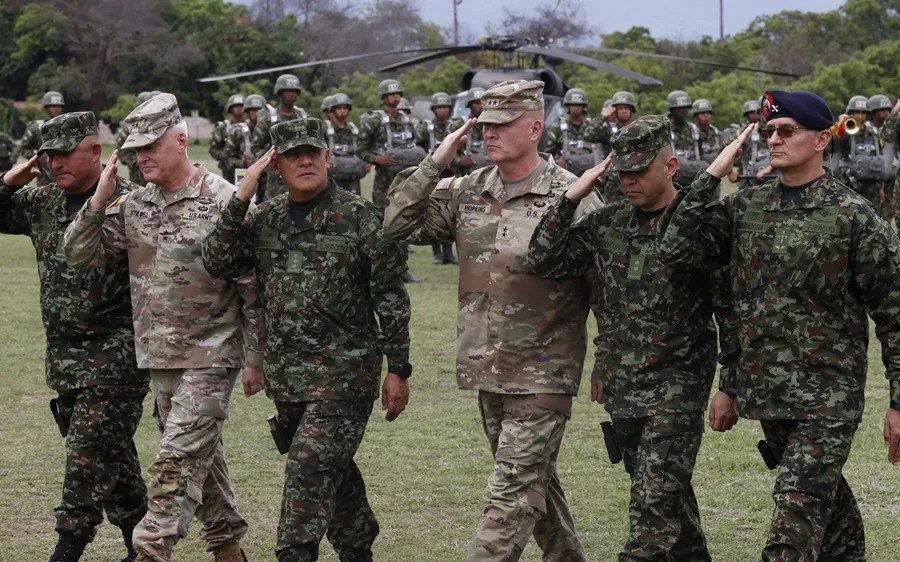
Two generals walked side by side at the closing ceremony in Nilo on Wednesday. Colombia’s army commander, José Bertulfo Soto Sánchez, spoke about getting both armies to use the same procedures. U.S. Maj. Gen. Joseph A. Hopkins III singled out the trust the soldiers had built. For a mayor wondering whose troops might soon turn up in town, Col. Valerio Pérez had an answer.
Pérez, who directed the exercise, said the Colombian soldiers would deploy to different regions of the country. There were no plans for the Americans who trained beside them to join those operations. If a resident has a complaint about a patrol, responsibility runs back to Bogotá.
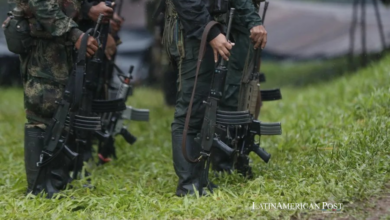
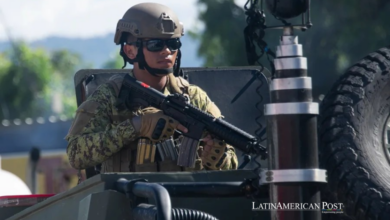
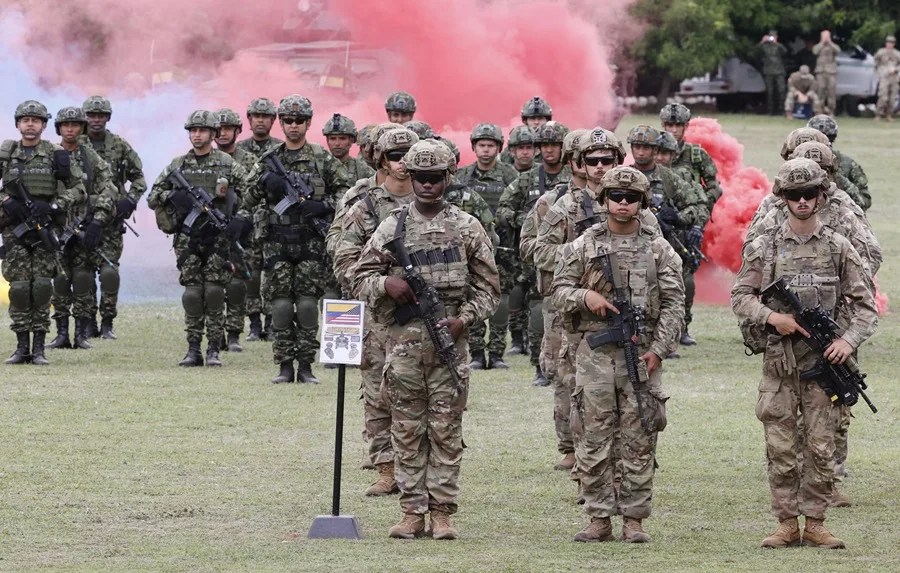
The main phase of Vanguardia del Sur 2026 ran from November 2 through 11 at the Tolemaida military base in central Colombia. It brought together 338 soldiers from Colombia’s 1st Counternarcotics Battalion and 282 from the U.S. Army’s 3rd Brigade, 10th Mountain Division. For every five Americans there were almost exactly six Colombians, all from a unit that fights the drug trade for a living.
The two sides traded notes on how they used drones for observation, Pérez said. They also trained in jungle terrain and rehearsed encounters with minefields. That last exercise carries particular weight in a country still living with mines from its long internal war. A patrol may be able to take another route. A farming family may have only one path between the house and the plot it cultivates.
From Plan Colombia to Trump’s Shield
A generation ago, Plan Colombia put U.S. money behind helicopters and counternarcotics battalions as Bogotá fought a guerrilla insurgency. In Washington, the difference between fighting cocaine and fighting guerrillas helped determine what Congress would fund. In a Colombian municipality where guerrillas collected a tax on coca and threatened candidates for mayor, the distinction was harder to draw.
Abelardo de la Espriella inherited those military ties when he took office on August 7. The far-right president quickly joined the Shield of the Americas, President Donald Trump’s alliance against drug trafficking and organized crime. On September 8, De la Espriella received Secretary of State Marco Rubio in Barranquilla for the first high-level meeting between the two governments.
As the exercise ended, Gen. Dan Caine, chairman of the U.S. Joint Chiefs of Staff, met Gen. Erik Rodríguez, commander of Colombia’s armed forces, in Bogotá. Training and exchanges are scheduled through 2028. That gives Washington a way to shape what a Colombian unit does in the field even when the only uniforms there are Colombian. It also gives Bogotá a chance to put officers coming off rural assignments in front of Americans who can learn from them.
Trump gets the public backing of a country whose soldiers have spent decades confronting the cocaine economy at its source. De la Espriella gets a hearing in Washington. He still needs one in Brasília and Quito: if a Colombian request for help looks like a test of loyalty to Trump, a neighboring president will have a harder time saying yes.
A Border You Can Walk Across
In Leticia, on the Amazon, a Colombian can walk down the street into the Brazilian city of Tabatinga to buy groceries. For a prosecutor in Leticia, that short walk can be a formidable distance. A witness on the Brazilian side might need protection from Brazilian authorities before agreeing to testify in a Colombian court. Getting that testimony before a judge depends on whether two sets of civilian officials can pick up the phone and trust each other.
Ecuador has a financial stake on the Pacific. If a crackdown at one Colombian port pushes more of the cocaine trade into an Ecuadorian port, Bogotá may have a success to announce just as its neighbor has to spend more inspecting cargo. For a banana exporter, an extra day on the dock is a cost that never appears in a Colombian seizure tally.
Washington has work to do at home. A seizure in Colombia costs the organization that paid for the cocaine, sometimes dearly. It says little about whether an American buyer can afford to finance another shipment. Financial investigators and prosecutors in the United States can pursue that buyer and the proceeds of earlier sales. De la Espriella now has a forum to ask what Washington can show for that work.
For a Colombian family weighing whether to switch from coca to plantains, the question might be what a trucker charges to take the fruit to town. A safer road can bring a buyer back. If the truck spends half the day stuck in mud, the freight bill can still eat up the profit on a legal harvest. The government that sends the soldiers will also have to find the money to fix the road.
Hopkins could speak to the trust soldiers built during ten days at Tolemaida. For the family with one path to its field, the date that matters will be the morning a demining crew comes back to say it is safe to walk there again.