Cuban Exiles in Miami Weigh Liberation Dreams Over Calle Ocho
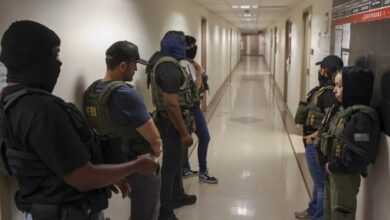
In Miami, where salsa leaks from doorways and cigar smoke clings to Calle Ocho, some Cuban exiles watched Venezuela’s January 3 operation and wonder if Washington might one day pull a similar lever in Havana to end decades of fear.
The Argument for Intrusion
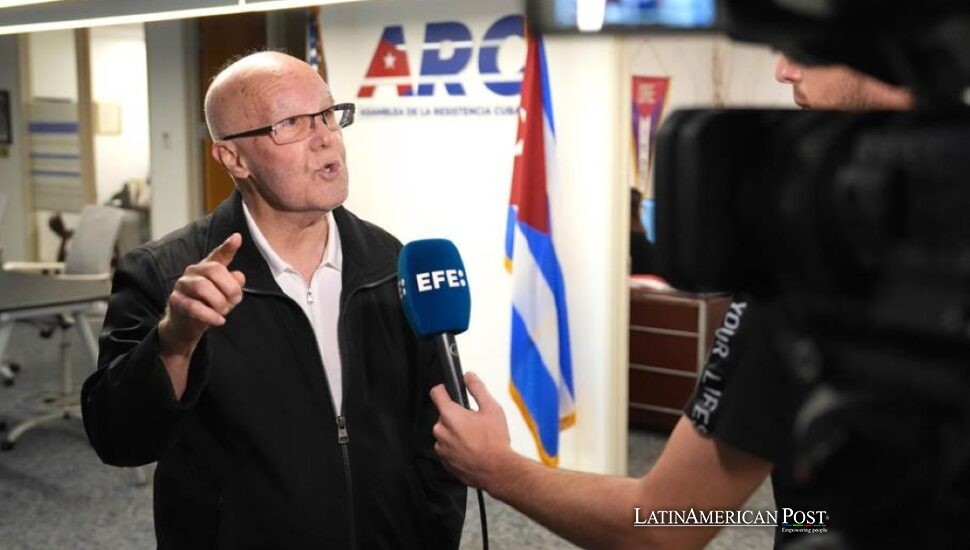
On certain afternoons in Doral, west of Miami, politics can feel less like debate and more like a long-held breath. Inside the office of the Cuban Resistance Assembly (ARC), the mood described by exiles is not celebratory so much as vigilant—a community measuring its own grief against the possibility of abrupt change. Luis Zúñiga, a member of the ARC, framed that possibility in stark, almost surgical terms, telling EFE that if pressure is not enough—economic, political, even military—then a “surgical operation” to remove “oppressors” would be justified. He spoke, in other words, from the exhausted place where patience begins to feel like collaboration.
What makes this moment different, in their telling, is not simply Cuba’s worsening hardship but the example of Venezuela. Several exiles pointed to the January 3 operation that, as they described it, culminated in Nicolás Maduro facing courts in New York—an outcome they read as both spectacle and precedent. In that interpretation, the event becomes proof that regimes can be physically unseated, not only diplomatically isolated. It is also, for some, a confirmation of a principle they believe the hemisphere has argued over for generations: whether sovereignty is absolute when a state is accused of crushing its own people.
Zúñiga called it a “right to intervene,” arguing to EFE that the Cuban dictatorship “crushes, abuses, and criminalizes” citizens arbitrarily. He extended the logic further, saying that because the Cuban system was installed “thanks to the help of the Soviet Union,” other superpowers have the right to help “liberate” the island. It is a claim rooted in Cold War memory and still alive in exile households: that Cuba has never been allowed the luxury of isolation, because it has always been entangled—first by revolution, then by geopolitics, then by punishment.
Sanctions, Leverage, And the Rubio Factor
Not everyone in Miami’s Cuban diaspora wants to say these things out loud. EFE reported that some exiles avoid public comments out of fear that relatives still on the island could face reprisals. That silence is part of the story too: even from across the water, speech can feel like a risk with consequences that land on someone else’s doorstep.
Among those who do speak, the conversation quickly turns to Washington and the tightening circle of policy. The reporting describes renewed pressure since Donald Trump’s return to the U.S. presidency, including Cuba being placed again on the U.S. list of state sponsors of terrorism—an action that brought new financial sanctions. In exile cafés and offices, these measures are argued over not like abstractions but like weather systems: you may not control them, but you live under them, you plan around them, you justify them, you blame them.
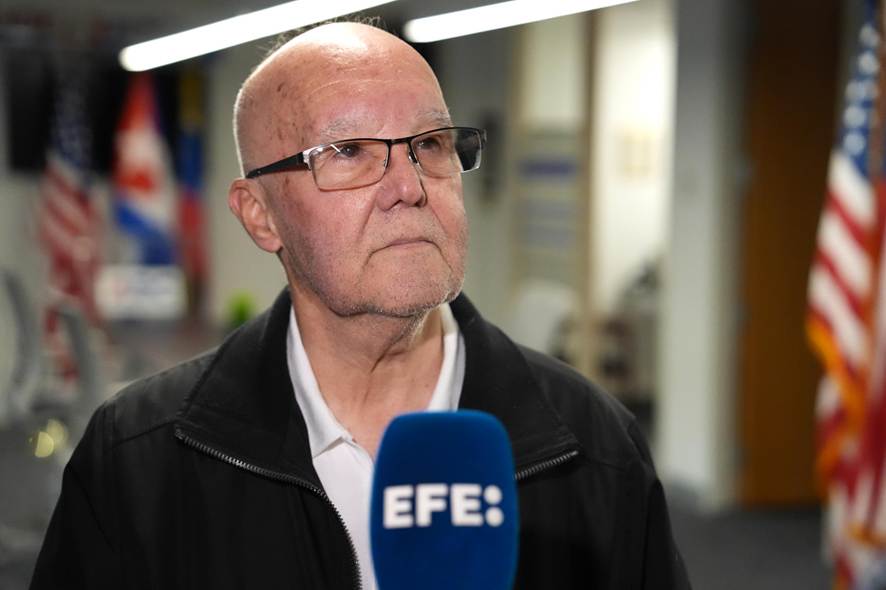
For many, the appointment of Marco Rubio—an American with Cuban roots and a hard-line reputation toward Havana—as Secretary of State reads as another message about what comes next. In a cigar shop on Calle Ocho, the setting itself is a kind of archive: leather chairs, murmured Spanish, the ritual of smoke and memory. There, José Ramón Pérez Campos, a Cuban man with exiled parents, told EFE he does not assume Maduro’s fall guarantees anything for Cuba. But he described it as a “very sensitive link” in a chain that, in his view, kept alive the system now headed by Miguel Díaz-Canel.
The collapse of Venezuelan support, Pérez Campos suggested to EFE, pushes Havana toward an uncomfortable crossroads. Either the government searches for alternatives through what he called a form of “conversational diplomacy,” or it risks sliding into an even harsher dead end. He raised the possibility that real change would require abandoning communism—then doubted the regime would ever willingly surrender control. And he warned that the familiar narrative—casting the United States as the eternal enemy responsible for the island’s failures—would likely be reinforced, because it remains politically useful inside Cuba, especially when the lights go out, and the shelves stay thin.
Hope, Guilt, And the Price Of Pressure
If you listen closely to this exile discourse, it carries two emotions at once: hope and guilt. Hope is easy to hear—the fantasy of a liberated Havana, the return flights, the reopened family homes, the sudden permission to live without whispering. Guilt is quieter but persistent: the knowledge that every lever pulled from abroad can land hardest on ordinary people who never signed up to be symbols.
Pérez Campos voiced that tension directly, telling EFE that either the authorities recognize their incapacity and attempt change, or they will be “forced” into it. In his vision, if such a rupture came, the streets would fill with joy, and much of the diaspora would help rebuild an island sinking into economic, energy, and demographic crisis. Then he asked the question that sits beneath so many exile lives: why would anyone choose this distance if there had been a real choice at all? “Do you really think we’re here because we want to be?” he told EFE, insisting the community did not go to a country of immigrants out of romance, but out of necessity.
Beside him, Álex Arellano leaned into the Rubio symbolism, telling EFE that Marco Rubio could be remembered in Cuban history if he helps end the Castro-era system. The comparison he offered—calling Rubio the best U.S. secretary of state since Henry Kissinger—was not just praise; it was a sign of how strongly parts of the exile community are searching for a single decisive figure, someone who can embody an outcome that has eluded them for decades.
The most radical timeline came from José Ramón Cardona, a small-business owner whose shop, he told EFE, has hosted famous visitors such as Bill Murray and NBA player Jimmy Butler. Cardona claimed Cuba would be free by the end of next April, a prediction that sounds more like a prayer than an analysis. Yet even he acknowledged the human cost: he lamented the hardships sanctions impose on Cuba’s population, then argued to EFE that this suffering is “the only way” to apply enough pressure for the system to collapse.
That is the moral knot at the center of the story: the belief that pain can be strategic, colliding with the reality that pain is lived by families, not by governments. In Miami, that collision plays out in everyday scenes—phones held close during calls to the island, money transfers measured against rising need, political talk that always circles back to one question. Not whether change is desirable, but what kind of change is imaginable when exile has lasted long enough to become its own country. All quotes and interviews in this article are credited to EFE.
Also Read: Venezuela After Maduro Migrants Weigh Homecoming Between Hope and Fear