Central America Blooms Before Rain and Counts the Climate Cost
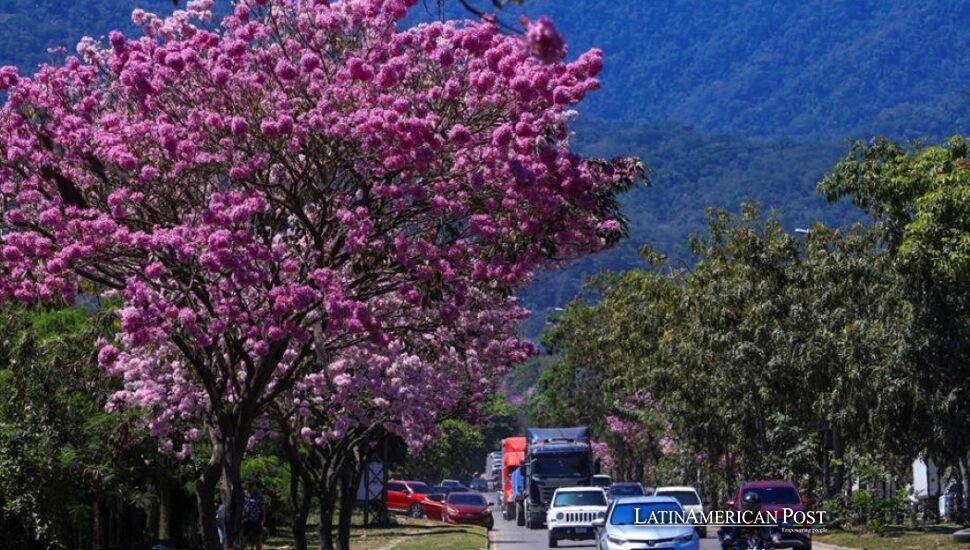
Each dry season’s end brings Central America a brief eruption of yellow and pink, when guayacán and savanna oak flowers break through the dust and heat, signaling rain, memory, and a climate rhythm that now feels less certain than before.
When the Dry Season Suddenly Turns to Color
At the end of summer in Central America, the landscape does something startling. For a few weeks, just as the long dry stretch begins to loosen its grip, yellow guayacáns and pink savanna oaks burst into bloom from Guatemala to Panama. The effect is almost theatrical. A region known for green suddenly fractures into gold and rose, and streets, parks, and secondary forests begin to look as if they were dusted by hand.
The flowering is brief. That brevity is part of its force. These are not background trees in these weeks. They take over the eye. They announce a seasonal turning point, the last gesture of the dry period before the rains begin in May. In a region where climate is not an abstraction but a calendar for daily life, that matters. The blossoms are beauty, yes, but they are also timing, signal, and social memory.
“Those are two species that beautify the close of the dry season,” Omar López, science director at the Inter-American Institute for Global Change Research, told EFE while standing beneath a thick yellow guayacán at the Panama Canal Administration building. The line sounds simple, but in Central America the end of the dry season is never just scenic. It is agricultural. Urban. Emotional. It means waiting for relief, for water, for the next cycle to begin.
The two species belong to the Bignoniaceae family and flower at roughly the same time, during the last stretch of the dry season that runs from November to April. Their appearance is a kind of natural punctuation mark. The region exhales through them. Or used to, more predictably.
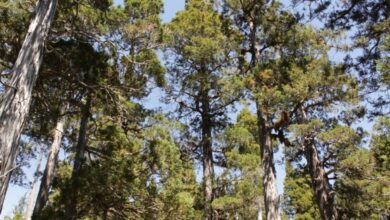
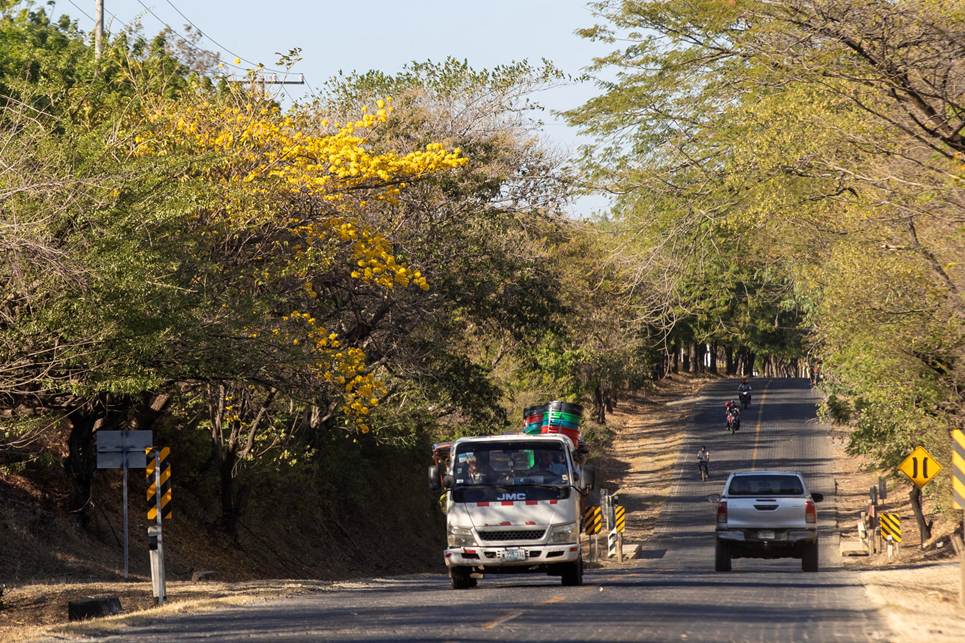
The yellow guayacán, also known as cortés amarillo, is especially well suited to this threshold moment. According to a guide from the Smithsonian Tropical Research Institute, it grows in forests ranging from dry to humid and at low to medium elevations. López explained to EFE that it is drought tolerant. To avoid water stress, it begins shedding its leaves in December. Then it remains bare for a time. When the rainy season approaches, it flowers.
That cycle gives the tree its peculiar drama. It seems stripped down, almost skeletal, then suddenly luminous. In the Central American Dry Corridor, the long Pacific-side belt of dry climate stretching from Panama to Guatemala, that transformation can feel like a small revelation. The corridor is already marked by aridity, and the climate crisis has made that condition harsher. So when the guayacán blooms there, it is not just decoration. It is a living response to stress.
In wetter urban places such as Panama City, the same tree softens avenues, parks, and private gardens. Its bell-shaped flowers, widening like lanterns, fall onto sidewalks and make floral carpets. López told EFE that because the species is deciduous, all yellow guayacáns flower “synchronously” at the end of the dry season, since the rains act as the “switch for their reproduction and then it flowers.” That synchrony is part of what makes the phenomenon feel almost collective, as though the trees had agreed on the same hour.
Flowers That Carry a Region’s Memory
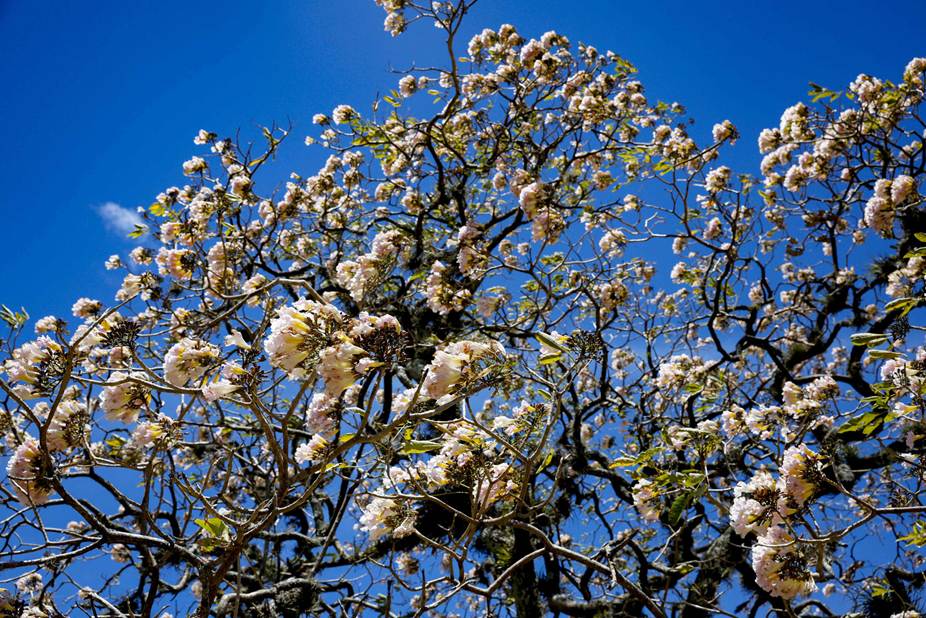
The pink species carries a different emotional register. Known in Panama as guayacán rosa, in Costa Rica as roble de sabana, and in Honduras as macuelizo, Handroanthus roseus has a more limited distribution, especially in wetter areas of Central America up to 1,200 meters in altitude. But where it appears, it does not go unnoticed. Rising as high as 40 meters, it lifts pale pink, bell-shaped flowers over cities and secondary forests in a way that feels less like ornament than atmosphere.
“It is a whole landscape when they begin to flower. They paint the scene with color in a dry season when many would think the trees are dead, but they are only deciduous,” Honduran biologist Rosely Vallecillo told EFE. Her description gets at something crucial. These blooms change how people read the land. What looks lifeless is not dead. What seems exhausted is preparing a return. In that sense, the phenomenon is not just botanical. It is interpretive. It teaches patience in a region where drought can easily be mistaken for finality.
The tree’s cultural reach runs deeper still. Under the name maquilishuat, it has been El Salvador’s national tree since a decree law of June 26, 1939. In Honduras and Nicaragua, Macuelizo gives its name to municipalities founded in 1794 and 1815, named for the abundance of this pink-flowered tree. Its beauty has also entered Salvadoran literature, appearing in verses by Orlando Fresedo and Mercedes Durand. Even its nickname is believed to have Indigenous roots, since in the extinct Matagalpa language, according to an official page of the Nicaraguan Tourism Institute, macuelizo means “five flowers.”
That layering matters. In Central America, trees are often never only trees. They are markers of place, names of towns, memory devices, shade, timber, poetry, and seasonal clocks. The occurrence of this flowering each year carries social weight because people do not encounter it as detached observers. They encounter it on sidewalks, in neighborhoods, on roadsides, in gardens, and in older names that survived on maps after other things vanished.
That is why the blooming of yellow and pink feels larger than itself. It compresses ecology and identity into one visible event. And because it happens only briefly, it is all the more cherished. The season arrives, the colors flare, and people know they are looking at something both ordinary and fragile.
Beauty Under Pressure
Fragility is the other half of the story. In 2023, all trees of the Handroanthus genus were included in Appendix II of the Convention on International Trade in Endangered Species of Wild Fauna and Flora, tightening regulations for lawful and sustainable trade. López explained that both trees are also used for carpentry and cabinetmaking because the wood is prized for its hardness and slow growth. They are used to make furniture, handicrafts, and tools, and they also serve in carbon capture and reforestation.
So the trees stand at an uneasy intersection. They are admired in bloom, valued as wood, useful in restoration, and increasingly vulnerable to the pressures that come from both commerce and climate. The climate side is especially revealing. López said unusual rains during the dry season are altering their “common flowering pattern,” causing Handroanthus trees to burst into flower several times during the hottest stage of the year in Central America.
That detail is easy to pass over, but it changes the meaning of the spectacle. If flowering becomes irregular, repeated, or detached from its old seasonal rhythm, then what was once a reliable sign of transition starts to lose some of its clarity. The blossoms may still appear, perhaps even more than once, but their message becomes harder to read. In a region already living with the strain of the climate crisis, that matters. Seasonal knowledge is part of how people orient themselves. When the pattern slips, beauty remains, but certainty does not.
So Central America says goodbye to summer under a canopy of yellow and pink, with sidewalks covered in petals and with the old promise of rain hovering just beyond the trees. The phenomenon still feels miraculous. It still stops people. But now it also carries a quieter warning, one written not against the beauty of the bloom, but inside it.
Also Read: Ecuador’s Port War Meets U.S. Muscle in a New Phase