Flood Deaths Test Latin America as Rivers Rise, Drains Fail
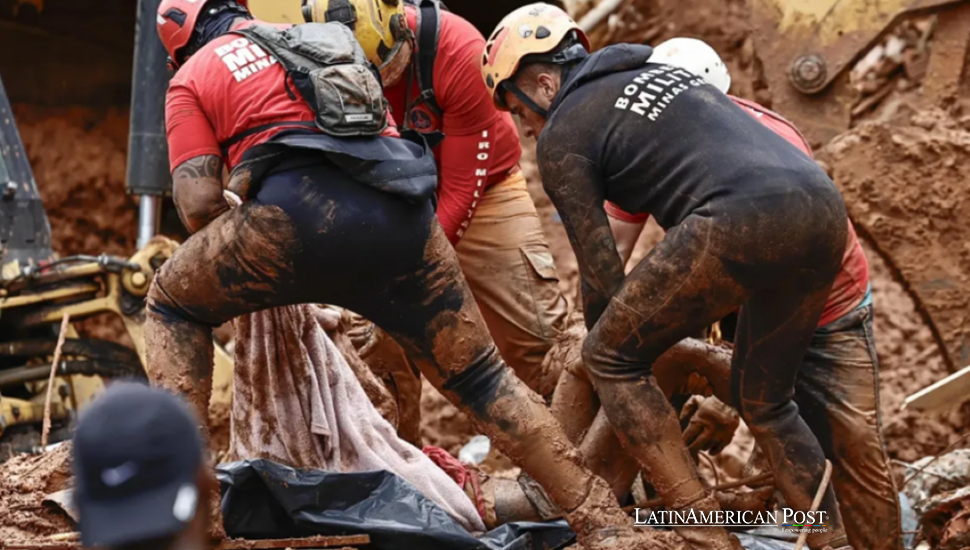
From the streets of Guayaquil to the slopes of the Andes, rains from February to March are causing deaths and displacing people across Latin America. So far, seventy-seven deaths have been reported, with Peru and Brazil suffering the most as climate patterns, poor drainage, and landslides come together once again.
Where the Water Wins First
In Guayaquil, water doesn’t come crashing in suddenly. Instead, it settles in low spots, creeps toward doorways, and turns simple errands into detours. The air feels heavier when the streets stay wet, and the city’s usual pace slows around standing water. Ecuavisa reported repeated urban flooding during the winter rains, with officials warning residents to stay alert as storms continue.
The trouble is that this is not one country’s story. The notes behind this snapshot describe a region-wide run of flooding tied to a familiar set of mechanisms: rainfall anomalies associated with La Nina conditions, Amazon Basin overflow, landslides along Andean slopes after intense precipitation, and drainage failures in large cities. The numbers, compiled from disaster reports, meteorological bulletins, and emergency authority statements, put the regional confirmed death toll at seventy-seven in the last few weeks, excluding missing persons, and the displacement at more than two hundred thousand.
In the Amazon, displacement is very real. Agência Brasil reported that rising river levels have put dozens of municipalities in the Brazilian Amazon on alert or in emergency status, affecting many families. Meanwhile, Brazil’s crisis also extends south, with landslides and bridge collapses in Rio Grande do Sul and Santa Catarina. The pattern is familiar: water always finds the low spots and weak points.
The impact varies depending on whether a country exports oil, soy, copper, or tourism, but floods quickly erase those differences. A washed-out bridge becomes a big economic problem hidden under mud. A blocked highway slows inflation. For families living paycheck to paycheck, the first losses are often not newsworthy; they are the mattress, the school uniform, or the week’s food.
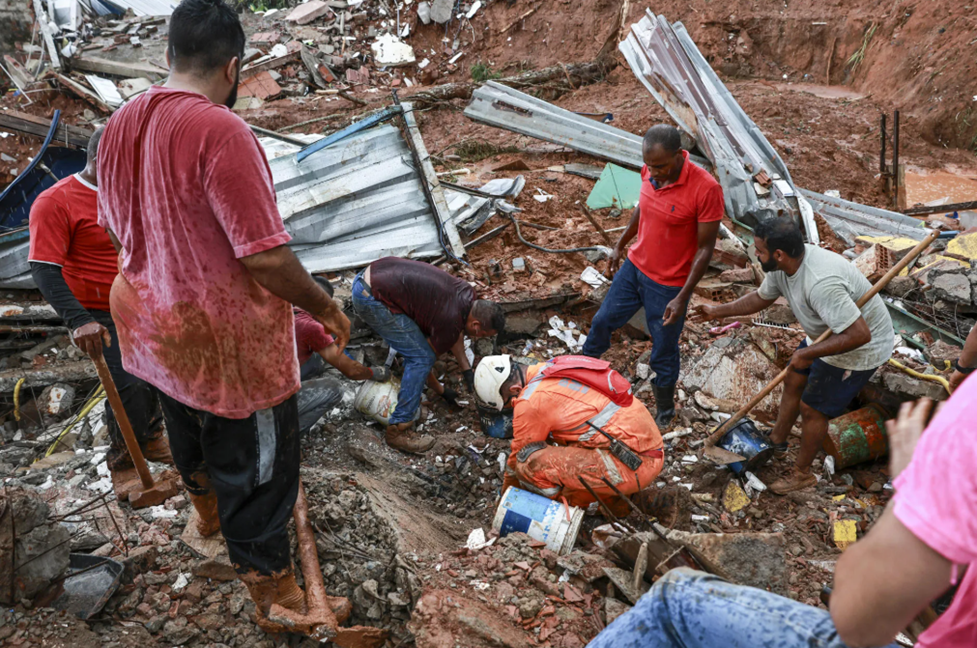
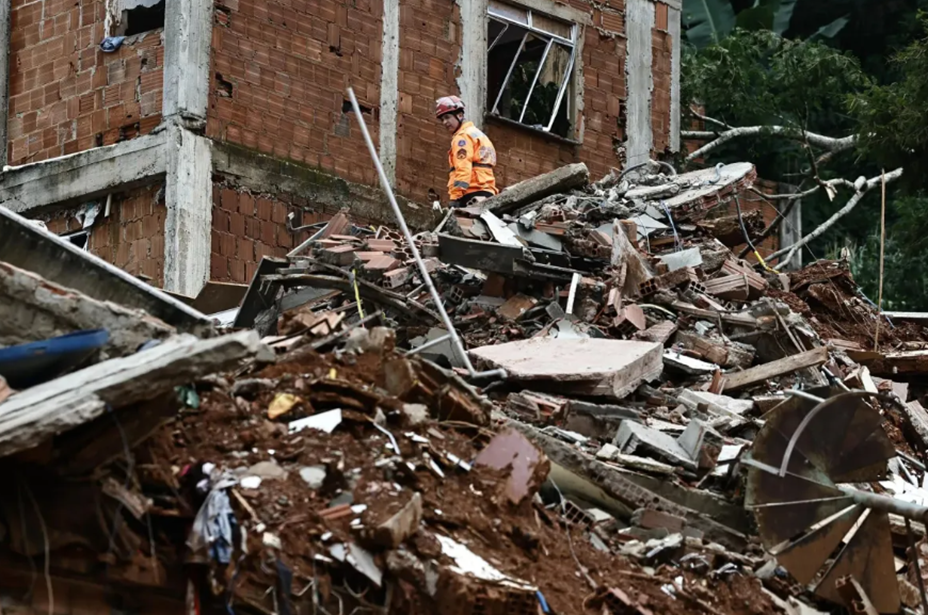
In Peru, the hardest-hit areas include Piura, Tumbes, Cusco, and the outskirts of Lima, with deaths, missing people, landslides, and coastal river flooding. Extreme rainfall has struck several regions, linking the heavy precipitation to unusual warming in the Pacific. The paper described how mud and floods can swallow streets and homes in minutes. One widely shared video captures a woman shouting, “Grab him. Grab him, please,” as the current pulls someone away, a stark reminder of how fast these events become deadly.
Counting the Dead, Counting the Costs
The figures in the notes are presented as verified where available, but still provisional. The numbers are verified when possible, but remain provisional in some cases, and that uncertainty plays into the political story. As the rain continues, counts change. Missing persons numbers shift. Local governments update, revise, and sometimes contradict each other. This creates room for delays and finger-pointing, flooding in Guayaquil, and dam overflow warnings. A state of regional emergency was declared across eight provinces due to impacts on the population, roads, infrastructure, and livelihoods, according to a press release. Local coverage has repeatedly framed the situation as recurrent exposure, especially where drainage and settlement patterns leave neighborhoods vulnerable.
In Colombia, the focus is on Antioquia, Chocó, and Santander, where landslides block highways, the Atrato River overflows, and municipalities are under emergency. A recent La República report said that hundreds of municipalities remain on landslide alert, with Antioquia, Chocó, and Santander among the highest-risk areas. The real issue is whether risk management is just paperwork or actually put into practice. If a plan exists but people still live on unstable slopes, and roads remain fragile, then the plan is just a document, not protection.
Venezuela’s section of the notes narrows to Zulia and Mérida, where flash flooding and mudslides have been paired with power outages in Andean towns. El Diario reported late-February flooding impacts in Mérida, describing rivers and ravines overflowing into residential zones and cutting communications routes, while noting that the national meteorology and hydrology institute forecast continued precipitation across parts of Zulia and the Andean states. That is the lived-in reality of storm governance: a road closure is also a clinic access problem, a schooling problem, a food supply problem.
The same pattern appears in smaller reports from Guatemala, Honduras, the Dominican Republic, Chile, Argentina, and Bolivia: different places, but the same clash of heavy rain with weak infrastructure and vulnerable communities.
The Forecast Is Also a Budget
The notes also examine flood deaths from 2024 to 2026, using data from disaster databases such as EM-DAT, civil defense agencies, and Red Cross reports. EM-DAT describes itself as an open disaster database built from UN, NGO, research, and press sources, reminding us that regional comparisons depend on the quality of reporting behind them.
This is where analysis has to get uncomfortable. Climate signals matter, but governance decides who gets hit hardest. Research on the Amazon Basin has documented how climate change is associated with more frequent extremes, swinging between drought and flood conditions, which compounds risk for riverine communities and the cities that depend on those waterways, according to the Cary Institute of Ecosystem Studies. Meanwhile, Amazonian hydrology is shaped by land-use choices, and the notes explicitly flag deforestation as a structural factor that can alter flood dynamics.
In Latin America, weather is not just news, it’s housing policy. It’s zoning. It’s drainage upkeep. It’s whether hillside neighborhoods get support to stay safe or just sympathy after a landslide. And it’s whether emergency response is the main plan or just a last resort.
The real question is time. If the rains let up, the region has a brief chance to fix what broke, strengthen what remains, and move people away from places that flood every year. But if the rains keep coming, that chance closes, and flood season becomes a regular part of life, not just a crisis.
Also Read: Colombia’s Bogota Cemetery Turns Into an Archive Where Missing Names Wait