Haiti Council Moves to Oust Prime Minister as New U.N. Force Arrives
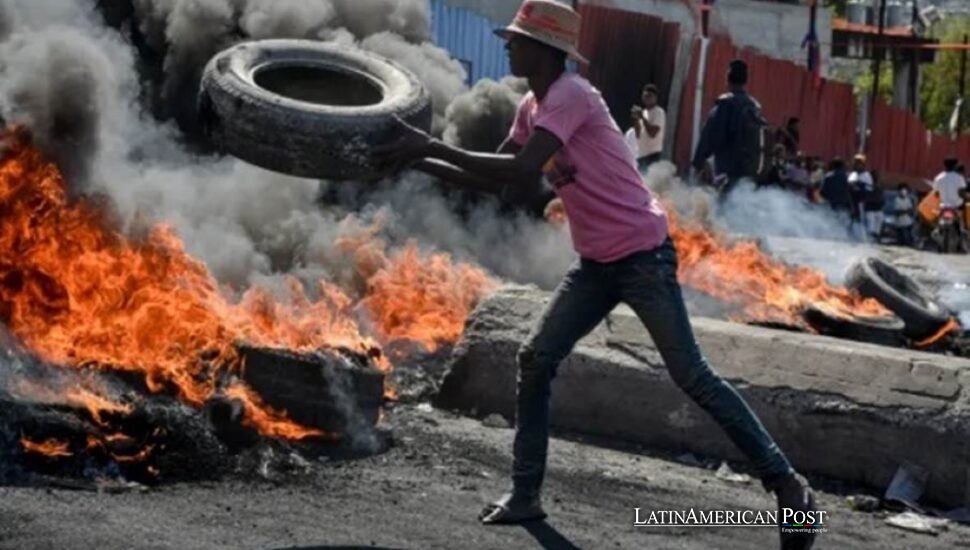
As Haiti’s transitional council moves to fire its prime minister days before its mandate ends, gangs dominate Port-au-Prince. A new United Nations (U.N.)-backed suppression force begins arriving, while sanctions and visa bans tighten around politicians accused of feeding chaos.
A Decision Announced Like Paperwork
The words land with the flat certainty of procedure. At a press conference, Edgard Leblanc Fils confirms that the decision has been made: the prime minister, Alix Didier Fils-Aimé, is to be removed. The normal steps are now underway, he says, so that the national press can publish the dismissal.
Cameras click. Microphones wait. The room does what press conference rooms do, turning a country’s crisis into a sequence of statements, then silence, then the next question.
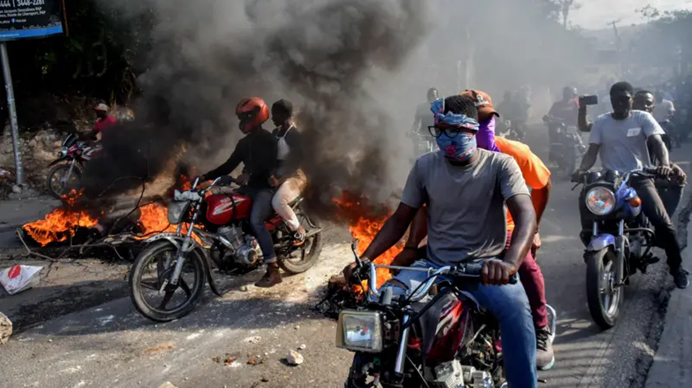
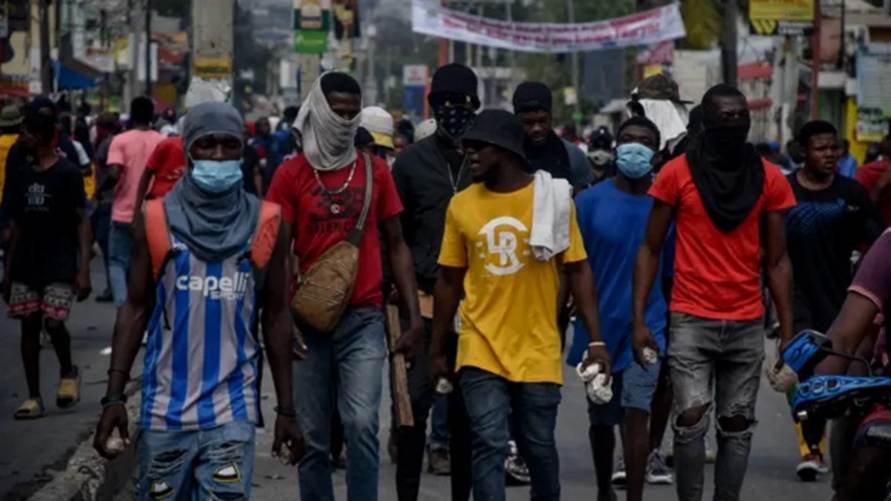
The trouble is that Haiti does not experience leadership changes as clean administrative resets. It experiences them as tremors that travel outward into a place already cracked by violence, displacement, and the long aftershock of 2021, when a president was assassinated, and a devastating earthquake struck a month later. The government has been in shambles since. Meanwhile, the police are outnumbered and outgunned by more than 100 gangs, some of which formed a powerful alliance in 2024. Those groups control almost 90% of Port-au-Prince. More than 1.4 million residents have been driven from their homes.
So when five of the seven voting members of the Transitional Presidential Council decide to dismiss the prime minister just days before the council’s mandate ends on February 7, the moment does not read as routine. It reads as a gamble with the last thin threads of continuity.
And it arrives, as these things often do in Haiti now, in the middle of everything else.
A Transition That Keeps Slipping
The council itself was born from collapse. It took office in April 2024 after Prime Minister Ariel Henry, who had assumed control following President Jovenel Moïse’s assassination on July 7, 2021, announced his resignation in March 2024. That announcement came as the Vivre Ensemble coalition, led by Jimmy Chérizier, known as Barbecue, launched an unprecedented offensive.
The council was supposed to steer Haiti back toward something recognizable: security in areas held by armed groups, inclusive and democratic general elections, a referendum on a constitutional project, and the resumption of economic activity. The notes are blunt about the outcome. That mission has not been achieved.
There have been attempts to stabilize the transition by replacing its managers. Garry Conille, an academic and politician who previously served as prime minister in 2011 and 2012, was appointed on May 28, 2024, and sworn in six days later, tasked with leading the country toward elections repeatedly postponed. Five months later, on November 11, he was removed and replaced by Alix Didier Fils-Aimé, a businessman, amid corruption allegations and differences with council members.
Fils-Aimé took office by describing essential priorities that, on paper, sound like the minimum duties of a state: the security of people, the protection of goods and infrastructure, food security, and freedom of movement across the country. The wager here was that the language of basics might help restore basics. But those goals remain far from reality in a country that recorded more than 8,100 killings last year. At the same time, armed groups continued to control large parts of the territory, especially the capital.
Now the council is moving to remove him too, despite rejection from the international community, especially the United States. The European Union’s representation in Haiti and the embassies of Germany, Spain, and France urge the transitional authorities of Haiti to act responsibly and in the general interest. They warn that any change at the top of government so close to the end of the council’s mandate could endanger what they describe as an encouraging dynamic in which security forces confront criminal gangs.
The United States, for its part, accuses corrupt politicians in Haiti of using armed criminal groups to sow chaos and expresses unwavering support for the prime minister and for stability and security in Haiti.
Sharp words, then more pressure. Two members of the transitional presidential council and a cabinet minister have had their U.S. visas revoked in the latest round of sanctions announced by the State Department on Wednesday. The restrictions came three days after two other council members were similarly barred from entering the United States. As in earlier cases, including another visa revocation in November, the State Department did not identify the individuals involved, citing privacy concerns.
This is how a political crisis starts to feel like a tightening circle. Leadership moves inside Haiti. External levers move outside it. Gangs keep moving through the middle.
New Forces Arrive at an Old Question
For three decades, Haiti has lived with interventions stacked on interventions, each arriving with its own mandate and its own promise. In 1994, a United States-led multinational force restored President Jean-Bertrand Aristide after a military coup. U.N. peacekeeping forces followed over the years, even before an earlier deadly earthquake in 2010. Most recently, a Kenyan-led international police force, with fewer than 1,000 officers, ended its U.N. mandate this past October without making much of a difference against gang power.
Now the United Nations has approved a stronger mission known as the Gang Suppression Force, designed to deploy up to 5,550 police officers with authority to detain suspected gang members and conduct offensive operations. Its first officers arrived in December to begin the transition.
On paper, the escalation is clear: more officers, broader powers, a harder edge. On the street, Haitians are left with the same question they have carried through every intervention cycle: what changes for ordinary life, and how fast.
The notes point to a grim measure of what has been happening in the meantime. The number of sexual abuse cases being treated at a clinic in the capital has tripled in the past four years as gang violence surges, a health charity warns. And the United Nations says more than 1.4 million people have been displaced due to escalating gang violence and political instability.
What this does is turn politics into shelter, or its absence. It turns the question of who leads into whether people can stay home.
Haitians, facing what the notes describe as a dizzying descent into lawlessness, are increasingly questioning what international intervention has done for them. Solutions, small-scale and imperfect, are growing inside the country. That detail matters because it points to a stubborn truth: even as missions arrive, Haitians keep improvising ways to endure.
Elections remain the formal exit ramp, but the ramp is guarded by reality. Haiti’s last presidential elections were held in 2016. The authorities have scheduled a first round of presidential elections for August 30, 2026, and a second round for December 6, 2026. The Provisional Electoral Council sets two prerequisites: an acceptable security climate and the availability of financial resources. The notes suggest both are unlikely for now.
Even Europe is moving in parallel with Washington. On January 28, the Swiss Federal Council joined EU sanctions aimed at curbing gang violence, extending an ordinance that has been in place since December 16, 2022, and had previously been based exclusively on U.N. sanctions. The U.N. measures include an arms embargo on the entire country, as well as an asset freeze and travel ban targeting 11 individuals and entities. With the new decision, asset freezes and travel bans now apply to 10 additional individuals and entities, while humanitarian exemptions remain in place.
In the press conference room, the decision to remove a prime minister is framed as a step toward publication. Outside, Haiti keeps living in the gap between announcements and control. A government can change its head. A mandate can expire. But in Port au Prince, where gangs hold nearly nine-tenths of the capital, the argument is always the same, repeated because it does not go away: power is not what you declare. It is what you can actually hold.
Also Read: Tragic Deaths in Ecuador Prisons Highlight Growing Crisis: Authorities Fail to Provide Answers