Latin America Returns to Center Stage as CIA Covert Power Rewrites Rules
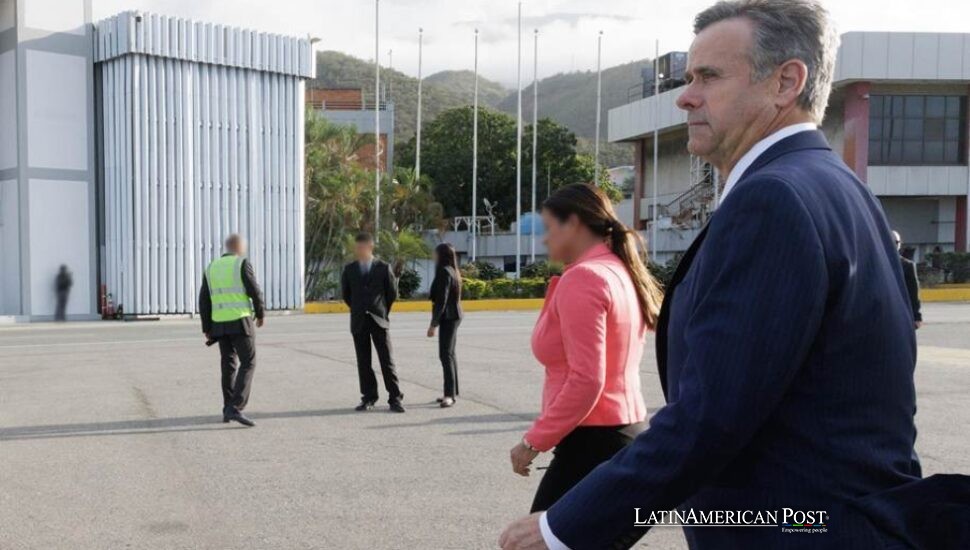
A secret operation in Venezuela reveals how Latin America is once again becoming a frontline for U.S. intelligence, reviving memories of intervention, secrecy, and uneven power—this time under a doctrine that blends covert force with strategic urgency.
A Raid Planned in Silence, Felt Across a Region
The operation unfolded quietly, almost clinically, but its echoes traveled fast. Earlier this month, a covert C.I.A. team carried out sabotage missions inside Venezuela, clearing the path for a U.S. military strike force to enter the country and seize President Nicolás Maduro. According to officials briefed on the operation, the clandestine work ensured American forces could move swiftly and safely through hostile terrain. The raid marked more than a tactical success. It signaled a strategic pivot, placing Latin America—long treated as a secondary theater—back at the center of U.S. intelligence planning.
For Washington, the mission demonstrated a new confidence in blending espionage with military power. For the region, it revived a familiar unease. Latin Americans know this script. Covert teams, closed-door authorizations, and sudden force have shaped the hemisphere before, often with consequences that linger long after the headlines fade. This time, the operation came amid a declared shift in U.S. priorities, one that intelligence officials describe as overdue.
In a closed-door briefing to Congress earlier this month, John Ratcliffe, the C.I.A. director, told lawmakers that foreign intelligence collection focused on Latin America had increased by roughly fifty-one percent during his tenure. The number of human sources, he said, had risen by sixty-one percent. The precise figures remain classified, and the agency declined to comment publicly. But the message was unmistakable: the hemisphere is no longer an afterthought.
Spies Without Embassies, Risks Without Safety Nets
The Venezuela mission required months of preparation. The covert team monitored Maduro’s movements, recruited individuals capable of relaying information from within his inner orbit, and provided real-time intelligence to U.S. military commanders before and during the raid. A senior U.S. official declined to confirm every detail but acknowledged that the team supported the operation as it unfolded.
What made the mission exceptional was not only its ambition but its exposure. The United States has no diplomatic relations with Venezuela. Its embassy remains closed. That meant the covert team operated without the thin shield of diplomatic cover that typically protects American intelligence officers abroad. If discovered, they would not have had consular assistance or formal immunity. It was a gamble that underscored the agency’s new posture: more aggressive, more willing to accept risk.
Ten days before U.S. forces seized Maduro, the C.I.A. carried out a strike on a dock where members of a Venezuelan gang were reportedly loading drugs onto boats. The action, authorized by President Donald Trump, was part of the broader effort to destabilize hostile networks and shape the battlefield ahead of the main operation. Trump later spoke openly about the agency’s role, an unusual move in a world where intelligence operations often remain classified for decades.
After the raid, Gen. Dan Caine, chairman of the Joint Chiefs of Staff, credited the C.I.A. and other intelligence agencies for their patience and precision. “We watched, we waited, we prepared,” he said, emphasizing how intelligence teams tracked Maduro’s movements over time. The remark captured the choreography of modern covert action: surveillance layered with restraint, force applied only after months of quiet work.
A Hemisphere Watched More Closely Than Before
Inside the Pentagon, the renewed focus on Latin America had been brewing. Early last year, defense officials privately lamented that U.S. intelligence coverage of Venezuela and the Caribbean lagged behind that of allies like Britain. For a region geographically close but politically complex, the intelligence gaps were striking. Ratcliffe arrived promising to close them, advocating a return to classic tradecraft: more spies, more human sources, and a willingness to conduct covert action rather than rely solely on satellites and intercepts.
Throughout last summer and fall, Ratcliffe met regularly with Marco Rubio, the Secretary of State; Pete Hegseth, the Defense Secretary; and General Caine to plan the Venezuela operation. Their coordination reflected a tightening bond between intelligence and military leadership, one that officials say is essential in an era of rapid crises and blurred battle lines.
From a Latin American perspective, that coordination carries historical weight. The region has often been the testing ground for doctrines developed elsewhere. During the Cold War, covert operations reshaped governments and societies with little regard for local consequences. Scholars writing in journals such as Third World Quarterly have long noted how external interventions, even when framed as security measures, tend to weaken institutions and deepen mistrust when they bypass democratic accountability.
The Venezuela mission arrives at a moment when many Latin American countries are already grappling with insecurity, economic strain, and polarized politics. In that environment, an expanded intelligence footprint can feel less like partnership and more like surveillance. The numbers cited by Ratcliffe—fifty-one percent more collection, sixty-one percent more human sources—may reassure lawmakers in Washington. South of the border, they raise questions about sovereignty and consent.
Openness That Reveals, And Alarms
One striking feature of the operation was how openly Trump discussed it. He publicly confirmed that he had authorized C.I.A. actions in Venezuela, and during a radio interview, he revealed details about the mysterious port strike. Traditionally, presidents maintain plausible deniability, allowing intelligence agencies to operate in the shadows. Trump’s candor broke with that norm, signaling confidence but also exposing the machinery of covert power to public scrutiny.
For Latin America, that openness cuts both ways. On one hand, transparency can limit abuses and invite debate. On the other, it normalizes intervention, presenting covert action as just another policy tool. In countries with long memories of foreign meddling, such normalization can inflame suspicion and fuel nationalist backlash.
The Venezuela operation illustrates a broader reality: Latin America is being reimagined in Washington not merely as a neighborhood to be managed but as a strategic arena where great-power competition, migration pressures, and transnational crime converge. Intelligence officials argue that ignoring the region allowed threats to metastasize. Critics counter that an aggressive intelligence posture risks repeating old mistakes, substituting secrecy for diplomacy and force for legitimacy.
The absence of diplomatic ties with Venezuela underscores the dilemma. When embassies close, intelligence fills the void. Spies replace diplomats, and covert action stands in for negotiation. The short-term gains can be dramatic, as the seizure of Maduro demonstrated. The long-term costs are harder to measure but often borne by ordinary people.
Between Security and Self-Determination
From the Andes to the Caribbean, Latin Americans are watching closely. The Venezuela raid may be framed in Washington as a singular success, a proof of concept for a reinvigorated C.I.A. But in the region, it resonates as part of a larger pattern: external powers asserting control during moments of domestic fragility.
The challenge, for both sides, is to avoid letting intelligence triumphs eclipse political realities. Security achieved through covert force can be fleeting if it undermines trust or fuels resentment. Academic research in journals like Journal of Democracy suggests that durable stability depends less on clandestine victories than on inclusive institutions and transparent governance.
The renewed U.S. focus on Latin America is not inherently negative. Better understanding, deeper engagement, and respect for local complexities could strengthen partnerships. But when that focus manifests primarily through covert operations and military coordination, it risks reinforcing the very dynamics that have long destabilized the hemisphere.
As the dust settles in Venezuela, the region is left with familiar questions dressed in modern language. Who decides when intervention is justified? Who bears the risks when secrecy fails? And how can a hemisphere with a history of imposed solutions assert its right to self-determination?
For now, the answers remain classified. But the operation has already made one thing clear: Latin America is no longer on the periphery of U.S. strategic thinking. It is back in the foreground, where every covert success is measured not only in objectives achieved, but in memories awakened.
Credit: Originally reported by and adapted from New York Times coverage by Julian E. Barnes and Tyler Pager.
Also Read: Guatemala Wakes Up Under Emergency Rules as Gangs Test State Power