Twenty-Five Years After the Quake, El Salvador Remembers Forty-Five Seconds That Changed Everything
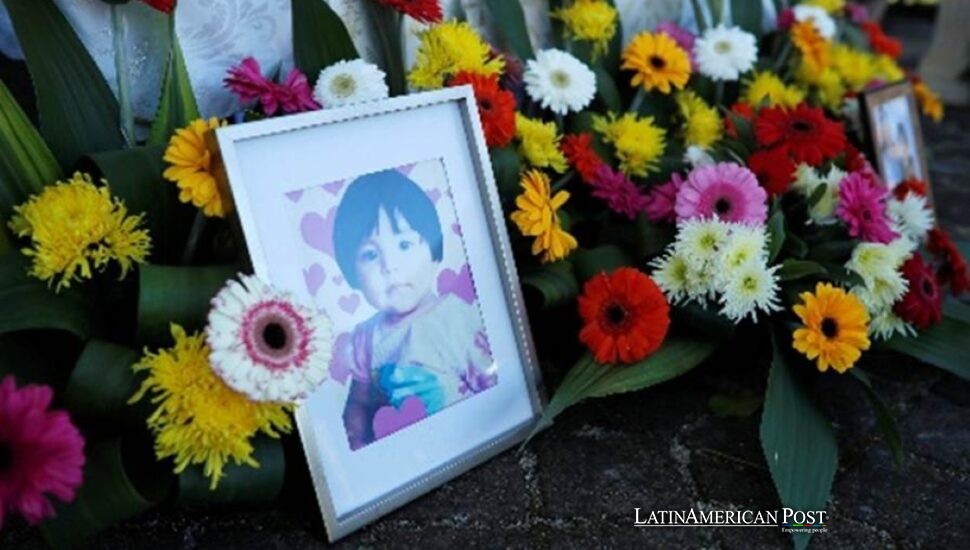
Twenty-five years after January 13, 2001 —the quake that bent El Salvador for forty-five seconds —its aftershocks still live in the body—inside the flinch at a passing truck, the pause when a wall creaks. It killed 944 people, displaced 1.3 million, and taught a small country how fragile “normal” can be.
Forty-Five Seconds That Rewrote a Country
At 11:33 a.m. local time on Saturday, January 13, 2001 (5:33 p.m. GMT), the ground in El Salvador shook with a force that felt deeply unsettling. The earthquake, officially measured at magnitude 7.7, struck off the Pacific coast with its center about 18 kilometers from the Usulután shoreline at a depth of roughly 60 kilometers. For forty-five seconds, 11 out of 14 departments learned that natural disasters can come at any moment, no matter the schedule.
In the months that followed, the tremor refused to leave quietly. Roughly 4,500 aftershocks were recorded that year, each one a small reminder that disaster is not a single moment but a season of uncertainty. Official publications describe the January 13, 2001, quake as the second-largest in the nation’s recorded history, surpassed only by a magnitude 7.9 earthquake in 1902—a statistic that reads coldly, until you remember that history is made of households.
Seismology can explain the mechanics. The Cocos and Caribbean plates collide and subduct beneath the Pacific Plate. Local faults also thread inland. But mechanics do not capture what happens near noon when the crunch of structures gives way to a thin, stunned silence. Then the cries begin—voices calling names into dust, trying to locate the living by sound alone.
Las Colinas and the Weight of a Mountain
If the earthquake has a single image, it is Las Colinas, the residential community in Santa Tecla, about fifteen kilometers from San Salvador. There, the quake triggered a devastating landslide in the El Bálsamo mountain range, burying nearly 200 homes. Official figures put the dead from the slide at around 600, but some former community leaders have said their own counts rose beyond 900—a grim example of how, in mass tragedy, numbers become contested not out of politics but out of mourning.
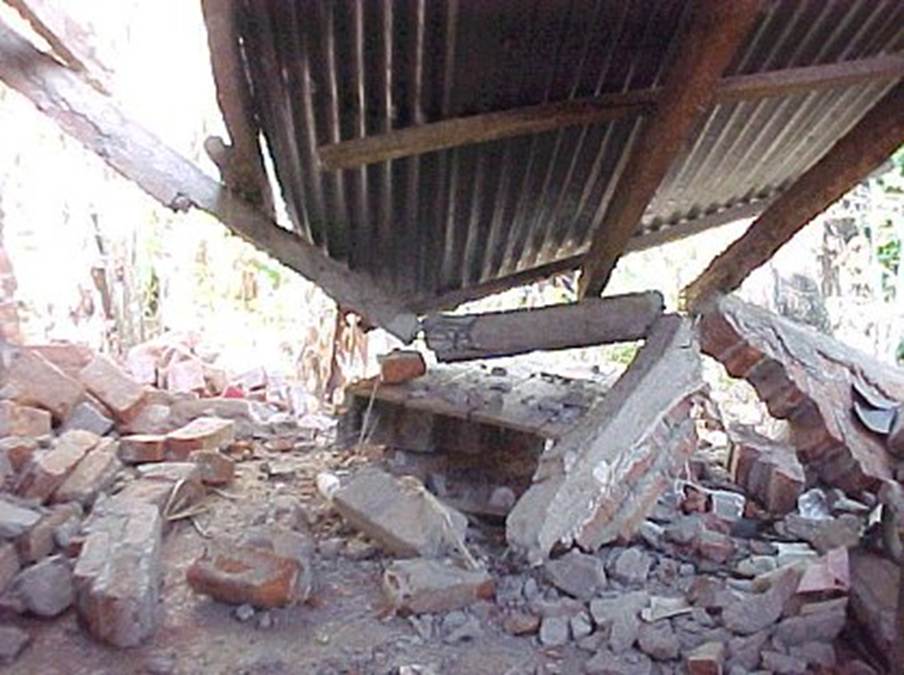
The destruction extended far beyond one neighborhood. Entire localities—Santa Tecla, Comasagua, and Colón in the department of La Libertad, among others—suffered near-total structural damage in places. The Dirección General de Protección Civil counted 108,261 homes destroyed and 169,962 damaged, along with 1,155 public buildings damaged. In human terms, that translated to 1,364,160 people suddenly living in improvisation: shelters, relatives’ floors, plastic roofs, borrowed pots, donated mattresses.
The economic wound was immense. The UN Economic Commission for Latin America and the Caribbean (CEPAL) estimated total damages and losses from the January 13 earthquake at $1,255.4 million. That figure includes what Latin Americans know too well. It means not only broken roads and collapsed walls, but the slow erosion of livelihoods—shops that never reopen, school years disrupted, migration decisions accelerated.
Landslides scarred slopes, raising vulnerability to future storms and tremors. The environmental loss affected rural families who relied on the stability of the hillsides.
A Rescuer’s Memory and the Second Blow
For Edgar Jhonny Ramos, a veteran rescuer with Comandos de Salvamento, the anniversary does not arrive as a date on a calendar—it arrives as a replay. He joined the organization as a teenager and earned his first Aspirant Rescuer credential at sixteen, in 1983, during the bloodiest years of El Salvador’s civil war (1980–1992). That earlier decade taught him urgency. The quake taught him scale.
“We were about to go have lunch when the tremor happened. We froze. I saw the bowl of soup they had served me fall onto the table. Then, we got up and ran to the base to see how we could help,” Ramos recalled speaking to EFE.
He and a colleague were initially sent to check a building in Zona Rosa, one of the capital’s upscale districts, but they were reassigned en route and directed to Las Colinas—the place that became shorthand for the disaster itself. By 2001, Ramos had training he did not have as a teenager during the October 10, 1986, earthquake, a magnitude 5.6 disaster that killed more than 1,500 and collapsed buildings in downtown San Salvador. Back then, he remembers, preparedness was thinner. In 2001, he had at least taken his first course in searching collapsed structures.
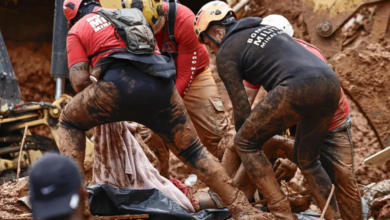
“When we arrived (at Las Colinas), we saw that the scene was quite extensive. Many people were buried there. We saw some people trapped among the rubble, and we were able to pull them out,” he said. (EFE)
What remains with him is not only the magnitude, but the intimate horrors: families found fused together in embraces in patios—a final instinct to become one body against fear. He remembers a rescue that briefly turned hope into a public symbol. Sergio Moreno was a musician from the then well-known tropical group Algodón. The rescuers were moving debris and vehicles when they were told someone was alive beneath the earth.
“We started moving rubble, cars, and began pulling those people out to take them to the hospital. Then we were told that there was a person buried alive—it was Sergio Moreno,” Ramos recalled.
A washbasin—an ordinary household object—helped keep a wall from crushing Moreno completely. Still, his hip remained trapped. In moments like that, survival feels like a negotiation with chance—a thin margin granted by furniture and angles.
“He begged us, please, not to leave him alone,” Ramos added to EFE.
After about thirty-six hours beneath the rubble, Moreno was pulled out alive. Yet, he died later at the hospital. This is one of those endings that complicates the word “rescue,” leaving it both true and insufficient.
The rescuers stayed in Las Colinas for 15 days: the first 7 days searching for survivors, the rest locating bodies. And then, as if the earth wanted to underline the lesson, another earthquake struck on February 13, 2001. The second tremor—magnitude 6.6—killed 315, injured 3,399, and left roughly 275,013 people affected, with CEPAL estimating damages and losses at $348.5 million. A country already leaning on crutches was asked to run.
This is why El Salvador remembers: because remembrance is also a statement. It asserts that the dead are not just numbers, the displaced are not easily forgotten, and that resilience does not mean accepting the same risks again. Ultimately, the anniversary is about more than the earthquake itself. It is also a reflection on what a society chooses to rebuild—homes, institutions, emergency systems, and the self-worth of those still affected by the quake.
Also Read: Venezuela After Maduro Migrants Weigh Homecoming Between Hope and Fear