Venezuela Blockade Drama Shows China’s Latin Gamble Meets Trump’s Navy
China condemns “unilateral bullying” as Donald Trump orders a blockade of sanctioned tankers around Venezuela. With December crude flows to China near 600,000 barrels per day, the standoff tests sovereignty, trade détente, and a region rethinking alliances in 2025.
Blockade Lines Drawn in the Caribbean
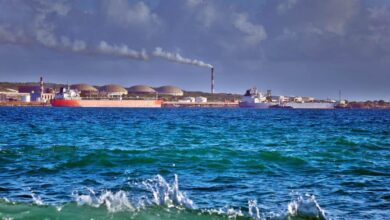
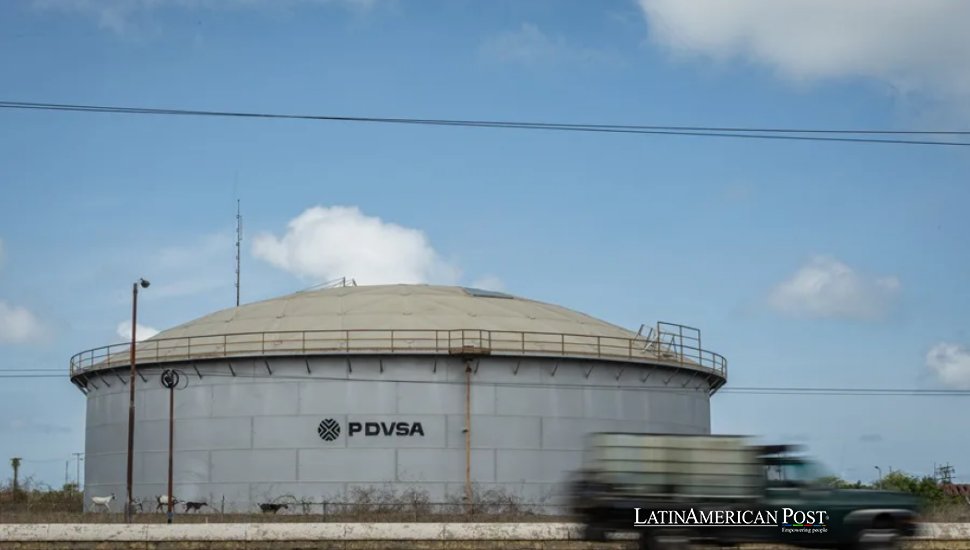
On paper, an oil tanker is a floating spreadsheet: cargo volumes, insurance clauses, ports of call. In the Caribbean, it can become something else—a moving referendum on who controls the sea, who controls revenue, and who decides what counts as legitimate commerce. Earlier this week, Trump ordered what Reuters described as a “complete blockade” of all sanctioned oil tankers attempting to leave Venezuelan waters, and those arriving, as Washington massed troops and warships in the region. The measure, framed by the White House as part of a campaign against “terrorism, drug smuggling and human trafficking,” goes after the country’s principal source of revenue at a moment when everyday life in Venezuela still hangs on imported supplies and the thin oxygen of oil dollars.
For Nicolás Maduro, the blockade is not just economic warfare; it is a familiar political script. Reuters reports he has said the United States wants the OPEC nation’s crude resources and that the military build-up aims to overthrow him. In an interview with Politico, Trump said Maduro’s days were “numbered.” In Latin America, that word lands with historical weight. It echoes earlier eras when outside powers treated the region as a chessboard, and when “security” language could serve as a passport for intervention. The difference today is that the lever is maritime choke points and sanctions compliance, not Marines landing on a beach. But the sensation—pressure from afar, uncertainty at home—rhymes.
Last week, Reuters reported that the U.S. Coast Guard seized an oil tanker off the coast of Venezuela. For sailors, dockworkers, and the small economies that orbit ports, the seizure is the kind of signal that changes behaviour before any policy memo does. Routes adjust, paperwork multiplies, intermediaries grow bolder, and fear becomes a market variable. That is the nature of blockade logic: it is enforced not only by ships, but by hesitation.
China’s Oil Appetite Meets Diplomatic Caution
Beijing’s response has been emphatic in language and cautious in commitments. Reuters reports China opposed what it called “unilateral bullying” after Washington ordered the blockade, but it did not specify how it would aid Venezuela or offer refuge for its embattled leader. That ambiguity is not merely a matter of diplomatic style; it reflects a hard constraint. China is the biggest buyer of Venezuelan crude, Reuters notes, and Venezuelan oil accounts for roughly 4% of China’s imports, with December shipments on track to average more than 600,000 barrels per day, according to analysts cited by Reuters. Beijing has money in the story, and its credibility is at stake after years of describing ties with Caracas as ironclad.
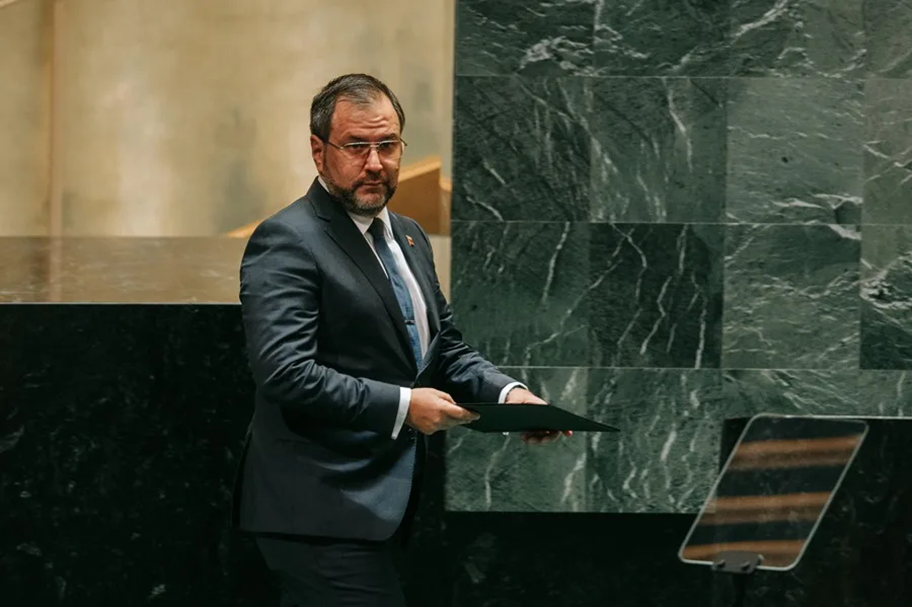
In a phone call on Wednesday, Reuters reports Chinese Foreign Minister Wang Yi told Venezuelan Foreign Minister Yvan Gil that China opposes all forms of “unilateral bullying” and supports countries in safeguarding sovereignty and national dignity. In the official readout cited by Reuters, Wang did not name the United States or Trump, and he did not detail what the support would entail. He did, however, sharpen the principle: “China believes the international community understands and supports Venezuela’s position in defending its legitimate rights and interests,” he said, according to Reuters.
This is where the geopolitics turns intimate. For years, Reuters notes, China extended credit lines to Venezuela through loans-for-oil deals—financing that once looked like a lifeline to Caracas and a resource hedge to Beijing. Reuters reports that Maduro met Xi Jinping in Moscow this year and said that Venezuela wanted to expand trade and energy cooperation. Yet Beijing is also trying—intensely, Reuters writes—to coexist with its most important trading partner, the United States. After months of bitter dispute over trade and tariffs, Trump and Xi reached a consensus in October on how to handle thorny trade issues, according to Reuters. That détente makes Venezuela a difficult friend to embrace too tightly. The tighter Beijing holds Caracas, the more it risks entangling itself in a confrontation that could spill into shipping, finance, and the broader U.S.-China relationship. The looser it holds, the more it risks advertising limits to its influence—especially in a region where symbolism matters as much as contracts.
A Hemisphere Tilting, and Venezuela as Test Case
The diplomatic temperature is rising beyond the bilateral. Reuters reports United Nations Secretary-General Antonio Guterres urged de-escalation, asking the U.S. and Venezuela to honour their obligations under international law, including the UN Charter and other applicable frameworks to safeguard peace in the region. The presidents of Mexico and Brazil also urged restraint and dialogue, Reuters adds. Russian President Vladimir Putin, in a phone call to Maduro last week, “reaffirmed his support for the policy of N. Maduro’s government, aimed at protecting national interests and sovereignty in the face of growing external pressure,” Reuters reports.
On Wednesday, Reuters reported that Venezuela requested that the UN Security Council meet to discuss what it called ongoing “U.S. aggression,” according to a letter to the 15-member body seen by Reuters. On Thursday, Reuters reports a Chinese foreign ministry spokesperson said China supports Venezuela’s request for an urgent meeting. Asked whether Caracas’ description of U.S. “aggression” could put China and the U.S. on a collision course in the region, Reuters notes the spokesperson reiterated Wang Yi’s comments and did not add more.
From a Latin American perspective, the silence is revealing. It suggests not indifference, but calculation—an unwillingness to promise what cannot be delivered, and an awareness that the region has become more contested terrain. In one reading in the text you provided, China is facing a bruising 2025 across Latin America, frustrated by partners shifting rightward, strengthening ties to the U.S., and, in some cases, flirting more openly with Taiwan. That argument casts the Venezuela blockade as more than a single-country crisis: a pressure point in a wider contest over influence, trade, and security narratives.
Yet for Latin Americans watching from the ground, the first reality is not ideology—it is risk. When great powers posture, costs rarely remain at the summit level. They spread into freight rates, fuel prices, migration pressures, and the daily work of staying afloat in economies already strained. A blockade is a blunt instrument in a region that has learned to distrust blunt instruments. If the UN becomes the stage, it will not automatically become the solution. But it may be the only place where the region can insist—out loud—that sovereignty is not a slogan reserved for speeches. It is a lived condition, negotiated in ports, in streets, and now, again, on the sea.
Also Read: Venezuela Ghost Tankers Outrun Trump’s Sanctions, and Caracas Learns Again