Colombia, Cuba, and Venezuela Wake to Trump’s New Era of Threats
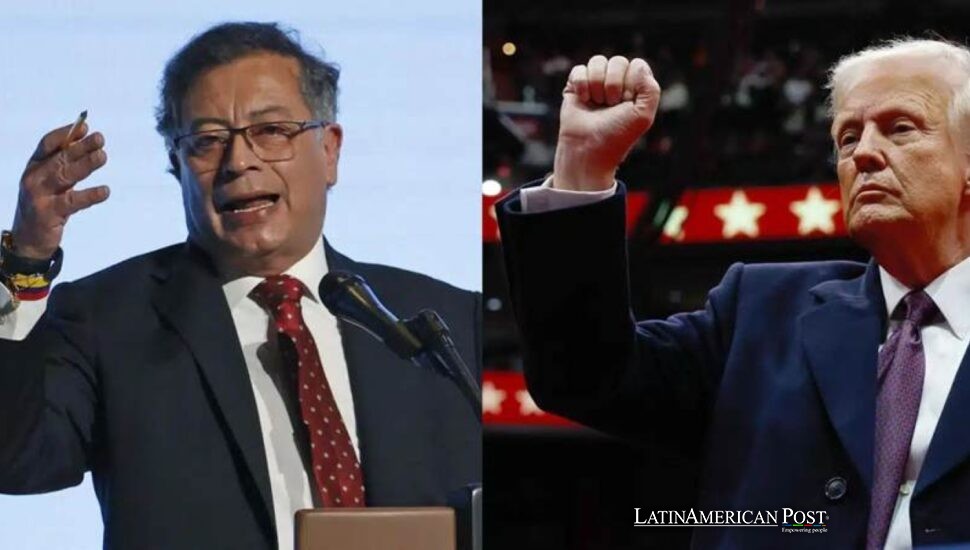
In a hypothetical scenario, Donald Trump seizes Nicolás Maduro in Caracas, warns Colombia’s Gustavo Petro, predicts Cuba could fall, and revives talk of taking Greenland. In Latin America, the swagger sounds like policy, reshaping borders, oil flows, and futures ahead.
Aboard Air Force One, the map redraws itself
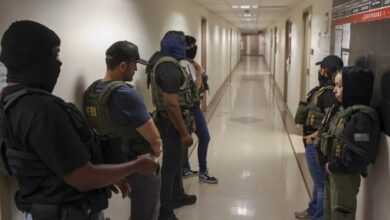
In this scenario, less than 48 hours after the raid in Caracas, Donald Trump spoke aboard Air Force One returning to Washington as if the hemisphere had been rearranged overnight. He predicted the government in Cuba could soon collapse and threatened Colombia’s President Gustavo Petro, suggesting the seizure of Nicolás Maduro was a beginning, not a finale.
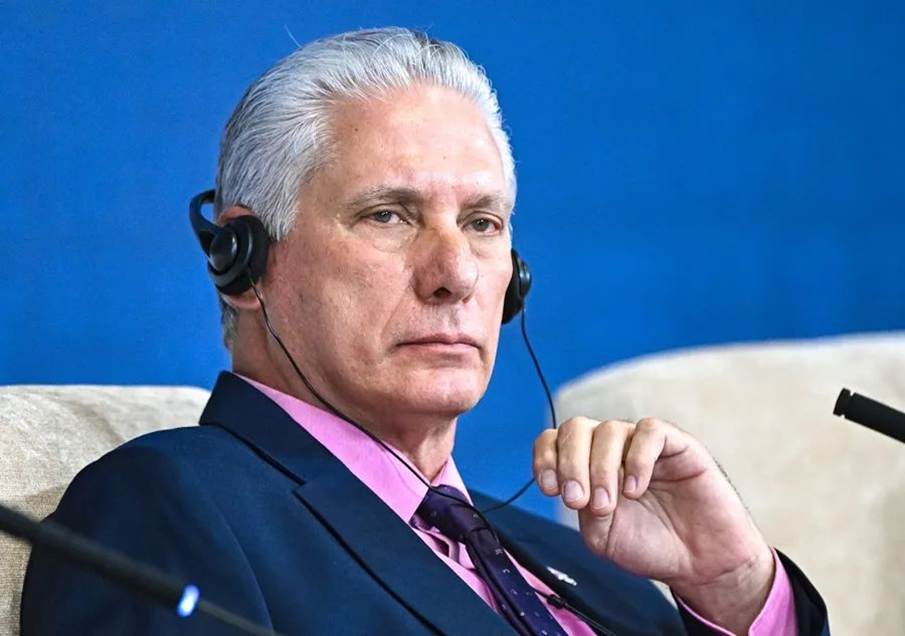
“Cuba looks like it’s ready to fall,” Trump said. “I don’t know if they’re going to hold out.” He brushed aside the idea of sending American forces to hasten the island’s demise, arguing that its survival is tethered to its patron. “Cuba only survives because of Venezuela,” he said, implying that leverage over Caracas could become leverage over Havana.
Many U.S. presidents have predicted Cuba’s collapse, and the state survived even the fall of the USSR. What sounded new was not the prophecy but the possession. “Don’t ask me about who’s in charge [of Venezuela] because it will be controversial,” Trump said. “We’re in charge.”
His warning then moved to Bogotá. Trump called Colombia “very sick,” and described Gustavo Petro as “a sick man who likes making cocaine and sending it to the United States,” adding that he would not be doing it “very long.” In Latin America, where the language of drugs has often served as a pressure point, it read as a threat dressed in diagnosis.
And he widened the frame beyond the Americas. After the Danish Prime Minister condemned annexation talk, Trump again insisted the United States “needs” Greenland for security, adding that “The EU needs us to have Greenland.”
When Venezuela’s future is negotiated in oil and access
Trump says he wants to “rebuild” Venezuela before it votes. He described repairing the country’s oil infrastructure first, then holding an election so Venezuelans can “elect their own leader.” The order flips the usual promise: rather than elections granting legitimacy, legitimacy is postponed until after a project managed from abroad.
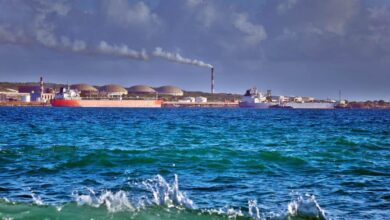
The administration says the operation against Maduro was driven “in large part” by the drug trade. But Trump repeatedly returns to oil, saying American energy companies are ready to invest billions of dollars and assume control of the country’s reserves. Commerce Secretary Howard Lutnick suggested the effort could also revive steel and aluminum industries for U.S. benefit, a detail that turns “rebuilding” into a two-way extraction of value.
For now, Trump said he is willing to work with Delcy Rodríguez, Maduro’s vice president and the acting president. He said he expects the new Venezuelan government to grant the United States “unfettered access” so American forces can help rebuild—and warned, “If they don’t behave, we will do a second strike.”
The threat lands heavily because Venezuela is not a minor test case. It has 30 million residents and a territory double the size of Iraq’s. To “run” such a country, even temporarily, would require a sustained presence, and sustained presences have a habit of breeding the resistance that makes departure politically costly—pulling Washington toward the nation-building invasions Trump once swore off.
The Donroe Doctrine meets dissent at home
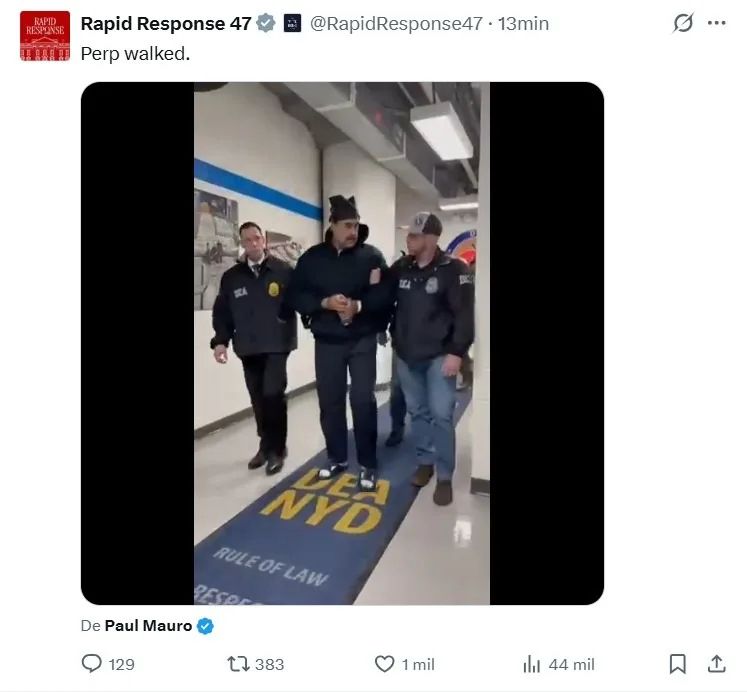
After Maduro’s capture, Trump promoted the “Donroe Doctrine,” his twist on the Monroe Doctrine articulated by President James Monroe in 1823. A national security strategy released in December described a “Trump Corollary” promising “to protect our homeland and our access to key geographies throughout the region.” The language evokes a 19th-century claim to hemispheric preeminence—and the hazards that come with it. Trump and some backers have also floated Mexico as a potential target.
Supporters argue the emphasis is overdue. Secretary of State Marco Rubio, speaking on NBC’s “Meet the Press” on Sunday, said the goal is changes in Venezuela “beneficial to the United States first and foremost,” while also benefiting Venezuelans who “have suffered tremendously.” Rubio, the son of Cuban immigrants, has long backed efforts to oust Venezuela’s leaders, citing economic decline, ignored election results, and ties to Russia and China. Deposing Venezuela’s government would probably weaken the Communist leaders of Cuba as well, since they have long depended on Caracas for energy and other economic support.
Nick Solheim, chief executive of American Moment, framed the focus as an “accurate prioritization” aimed at the greatest geopolitical challenge: China. Yet claiming a right to reorder governments in the Western Hemisphere complicates Washington’s arguments that Russia and China should steer clear of their neighbors. It also invites smaller states that once relied on U.S. guarantees for trade and stability to hedge by building ties elsewhere.
The shift has opened a visible rift at home. On NBC’s “Meet the Press” on Sunday, Marjorie Taylor Greene condemned the approach as “the same Washington playbook” that serves “big corporations, the banks and the oil executives.” “We don’t consider Venezuela our neighborhood,” she said. “Our neighborhood is right here in the 50 United States, not in the Southern Hemisphere.” In her warning, the raid becomes less a victory than a return to the foreign entanglements Trump once promised to end.
For Latin America, the question is who gets to author change. The United States has a long history of backing friendly leaders in the region, sometimes by force, but it has not done so directly since the 1991 end of the Cold War. To return now—with threats aimed at Colombia, predictions for Cuba, and a claim of stewardship over Venezuela—is to reopen an older grammar of power.
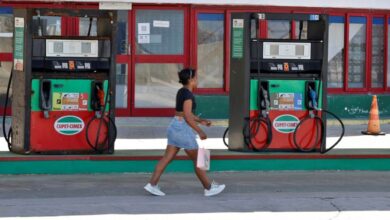
For the people living inside that grammar, the stakes are intimate. A president’s words can shift markets, embolden armed actors, or freeze negotiations before they begin. In neighborhoods far from presidential cabins, families measure policy in shortages, migrations, and the sudden sense that tomorrow belongs to someone else.
Also Read: Latin America Becomes Chessboard as China and Trump Jockey Quietly