Colombian Petro Walks Away from Trump Meeting with a MAGA Hat
In a two-hour White House meeting, President Trump called Colombia’s Gustavo Petro “great” and posed for smiling photos. Behind the warmth sat sanctions talk, cocaine politics, and a Caribbean border dilemma that both leaders now frame as shared work ahead.
Smiles First, Then the Reading Between the Lines
The telling moment did not happen behind closed doors. It happened later, in motion, when a visiting president was already halfway back into the mess of cameras, sidewalks, and protocols that make Washington feel like a stage built on deadlines.
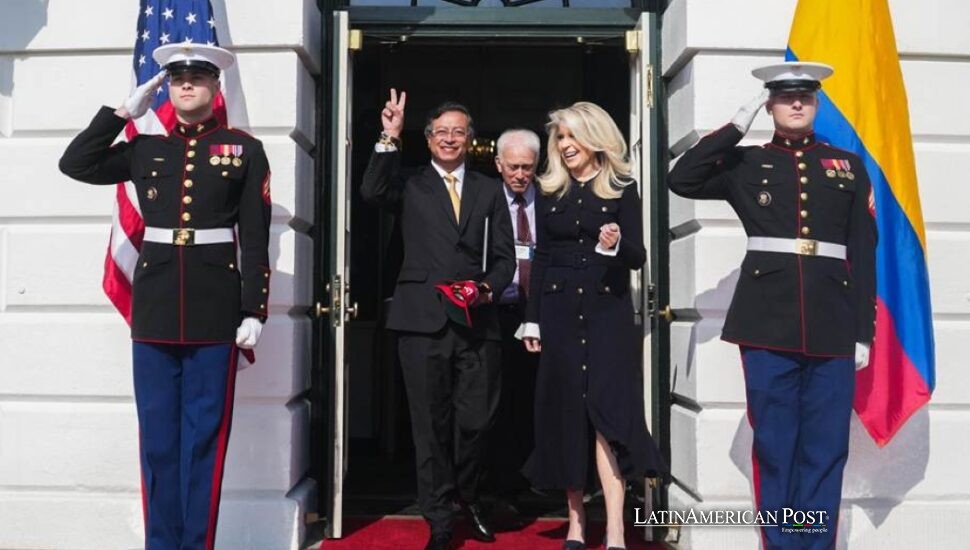
Gustavo Petro, leaving the White House, was spotted carrying a red MAGA hat.
It is the kind of detail that would have sounded implausible a month ago, given the year of ideological sparring and online rancor between Petro and President Trump. Yet there it was, the hat bright against the more neutral palette of official visits. And Petro, according to the notes, said he added an S to the cap Trump gifted him, turning the slogan into his own: “Make America Great Again.”
That minor edit, one letter, suggests what Tuesday’s meeting became. Not a surrender, not a showdown, but a careful attempt to step around the worst version of each other. A photo opportunity that also functioned as damage control.
Many had feared the opposite. Trump has used White House visits to ambush foreign leaders and assert dominance. Colombia is also central to Trump’s stated mission to crush transnational drug trafficking networks. The ingredients for a clash were already laid out: deportations, U.S. military boat strikes in waters the administration has described as used by drug traffickers, and a relationship strained enough that U.S. officials revoked Petro’s visa last fall and imposed sanctions on him along with members of his family and his government.
For this trip, the United States issued Petro a short-term visa. The trouble is that a short-term visa is not only paperwork. It is a message about leverage, and about who is allowed into the room and on what terms.
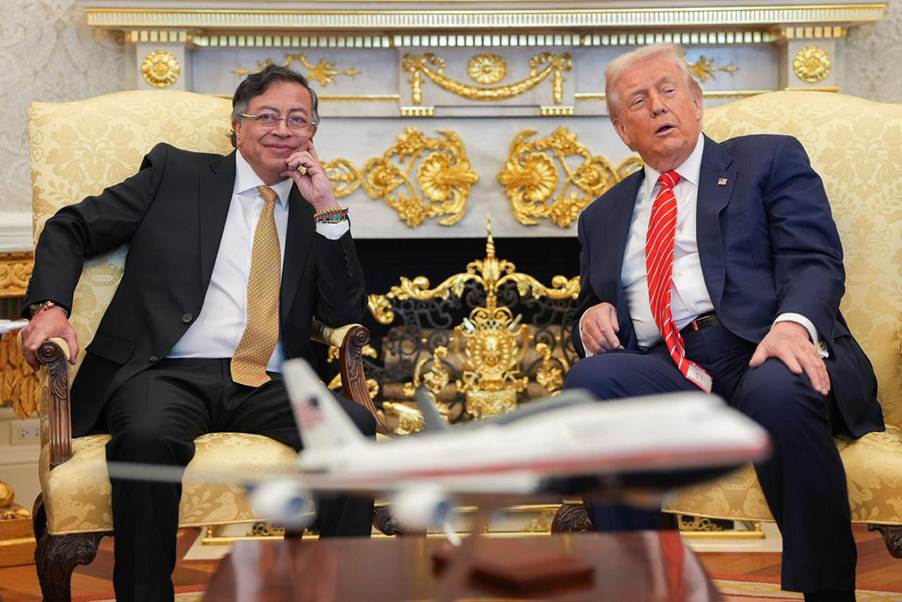
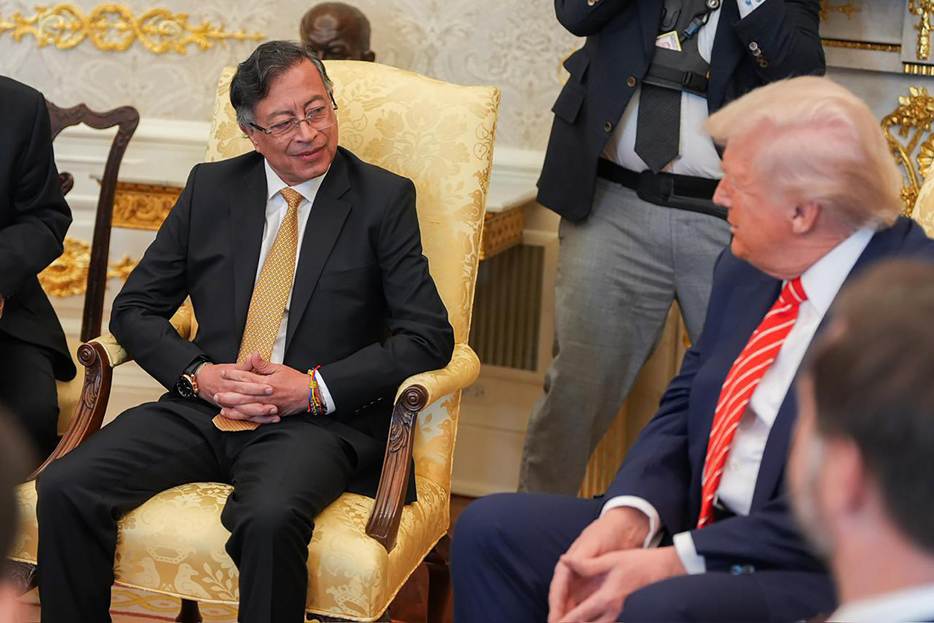
And yet the first images from the meeting were almost cheerful. After more than two hours in private, photos emerged of both leaders smiling broadly with top officials. Trump also gave Petro a signed copy of “Trump: The Art of the Deal,” with a dedication: “You are great.” Another photo showed a note from Trump saying, “I love Colombia.”
Diplomacy can be made of text as much as treaties. Sometimes a sentence is the treaty.
A Caribbean Map Under the Table
At a news conference after the White House visit, Petro said he left feeling “optimistic and positive,” while also warning that the Caribbean was now the “eye of the storm” of U.S. foreign policy. It was a pivot that sounded like Petro being Petro, mixing warmth with warning, praise with geography.
His remarks, delivered at the Colombian Embassy in Washington, centered on what he described as a “difficult” moment for Colombia and Venezuela. He said he proposed renewing Colombia’s bond with the United States through a joint crackdown on drug trafficking groups active on both sides of the Colombian-Venezuelan border, and through investment in clean energy that could supply both countries with electricity.
This is where the friendly photos stop doing the work. Petro’s pitch was not simply about policing. It was about linking security to infrastructure, narcotrafficking to energy, the border to the grid. In Latin America, those links are rarely theoretical. Armed groups exploit state absence. Smugglers thrive where governance is thin. Electricity and legitimacy often rise or fail together.
Trump, for his part, described the meeting as good. When asked if they had reached any agreement on counternarcotics efforts, he said, “We worked on it, and we got along very well.” Afterward, he also said the two were working on other matters, including sanctions.
That last detail is the shadow in the frame. Sanctions were not the public centerpiece, but they were not absent. Petro later told a Colombian radio station he rated the meeting a nine out of ten, and said not even a second had been spent discussing the sanctions or his visa issues. That is a striking claim given the context, and it also reads as a strategy. In a relationship marked by power imbalance, choosing what to say about what you did not discuss can be as pointed as admitting what you did.
A month earlier, the atmosphere had been sharper. After a U.S. military raid in Venezuela that ousted Nicolás Maduro, Trump suggested Colombia could be next. Then came an amicable phone call a few days later, arranged by Colombia’s ambassador, Daniel García-Peña, with the help of Senator Rand Paul, and Trump announced that Petro would visit Washington.
On Monday, Trump implied the Venezuelan raid had changed Petro’s posture. He said the two would talk about drugs, emphasizing that tremendous amounts of drugs come out of Colombia. This is the steady refrain behind every shift in tone. Colombia is framed as both a partner and a problem: Ally and origin point. A country invited into the Oval Office and warned at the same time.
Gifts, Extradition, and an Old Codependency
It remains unclear whether any concrete agreements emerged from the meeting. That uncertainty is not unusual. High-level visits often create an atmosphere before they produce documents.
Still, a few actions and symbols clustered around the trip. It is customary for visiting leaders to bring gifts, and Petro reportedly gave Trump chocolate and coffee produced through efforts meant to replace coca cultivation with other products. Even the gifts carried policy inside them, a quiet argument that rural livelihoods are part of counternarcotics, not an afterthought.
On Tuesday, the Colombian government also extradited to the United States an accused high-ranking leader of an organized crime group. That move, placed alongside the visit, read like a reminder of capability and cooperation, and also like an offering in a relationship where proof of seriousness is continually demanded.
Despite the rancor of the past year, the logic underneath has not changed. “It wasn’t in the interest of the U.S. to be in conflict with its most strategic ally on narcotrafficking,” said Gimena Sánchez, a Colombian human rights activist at the Washington Office on Latin America. “No matter who has been in charge of both countries,” she said, “that codependency has always been understood.”
Codependency is a blunt word, but it fits. Colombia sits inside U.S. domestic politics whenever drugs do, and U.S. pressure shapes Colombian choices even when Colombia objects. The wager here is whether two leaders who pride themselves on bluntness can accept that reality without reigniting the relationship.
For now, the scene ends with that red hat in Petro’s hands, a prop turned into punctuation. One letter added. One phrase tweaked. A small, careful act that said what the meeting itself never reasonably could: this relationship may be tense, but it is not optional.
Also Read: Honduras and the Problem of Legitimacy After Tito Asfura’s Inauguration