Costa Rica Chooses Continuity as Security Crisis Tests Rights and Power
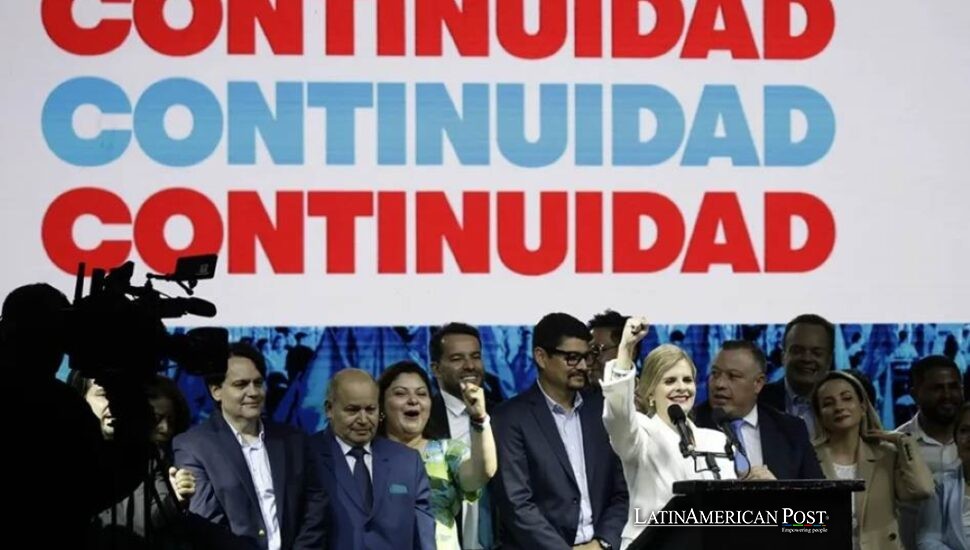
On Sunday night, Costa Rica handed power to Laura Fernández in a first-round win, extending Rodrigo Chaves’s confrontational era. Her mandate arrives with a new legislative majority, a hard-line security agenda, and a looming argument over rights, prisons, and social spending.
A Victory Speech With a Hard Edge
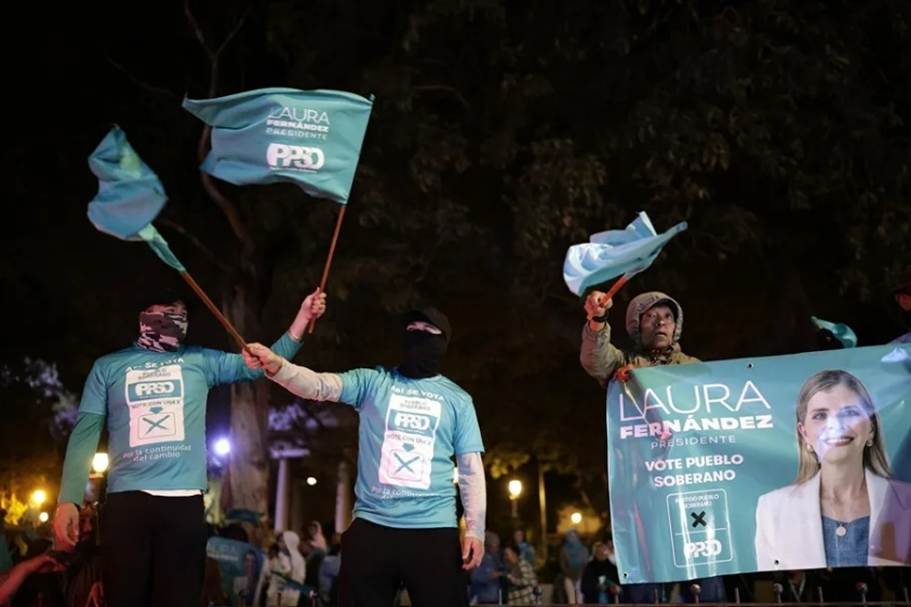
The room had the feel of election-night inevitability, the kind that settles in once the numbers stop wobbling. As results accumulated from the Supreme Elections Tribunal, Fernández’s margin became the headline and, quietly, the premise for everything that follows: more than forty-eight percent of the vote, no runoff, and a field of nineteen rivals left behind. Álvaro Ramos of the National Liberation Party trailed in second with thirty-two percent, with more than eighty-eight percent of polling stations counted, according to the tribunal.
Fernández’s party, Pueblo Soberano, also secured thirty of fifty-seven seats in the legislature. That detail matters as much as the presidential tally because it turns campaign promises into a near-term test of governance. The wager here is not just whether Costa Rica chose a new president. It is whether the country chooses a new tempo.
In her first speech after the victory Sunday night, Fernández promised to lead a government of dialogue and national concord, respectful and firm in the rule of law. Then, in the same breath, she branded part of the opposition as obstructionist and sabotaging, an unusually aggressive posture for a victory address in a country that often treats political civility as part of its national story.
It was a reminder of the shadow she is stepping into, and the shadow she is trying to manage. Fernández ran as the heir to outgoing President Rodrigo Chaves, a leader known for confrontation and direct criticism of the traditional political class. She thanked him repeatedly during the campaign and again in victory, and she framed her agenda around continuity rather than rupture. Continuity, in her telling, is not hesitation. Continuity is pressure.
Fernández, thirty-nine, is set to take office on May eight, becoming Costa Rica’s second woman president after Laura Chinchilla, who served from twenty ten to twenty fourteen. She arrives without prior electoral experience, but not without experience in the state. Trained in political science at the University of Costa Rica and specialized in public policies, she built a technical profile inside Chávez’s administration, serving as planning minister and later minister of the presidency before resigning to run.
Her relationship to Chávez is the hinge of this political moment. Ronald Alfaro-Redondo, a political scientist with a doctorate from the University of Pittsburgh, described the challenge of transferring a personalistic popularity to a successor with her own style. “Chaves maintains a direct and even confrontational tone that makes him look like a firm politician. Fernández’s style is different from the president’s, which implies a challenge for the candidate,” he told the BBC. He added that the president has tried to transfer his high popularity, rooted in his personal style.
The trouble is that popularity is not a policy, and continuity is not a plan. But in Costa Rica, continuity now has a name, and it will have to govern.
Security Promises Meet Constitutional Red Lines
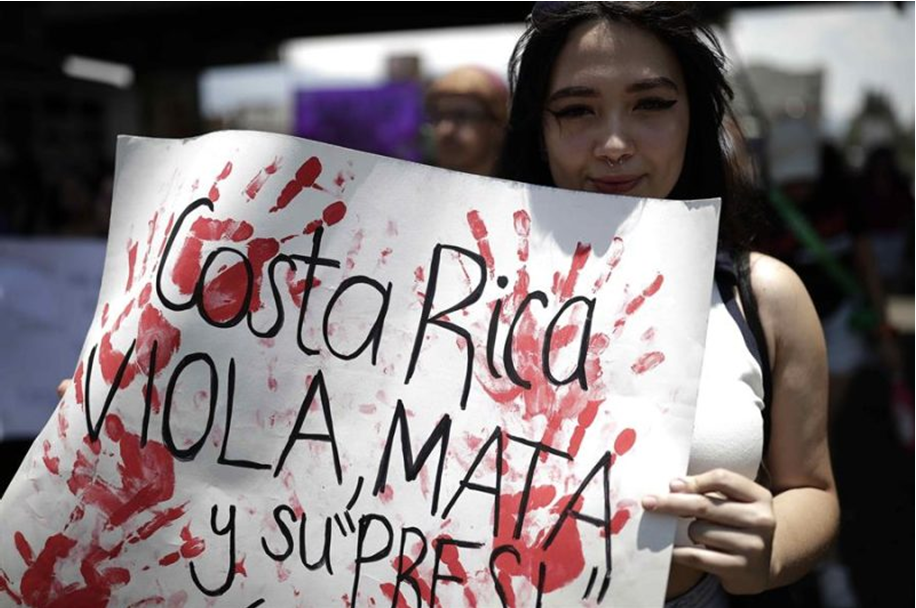
Fernández’s platform emphasizes security in a country grappling with a sharp rise in violence. In two thousand twenty-five, Costa Rica recorded the third-highest homicide rate in its history, sixteen point seven per one hundred thousand people, according to the country’s Judicial Investigation Organism. Nearly seventy percent of homicides were linked to drug trafficking.
Those are the numbers that sit behind the rhetoric and behind the proposals. During the campaign, Fernández argued that continuity means intensifying the fight against drug trafficking and organized crime with firmness and a tough hand, “with the firmness and the tough hand that only we have dared to exercise,” as she put it.
She also floated an extraordinary measure: the possibility of declaring a state of exception in conflict zones, and asking the legislature to lift or suspend individual constitutional guarantees in strictly necessary cases if Costa Rica saw an escalation in contract killings and related crimes. The proposal would allow, among other things, the detention of suspects without a judicial order. It has become one of the opposition’s central lines of attack.
In a presidential debate, leftist candidate Ariel Robles pressed the point directly, asking why her camp had promoted suspending individual guarantees rather than finding solutions to the security crisis. That question is likely to return, not as a debate prompt but as a governing dispute, because Fernández’s legislative ambitions are built into her security pitch. She said she needed a legislative supermajority of forty deputies to advance reforms, a threshold her party did not reach, even as it won the largest bloc.
The prison plan is the most concrete symbol of the continuity she promises. Two weeks before the election, Chávez hosted El Salvador’s President Nayib Bukele to announce the start of works on a high-containment center against organized crime, a mega-prison near the capital designed for five thousand detainees. Fernández’s government program says she will push forward with construction, calling it modern infrastructure conceived to isolate crime leaders.
Opponents argue it is the wrong answer and, more pointedly, not even a real start. Claudia Dobles, a centrist candidate running for president under the Citizen Agenda Coalition, said the government had announced the start of construction, but that the work had not yet begun. “They were not capable of laying the first stone in a media show,” she said, calling the promise ridiculous.
What this does is crystallize the dispute: whether Costa Rica’s insecurity is best met by building capacity to isolate, confine, and deter, or by strengthening institutions without stretching the constitution to its edge. Continuity, again, becomes the frame. Continuity, again, becomes the fight.
The Price of Continuity in Courts and Social Spending
Security is not the only arena where continuity collides with Costa Rica’s institutional self-image. Fernández has pledged to continue a judicial reform begun under Chávez, a move several analysts read as interference in the separation of powers and a threat to constitutional rules.
Alfaro-Redondo pointed to the principle of political non-belligerence and said Chávez has pushed the limits in his clashes with the justice system. Those clashes reached a formal institutional flashpoint in October, when the Supreme Elections Tribunal asked Congress to lift the president’s constitutional immunity so he could be prosecuted for alleged interference in the ongoing political campaign, a request rejected twice.
On the economic front, the Chávez administration has touted a near five percent growth rate, unemployment falling from thirteen percent to around seven percent, negative inflation, and poverty dropping to fifteen point five percent in two thousand twenty five, using official figures repeated by the governing candidacy. Supporters present that record as proof that a combative style can deliver.
Opponents say the stabilization came at the expense of social investment. Robles framed it in moral terms during the campaign, arguing that a primary surplus cannot be achieved at the cost of a child without a scholarship and falling behind in school, and promising that his government would not cut social programs to produce surpluses.
Fernández now faces the most delicate continuity question of all: how to govern in Chávez’s shadow, and whether that shadow will become a second center of power. She has said in media remarks that she would like Chaves to serve as minister of the presidency or of finance, a move described as unprecedented in Costa Rica. Alfaro-Redondo underlined the cultural rupture embedded in that idea, noting that former presidents typically leave the field clear when their term ends, and that it remains to be seen how she would manage it.
Costa Rica voted for continuity of change, Fernández declared in her victory speech. The country may soon learn what that phrase costs, and who pays it first.
Also Read: Colombian Petro Walks Away from Trump Meeting with a MAGA Hat