From Revolution to Aid Shipments and Oil, Mexico Keeps Cuba Close
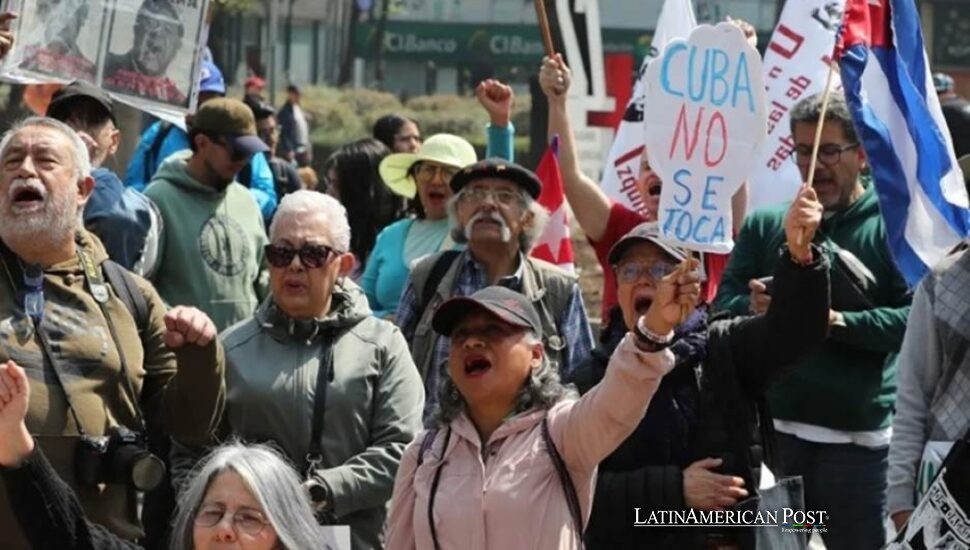
Washington’s tariff pressure on countries that send petroleum to Cuba has put Mexico back in the spotlight. But the question of fuel is only the latest chapter in a relationship described as “unique” since the Cuban Revolution. Now the test is whether that history can still function as policy.
A Pallet of Food, a Barrel of Fuel, and a Familiar Pattern
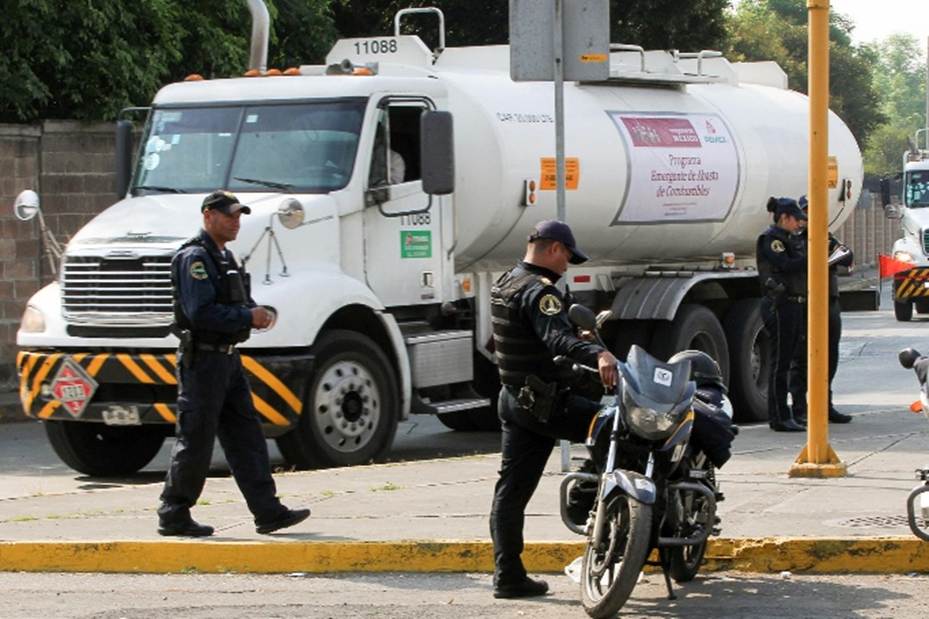
It is easy to talk about oil as if it were a technical issue, numbers moving through a pipeline of paperwork. Then you picture cargo. Weight. Boxes stacked, sealed, shipped, and counted. Mexico announced Sunday that it sent more than 814 tons of foodstuffs to Cuba as humanitarian aid, while evaluating how to supply crude without being sanctioned by Washington. In Latin America, logistics are never just logistics. A shipment is a signal you can measure.
The trouble is that Mexico’s support for Cuba is not a new improvisation triggered by today’s tariff pressure. It is a habit formed over time, reinforced by decisions taken when the hemisphere was colder, and the costs of disobedience were higher. What looks like an energy debate is also a debate about whether a long diplomatic posture can be adjusted without snapping.
Mexican academics told EFE that the bond with Cuba is among Mexico’s most important globally and its most symbolic, rooted in deep historical and cultural ties that inspire pride and a sense of shared identity among the audience.
History Before the Revolution, Then the Revolution as a Turning Point
One reason the relationship absorbs so much meaning is that it is not limited to the contemporary era. Jazmín Benítez, a researcher at the Autonomous University of the State of Quintana Roo, said its origin “goes far beyond the contemporary era,” she told EFE, tracing it to the colonial period, when both territories formed part of the Spanish Empire.
That framing matters because it pushes the story beyond a single ideological embrace. In this telling, there was already a shared geography and a shared historical circuitry. Later, after Cuba achieved independence in 1902, Mexico recognized it as an independent state. Benítez described a good relationship, shaped in part by the fact that both countries belong to a Caribbean regional sphere. In other words, familiarity preceded the revolution.
Then, 1959 arrives, and the relationship becomes something else.
Ricardo Domínguez, a researcher at the National Autonomous University of Mexico, said ties “grew stronger” after the overthrow of Fulgencio Batista and the arrival of Cuban revolutionaries in power. Mexico, he explained, was the first country to recognize the new government in Havana. And before the triumph, it had sheltered Cuban revolutionaries and allowed them to buy weapons to overthrow Batista’s regime.
The notes also place Fidel Castro and Che Guevara in Mexico, “preparing” the revolution. That detail is more than anecdote. It is the hinge. When the origins of a political rupture pass through your territory, neutrality becomes harder to sustain afterward. Domínguez suggested that this is why the relationship turned into an ideological question, not simply a diplomatic preference.
Diplomacy as Support, and Support as a Tradition
The ideological turn did not stay in memory. It became policy.
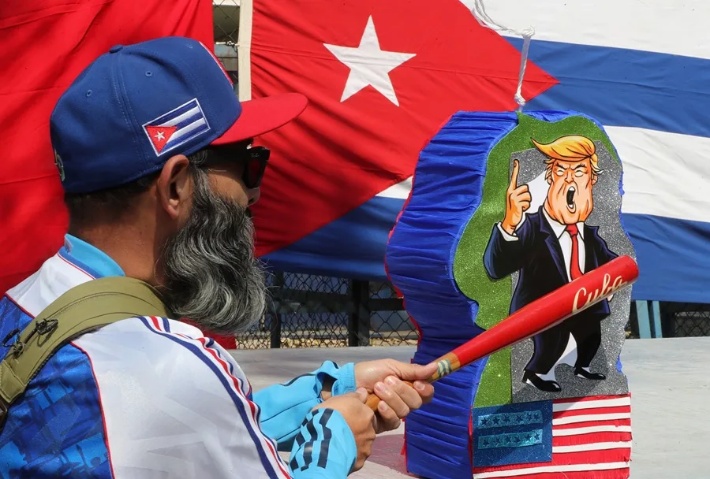
Mexico refused to break relations with Cuba in 1962, at a moment when most countries in the Organization of American States took the opposite path. It also refused to back the U.S. embargo against Cuba in the United Nations. “Mexico has maintained a consistent policy of solidarity and commitment to the Cuban people throughout recent history,” Domínguez told EFE.
Consistency can be a virtue, especially in a region where foreign policy often swings with each administration. But sanctions like the U.S. tariff pressure on petroleum exports to Cuba directly threaten Mexico’s ability to sustain support, raising questions about the practical limits of its diplomatic stance.
Both specialists in the notes also emphasize resilience. Despite “ups and downs,” they argue, the relationship has remained in force regardless of which party governs Mexico. Presidents with different “ideologies and sensitivities” treated it as strategic and very close, framed as serving national security and allowing Mexico to act as a bridge between Cuba and the United States.
This bridge idea is central because it presents support not as rupture but as mediation. The wager here is that staying connected to Havana can be justified as a stabilizing function, a way of keeping channels open between Cuba and Washington. Yet bridge-building is rarely appreciated by both sides at the same time. In practice, it can look like taking sides precisely because it refuses the demand to isolate.
Benítez tied this continuity to Mexico’s diplomatic tradition of cooperation and nonintervention, a moral stance that resonates with the audience’s appreciation for principled foreign policy rooted in sovereignty and respect.
But doctrines get tested in concrete ways. Sometimes they are challenged by crises, like recent U.S. sanctions and tariff pressures, which force Mexico to reconsider how to balance its support for Cuba with its own national interests and international obligations.
Oil Since 2012, Ideological Affinity Now, and a New Visibility
Energy is the newer, more visible layer of Mexico’s support. The notes state that oil has been sent to Cuba at very preferential rates since 2012. They also say that under the administrations of Andrés Manuel López Obrador from 2018 to 2024 and Claudia Sheinbaum today, there is greater “ideological affinity,” described as doing justice to the “historic relationship.”
Oil is different from rhetoric because it is measurable and immediately legible. It touches daily life in a way that speeches do not. That is part of why the current scrutiny concentrates on petroleum. Tariff pressure aimed at oil flows forces Mexico to ask whether a long-standing relationship can still be expressed in material support without triggering penalties.
This is where the aid shipment becomes more than a humanitarian note. Mexico’s announcement that it sent more than 814 tons of foodstuffs to Cuba sits alongside the oil question as proof that support takes multiple forms. It also reveals the government’s balancing act. Provide help. Sustain the relationship. Avoid sanctions.
Ideological affinity may explain warmth, but it does not dissolve risk. The relationship, as presented in the notes, rests on overlapping pillars: solidarity with the Cuban people, national security logic, a bridge role with the United States, and a doctrine of nonintervention. Under tariff pressure, those pillars can start to compete. The solidarity impulse pushes toward continued support. The bridge logic pushes toward careful calibration. The sanctions risk pushes toward restraint.
There is a sentence you write when history refuses to stay in the background: for Mexico and Cuba, support is not a moment, it is a pattern. From revolution to diplomatic choices to aid shipments and oil, the posture keeps returning, even as the pressures change. And now, with Washington watching petroleum flows, Mexico has to decide how to keep a historic bond intact while making sure the present does not punish it for the past.
Also Read: Costa Rica Chooses Continuity as Security Crisis Tests Rights and Power