Latin America Faces Trump’s Threats, Deals, And Contradictions
From Honduras to Venezuela, Donald Trump’s mix of military threats, election meddling, and anti-drug rhetoric is reshaping U.S. power in Latin America, alarming allies and exposing contradictions that even supporters struggle to explain or turn into a coherent strategy for anyone.
A Continent On The Receiving End Of U.S. Muscle
It has been a long time since a U.S. president treated the entire hemisphere with such open hostility. Over the past year, Latin America has watched Donald Trump revive gunboat diplomacy, deploy economic threats, and insert himself directly into domestic politics from Honduras to Argentina-shifts that mark a departure from the more cautious approaches of previous administrations. What had begun with clashes over trade and security with Canada rapidly widened southward, turning Latin America into the main stage for a new era of U.S. assertiveness.
Trump’s approach mixes old-fashioned power politics with social media theatrics. Military maneuvers off Venezuela’s coast are announced in the same breath as insults hurled at leaders like Colombia’s Gustavo Petro. Policies that once came wrapped in formal diplomatic language now arrive as blunt warnings: vote for the “right” candidate, stop sending migrants, stop sending drugs—or risk losing aid and access. For many in the region, the substance feels familiar, but the tone is unprecedented.
Behind the show lies a clear hierarchy. Right-wing governments willing to align with Washington’s agenda are rewarded with promises of money and protection. Left-wing or independent-minded leaders are cast as enemies, even when they share some security concerns. That divide risks regional stability, affecting everyone’s future security and prosperity.
Election Blackmail From Honduras To Argentina
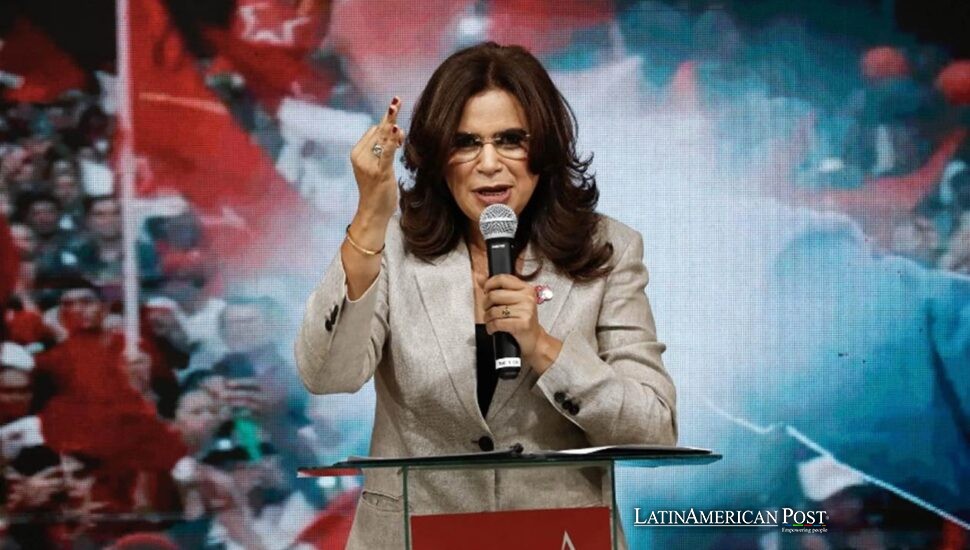
Honduras’ general elections on November 30 offered a sharp example of how far Trump is willing to go. In a country already scarred by violence, drug trafficking, and a fragile democracy, the U.S. president openly urged Hondurans to vote for a specific right-wing candidate. The message was backed with a threat: if that candidate lost, U.S. aid could dry up. For voters in one of the hemisphere’s poorest and most dangerous countries, the line between partnership and blackmail suddenly looked very thin.
Argentina saw a different version of the same play. During that country’s October elections, Trump announced a massive $20 billion assistance package, but only if candidates aligned with President Javier Milei prevailed. This conditional support may make the audience feel wary of U.S. interference in their sovereignty and democratic processes.
These interventions land in societies already deeply polarized. Supporters of conservative candidates may welcome the backing of a powerful ally; critics see it as foreign interference that undermines Latin American sovereignty and the legitimacy of future governments. Either way, Trump’s habit of tying U.S. money to his personal favorites breaks with decades of more cautious diplomacy. It encourages Latin American politicians to play to an audience in Washington as much as to their own people.
Gunboats, No-Fly Decrees, And Regime-Change Talk
The same pattern is visible on the security front, especially in Venezuela. On November 29, Trump unilaterally declared Venezuelan airspace “closed in its entirety,” effectively announcing a no-fly zone without international backing. The proclamation came alongside the largest deployment of U.S. naval forces in the Caribbean since the Cuban Missile Crisis of 1962. For many in the region, the symbolism was hard to miss: Washington was again prepared to brandish hard power close to home.
At sea, the U.S. military has launched repeated strikes on boats it claims are used by drug cartels and criminal gangs. The administration presents these attacks as a necessary escalation in the fight against traffickers, now labeled a primary security threat. But officials have offered little public evidence to back up specific targets. Reports of more than 80 people killed in a few months of operations have sparked growing unease, not only among human rights groups but also inside the U.S. Congress, including some Republicans. Lawmakers and legal experts warn that the attacks look dangerously like extrajudicial killings in international waters.
Trump has made no secret of his broader goal: removing Nicolás Maduro from power. Venezuela’s president, who presided over a catastrophic economic collapse and clung to office after an election widely seen as fraudulent in 2024, is an easy villain in Washington. Yet the question is not whether Maduro should go, but how. Even if U.S. pressure succeeds in forcing him out, reckless brinkmanship could deepen Venezuela’s humanitarian crisis, trigger increased migration flows, and destabilize neighboring countries already straining under the weight of millions of migrants.
The Drug War Logic That Undercuts Itself
Nowhere are the contradictions of this agenda more glaring than in Trump’s approach to drug trafficking and organized crime. On the one hand, his administration has elevated the fight against cartels to justify lethal force at sea and a sweeping militarization of the Caribbean. On the other hand, he has pledged a “full and absolute” pardon to Juan Orlando Hernández, the former right-wing president of Honduras, who was sentenced in 2024 to 45 years in a U.S. prison for helping traffickers move vast quantities of cocaine into the United States.
It is hard to reconcile those positions. If drug trafficking is truly the overriding threat, why offer clemency to a man a U.S. court found guilty of enabling it at the highest levels of government? For many observers, the answer lies less in principle than in politics. Hernández belongs to the same conservative camp Trump is courting in Honduras; his release would be a gift to allies there and a slap at the current left-leaning leadership. The message to the region is clear: the label “narco” is flexible, and punishment or mercy depends heavily on whose side you are on.
The pattern extends beyond Latin America. Trump has championed cryptocurrencies, benefiting businesses linked to his own family, even as security agencies warn that these assets are a key financial channel for organized crime and sanctions evasion. This inconsistency may prompt the audience to question the U.S.’s sincerity and motives.
For Latin America, these contradictions are not an abstract problem. They shape how governments calculate risk, how opposition movements seek support, and how ordinary citizens judge the credibility of U.S. commitments. When Washington denounces corruption in one capital while embracing convicted traffickers in another, its moral authority erodes. When it demands cooperation on migration and security while threatening to cut off aid for electoral reasons, its reliability as a long-term partner comes into question.
Trump has exported the same scorched-earth style he uses in domestic politics to an entire continent, with military deployments, financial carrots and sticks, and dramatic announcements designed to dominate headlines. The result is a hemispheric policy that feels improvisational and highly personal, driven less by a clear strategy than by immediate political advantage. For Latin America, living next door to such volatility means navigating an increasingly narrow path between resisting pressure and avoiding punishment—while trying not to be crushed by the contradictions in the process.
Also Read: Honduras Pardon Gamble Exposes Trump’s Drug War Double Standard Abroad