Latin America Votes While Trump Looms Over Every Fragile Ballot
From Peru to Brazil, Latin America’s election season is unfolding under pressure from Washington, rising crime, and exhausted voters, turning each presidential contest into a test not only of ideology but of sovereignty, fear, and democratic stamina across the region.
Trump Moves and the Region Recalculates
Nearly half of Latin America’s population will cast ballots in a presidential election this year, and, as CNN reports, the ballots are arriving in a climate already thick with insecurity, volatility, and the louder return of U.S. power. Voting has started in Costa Rica and continues in Peru, but the broader regional mood extends beyond any one country. It feels worn down. Campaigns are no longer only about jobs, ideology, or public works. They are increasingly about whether a candidate can manage violence at home while also avoiding a collision with Donald Trump abroad.
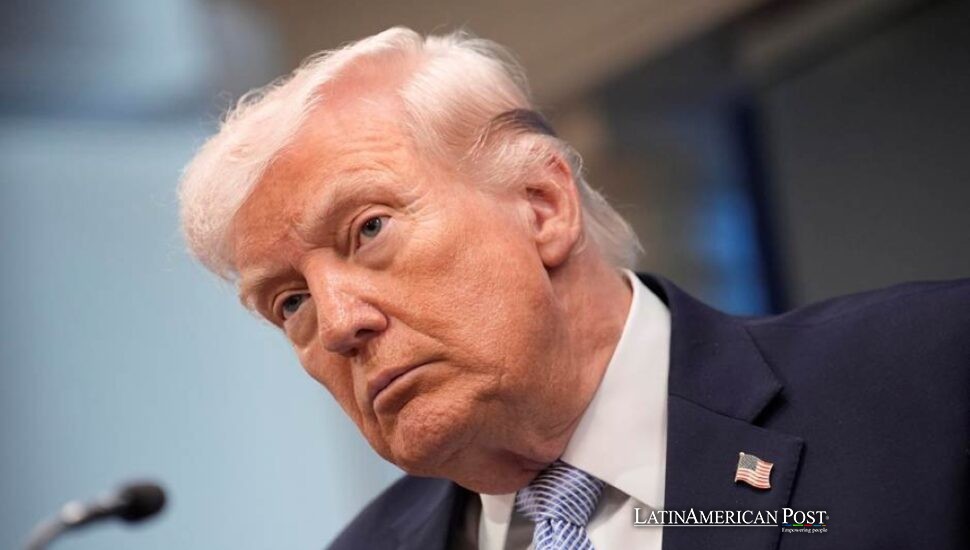
That outside pressure is no longer subtle. In his second term, Trump has renewed the White House’s attention to Latin America with a style that is less a diplomatic courtship than an open test of the region’s political nerve. CNN reports that he has pushed some Central American countries to receive deported migrants from other nations, deposed Venezuelan President Nicolás Maduro, sought the demise of the Cuban regime partly through an oil blockade, and threatened countries that do not elect his preferred candidate. That changes the atmosphere of every campaign. A presidential race starts to look less like a national argument and more like a negotiation with an external referee who is not pretending to be neutral.
Abelardo Rodríguez Sumano, an international relations expert at the Ibero-American University in Mexico, told CNN that Trump is focused on positioning himself as the leader of the entire Western Hemisphere and is seeking alignment, even total subordination. The White House, unsurprisingly, describes the project in more positive terms. Deputy press secretary Anna Kelly told CNN that Trump established the “Donroe Doctrine” to restore American preeminence in the hemisphere, pointing to border policy, anti-cartel cooperation, and what she called historic economic cooperation with Venezuela. Between those two versions lies the political reality Latin America now faces. The region is being asked to read American pressure either as an order or as domination, and to vote under that shadow.
The evidence that this pressure is not abstract is already visible. In Honduras late last year, Trump warned that if Nasry Asfura did not win the presidential race, he would not work with the country’s new leader. In Argentina’s legislative elections, CNN reports, he conditioned Washington’s economic assistance on a victory for President Javier Milei’s party. In both cases, his preferred outcome prevailed. Rodríguez told CNN that governments that confront Trump quickly become enemies, drawing investigations, threats, or visa cancellations. Farid Kahhat, a professor at the Catholic University of Peru, put it even more starkly. “Trump is basically extorting voters,” he told CNN. In Honduras, Kahhat said, the pressure was blatant because of what stricter U.S. immigration policies and the threat of aid suspension could mean for remittances. That is the brutal arithmetic now entering the Latin American ballot box. Voters are not only weighing candidates. They are also weighing possible punishment.
Security Sells When Institutions Feel Thin
Trump’s influence lands so hard because it falls on a region already politically fatigued. Latin America has spent years moving between left and right, punishing incumbents, hoping the next government might steady the floor. Kahhat told CNN that the most common pattern is not a broad regional shift to the left or the right, but the fact that the ruling party rarely gets reelected, excluding Venezuela, Nicaragua, and El Salvador from that reading because he does not consider them democracies. He points to the pandemic, recession, inflation, and homicide rates as drivers of that pattern. The message is simple enough. Where life feels more expensive, more dangerous, and less governable, incumbency becomes a liability.
That is why security has become the master language of the campaign season. Organized crime has pushed candidates toward harder rhetoric across the region, and the Bukele model in El Salvador has become the benchmark for those promising tighter territorial control and harsher prison conditions. Even in Chile and Costa Rica, long treated as more orderly than many of their neighbors, crime has become a central campaign concern. Kahhat told CNN that the hard-line approach generally benefits the right. He added that harsher penalties do not solve the problem of crime, at least not on their own, but they do help win support. That may be one of the most revealing facts in the whole regional picture. Fear is no longer just a social condition. It is a campaign technology.
Sandra Borda, an associate professor at the University of the Andes in Bogotá, told CNN that it is difficult to know whether voters are currently more moved by economic concerns or by fear. But perhaps that distinction is becoming less useful than it once was. In much of Latin America, insecurity now behaves like an economic fact. It changes mobility, spending, hiring, trust, and everyday routine. It shrinks the citizen’s horizon. Borda also observed that the left’s discourse on insecurity is less forceful than the right’s. That matters because politics often rewards not the deepest diagnosis, but the loudest promise of control.
Rodríguez told CNN that no matter how many policies governments implement to redistribute wealth, if that wealth is not reflected in people’s pockets, the rise of crime, including transnational organized crime, will have consequences. In that context, he said, strong leaders emerge, including those willing to oppose respect for human rights. That line should unsettle anyone watching this election cycle. It suggests that institutional weakness, economic frustration, and criminal violence are now combining into a culture of permission for harsher rule. The region is not simply leaning right or left. It is becoming more available to the politics of force.
A Region of Outsiders and Nervous Adaptation
That availability is most evident where party systems have thinned out. In Peru and Colombia, CNN reports, growing rejection of traditional elites has fragmented the political field. Borda noted that at one point, eighty citizens expressed interest in running for president in Colombia to succeed Gustavo Petro. Outsiders and anti-establishment candidates, she said, will keep appearing as long as the political class continues to lose credibility. In Colombia, Kahhat told CNN, ruling party candidate Iván Cepeda still has high support, so fragmentation appears sharper between the center and the right. The conservative field, once seemingly consolidating around Abelardo de la Espriella, is now showing a close race with Paloma Valencia.
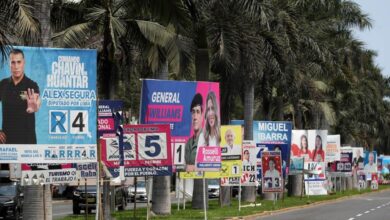
In Peru, the scene is even more fractured. Among the record thirty-five candidates competing in the first round, none had reached twenty percent in the latest polls, meaning a candidate with barely eight percent still had a strong chance of reaching the second round. That is more than fragmentation. It is a political system running on splinters, where weak mandates are almost built into the structure of competition. Under those conditions, Trump’s pressure, organized crime, and anti-elite anger do not arrive as separate forces. They stack on top of each other.
Brazil may be the major exception in terms of sheer capacity. Rodríguez told CNN that Brazil, as the largest economy in Latin America and a key player in BRICS, has greater room to confront pressure from Washington than most of its neighbors. Still, he said Trump has openly supported Jair Bolsonaro and will back the candidacy that seeks to unseat the Workers’ Party of Luiz Inácio Lula da Silva. Colombia presents a different strategic problem. Kahhat believes Trump’s confrontational style could backfire there, and Borda told CNN that he appears to be discovering that too much intervention can push the electorate the other way. That is why the coming elections in Colombia and Brazil matter so much. They will help define not only domestic power, but also the balance of the region’s relationship with the United States.
So far, no candidate endorsed by Trump has lost in Latin America. CNN notes that it is still unclear how far he would go if his preferences were rejected. Rodríguez believes he has many options: diplomatic, economic, tariffs, military intervention, and intelligence operations. It is a chilling range. And yet, the last point in CNN’s reporting may be the most honest. Rodríguez says there is a process in which everything happens at once. The United States has defined the continent as its sphere of influence, and Latin American governments are adapting to it. That is what this election year really looks like from the ground. Not a clean ideological contest, but a region trying to vote while recalculating how much sovereignty it can still afford, how much fear it can politically absorb, and how many more swings the pendulum can survive before it stops being a pendulum at all.
Also Read: Peru Votes Again as Fear and Fragmentation Rewrite the Campaign