Mexico Debates Dignity as Samara Martínez Brings Death into Public Discourse
In Mexico, Samara Martínez’s campaign to decriminalize euthanasia has transcended a private illness narrative. It has evolved into a regional examination of dignity, religion, medicine, and state authority, challenging Latin America to determine who defines mercy at the end of life.
When Illness Becomes a Public Argument
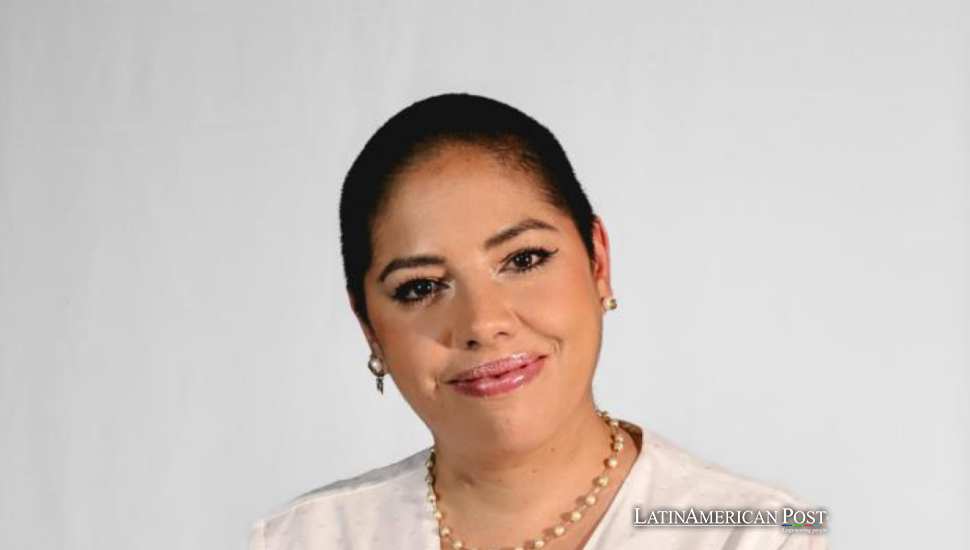
Political debates often originate in congresses, party caucuses, or courtrooms. This debate, however, began within a body that has already endured significant hardship. Samara Martínez, a Mexican activist from Chihuahua, has spent years addressing the illness that has debilitated her since adolescence. In one letter, she described the illness as cursed, expressing both hatred for its toll and appreciation for its lessons. This tension underpins the debate’s intensity. Martínez’s argument is grounded not in abstraction but in lived experience involving chemotherapy, transplants, dialysis, hospitalizations, debt, and the gradual reorganization of life around survival.
The Associated Press provided the original report and quotations framing this story. Their coverage captures more than the biography of a determined individual; it marks the moment when one person’s ordeal begins to reshape a national conversation. At thirty-one, Martínez has emerged as one of the most prominent advocates for decriminalizing euthanasia in Mexico. Her proposal, the Transcendence Law, introduced by lawmakers from multiple political parties, including Morena, seeks to remove the explicit ban, redefine euthanasia as a legal and voluntary medical procedure, and establish it as a right based on dignity and autonomy rather than an obligation to prolong suffering.
This language holds significant weight in Mexico and, by extension, Latin America. The region has long adhered to a moral framework that regards endurance as virtue, pain as a trial, and the defense of life as nearly absolute—even when medicine can no longer heal but only prolong life. Martínez challenges this framework from within. She does not portray herself as nihilistic or defeated. According to the AP report, she explicitly states that she does not intend to surrender. However, she also asserts that when her body fails, she desires the right to say farewell by the sea, away from a hospital bed, surrounded by family and friends.
This reality renders her politically difficult to dismiss. Mexico is not being asked to consider euthanasia through abstract philosophical debate but by a woman who continues to work, engages with politicians, hosts conferences, addresses a large social media audience, and maintains that resilience and the right to choose can coexist. She does not argue against life but opposes the notion that life must be prolonged beyond dignity solely because the law lacks alternative solutions.
This issue is significant for Latin America as the region engages in a deeper debate over autonomy. Reproductive rights, gender identity, end-of-life care, and freedom of conscience are increasingly interconnected, converging into a broader conflict: whether the state’s role is to impose a singular moral doctrine or to accommodate diverse ways of living and dying.

The Law Is Adapting to a Complex Reality
Mexico’s legal framework continues to treat euthanasia severely. The General Health Law defines it as mercy killing and prohibits it alongside assisted suicide. Federal law penalizes assisting or inducing suicide with imprisonment, imposing harsher sentences if death is directly caused. However, the regional context is evolving: Colombia has fully legalized and regulated euthanasia; Ecuador has decriminalized it; and Uruguay has approved legislation pending implementation. Consequently, Mexico is not confronting an unprecedented issue but is entering a debate already active in Latin America.
This delay is revealing. Mexico exemplifies a context where medical modernity and moral conservatism coexist, each constraining the other. The country possesses considerable legal sophistication and vigorous civic debate, yet it also experiences profound religious influence and strong opposition from conservative groups. Martínez’s campaign highlights this contradiction: a nation capable of public dignity debates remains legally bound to criminalizing assistance at the end of life.
The AP report demonstrates that this issue depends not only on legal language but also on moral narratives. Patricia Mercado, a lawmaker supporting Martínez, asserts that Martínez’s struggle and authenticity advance the possibility of legislation, emphasizing that testimony resonates more than extensive data. This observation is accurate. Despite institutional and ideological divisions, Latin American politics remains strongly influenced by personal testimony. While statistics establish scope, testimony often confers legitimacy.
Martínez’s personal history holds significant political relevance. Initially, she believed living connected to a machine was impossible. Currently, she undergoes peritoneal dialysis nightly, remaining tethered for hours to portable equipment. She has experienced the loss of a marriage, a desired career, financial stability, and long-term friendships. Her parents incurred debt to support her. Steroid treatments altered her body, and vomiting and hospitalization became routine. Despite this accumulation of suffering, she does not express defeat but has instead discovered a resolute sense of purpose.
This is precisely why the debate unsettles Mexico’s traditional moral gatekeepers. Opposition remains strong among conservative and religious groups. The Catholic Church echoed Pope Leo’s call to uphold the sanctity of life. Rodrigo Iván Cortés, president of a conservative advocacy group, says life must be protected at every stage. That position will resonate with many across Latin America, where religion remains one of the strongest public languages through which suffering is interpreted.
However, a singular religious response no longer exists. The AP notes that Héctor Reyes, a religious leader affiliated with the organization For the Right to Die with Dignity, supports Martínez’s cause. He contends that transcendence aligns with his conception of God and rejects the notion of a punishing deity. This division holds political significance, indicating that the region’s traditional moral monopolies are weakening. Faith is no longer assuredly aligned solely with prohibition.

Implications of Mexico’s Debate for Latin America
This struggle extends beyond Mexico because it intersects multiple Latin American realities simultaneously. First, institutional: as healthcare systems across the region advance technologically, they can prolong life more than before; however, legal and ethical frameworks have not consistently adapted to patients’ experiences of such prolongation. Second, cultural: Latin America remains profoundly influenced by family obligations and religious beliefs, rendering death rarely a purely private decision. Third, political: regional conflicts over bodily autonomy increasingly serve as indicators of democratic maturity.
Martínez’s case integrates these three dimensions. Her proposed legislation permits conscientious objection for healthcare workers while mandating that public institutions provide willing personnel. This approach is significant, as it acknowledges diverse convictions without allowing personal beliefs to obstruct access entirely. In effect, it offers Mexico a model of coexistence rather than a winner-take-all moral resolution. This may explain its regional importance. Latin America frequently experiences debates over rights that stagnate when one side demands absolute recognition and the other absolute prohibition. This proposal suggests a more challenging yet sustainable alternative.
Martínez’s refusal to allow suffering to become spectacle reflects a distinctly Latin American perspective. She firmly rejects pity, stating that she does not wish merely to exist but desires a proper farewell—a time to laugh, cry, and depart in peace. This aspiration holds political significance because it reclaims agency from institutions that frequently speak on behalf of the dying individual, including hospitals, churches, political parties, and courts.
Mexico must now determine how to address this claim, with Latin America observing closely, as the outcome will extend beyond Mexican borders. Should the Transcendence Law progress, it will reinforce the regional trend toward recognizing end-of-life autonomy as an element of democratic citizenship. Conversely, if it falters, it will underscore the persistent challenges Latin American states face in entrusting individuals with final decisions regarding their own bodies.
Regardless of the outcome, Martínez has already transformed the discourse. She stated to the AP that if she did not advocate for this cause, no one else would. This statement may be the most politically significant in the entire narrative, encapsulating a longstanding regional truth: reform often emerges not from institutional generosity but when an individual, with no reason to delay, compels private suffering to become publicly undeniable.
Also Read: Ecuador Promotes a Narco War Narrative While Jeopardizing the Truth