Noise Without Collapse: Colombia–U.S. Relations After Twelve Months of Tension
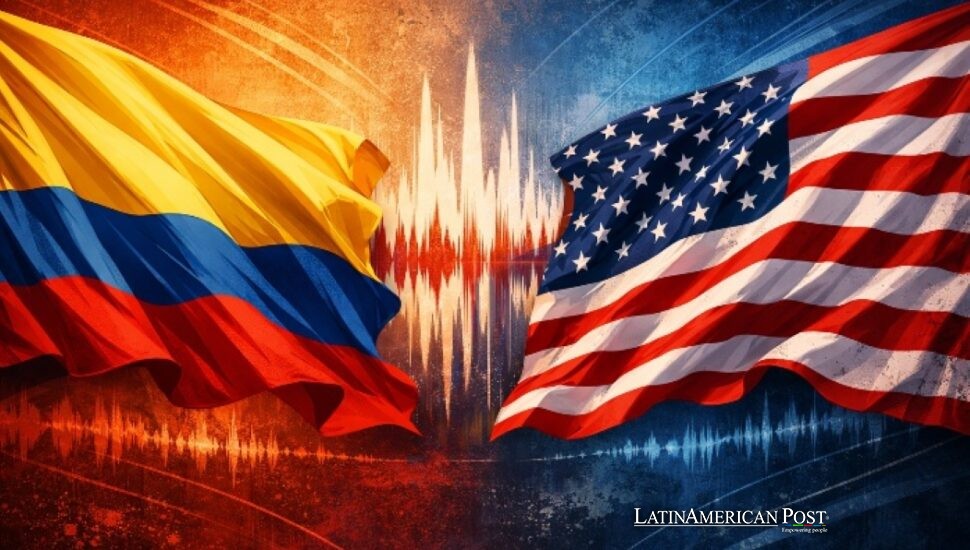
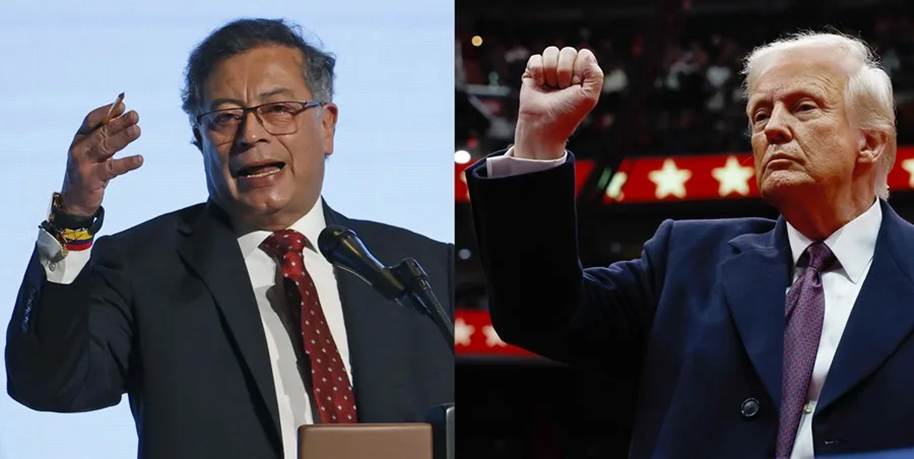
A year after a deportation standoff jolted the Colombia-U.S. alliance, Presidents Gustavo Petro and Donald Trump are set to meet on February 3 at the White House. The wager is simple: cool the politics before it scorches commerce and security.
Six Days In, the Tarmac Became a Test
In the first week of Trump’s second term, the relationship did not drift into trouble. It hit it head-on.
On January 26, 2025, two planes carrying deportees from the United States were bound for Colombia, and Colombia refused to let them enter. Petro argued that the deportees, arriving in handcuffs, were not being treated with dignity. It is the kind of dispute that starts as an image and turns into policy. Metal cuffs. A locked cabin door. A decision that has to be made fast, under bright airport lights that never flatter anyone. The everyday observation is almost banal: the whole machinery of a bilateral relationship can suddenly hinge on what happens to people at the edge of a runway.
Trump threatened tariffs. Colombia faced the prospect of its first tariff war with the United States. And then, the same day, the immediate crisis was resolved. What remained was the bruise. The trouble is that bruises in diplomacy do not stay the size they start.
“The 2025 left a clear conclusion: the Colombia-United States relationship is strategic and resilient; tensions make noise, but they did not break the foundations,” María Claudia Lacouture, president of the Colombian American Chamber of Commerce, told EFE. “The episode of January 26 confirmed precisely that: when there is friction, what is decisive is that there are formal channels, dialogue, and the ability to de-escalate so that politics does not end up affecting the economy.”
Her point sounds procedural, almost technocratic, until you sit with what it implies. A strategic relationship is not a romantic one. It is maintained, repaired, and sometimes dragged back from the ledge by people whose job is to keep talking when presidents are busy performing.
Colombia has reasons to treat the bond as more than symbolism. The United States is described in the notes as Colombia’s principal ally in security and defense, as well as its biggest trade partner. Since May 2012, they have been tied by a Free Trade Agreement. A year of crisis, therefore, does not float above the real economy. It leans on it.
In 2024, the exchange of goods and services reached 53.300 billion dollars, according to data from the Office of the United States Trade Representative. That total came from U.S. exports of 28.300 billion dollars and imports from Colombia of 25.000 billion dollars, leaving a 3.300 billion dollar surplus for the United States. These figures are not just accounting lines. They are an argument, made in numbers, for why neither government can afford a theatrical collapse.
“Between January and November 2025, the United States remained the main trade partner, with Colombian exports of 13.498,8 million dollars (thirty percent of the total), and it remained the main historical investor, with 3.375,4 million of investment through the third quarter (thirty-seven percent of the total received in the period),” Lacouture told EFE.
The repetition here matters. Main partner. Main investor. Those are not romantic labels either. They are reminders.
A Relationship That Took on Water, Then Sanctions
After January 26, the relationship did not settle. It shook again and again, driven by Petro’s criticism of Trump across multiple fronts.
The notes describe disputes over the U.S. military campaign against drug trafficking in the Caribbean Sea and the eastern Pacific, over the overthrow and capture of Nicolás Maduro, and over the war in Gaza and the Palestinian question. Each disagreement is its own fight, but together they create the steady churn of a relationship that is constantly reacting, never resting. What this does is make every issue feel like it belongs to the same argument, even when it does not.
By mid-September, Washington removed Colombia from the list of countries deemed to be meeting obligations in the fight against narcotics, commonly known as “certification,” because of differences over the results of the drug war. Days later, Petro lost his visa.
The stated reason, according to the notes, was a pro-Palestinian demonstration in New York where, the Department of State said, Petro “addressed U.S. soldiers” urging them to disobey orders and incite violence. It is hard to miss the escalation. This is not a quiet bureaucratic scolding. This is a formal rupture in the language of legitimacy.
Then came October 24, when the U.S. Department of the Treasury included Petro, along with his wife, Verónica Alcocer, his eldest son, Nicolás Petro Burgos, and Colombia’s interior minister, Armando Benedetti, on the Office of Foreign Assets Control list known as the “Clinton List.” The notes say Trump called Petro a “leader of drug trafficking.” In Colombia, the practical meaning of a sanctions list is often discussed in the tone used for storms. You do not need to admire the storm to understand that it can close ports, freeze plans, and warp daily life in a thousand quiet ways.
This is the point in the story where a human reporter starts to notice the emotional arithmetic underneath the policy. A relationship can survive noise, as Lacouture argues, but sanctions are not just noise. They are structured. They rearrange the room.
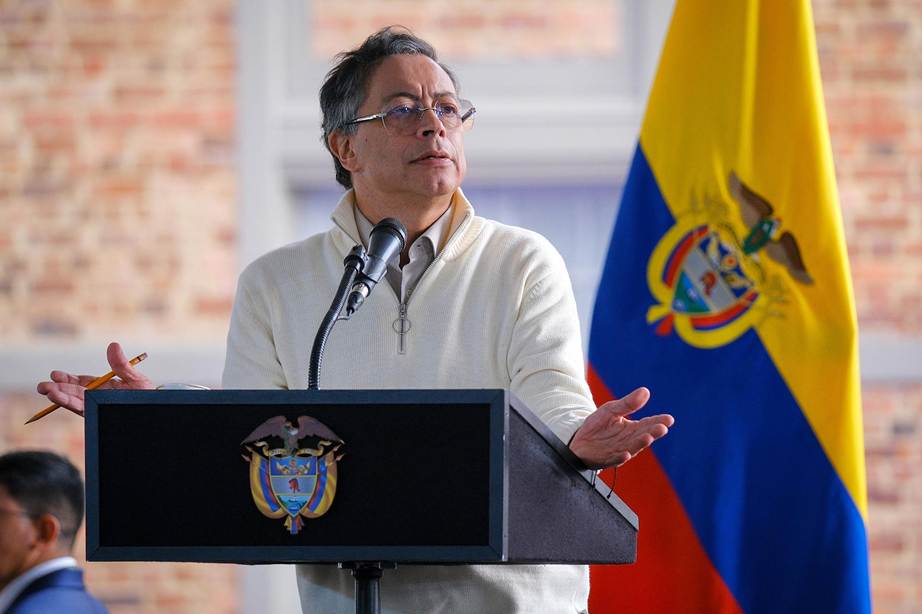
February 3 in Washington, and the Thin Hope of Normal
The notes describe a rise in tension after Maduro’s capture. Then, on January 7, Trump accepted a phone call from Petro. The temperature dropped. They agreed to meet on February 3 at the White House, their first meeting.
“We have a lot of hope that this February 3 meeting goes well for the benefit of Colombia and the United States and that we normalize our diplomatic, political, and commercial relationship, and that we can contribute to solving problems and fighting the common enemy, which is drug trafficking,” Javier Díaz Molina, president of the National Association of Foreign Trade, told EFE.
Hope is not policy, but it is sometimes the only available bridge.
In Colombia, expectations are not vague. The notes say the press and public are asking what Trump might raise with Petro on drug trafficking, democratic guarantees, and support for his campaign in Venezuela, and what Petro will ask for, above all, to get out from under the sanctions hanging over him.
Preparation is already underway. Colombia’s foreign minister, Rosa Villavicencio, spoke Friday with U.S. Secretary of State Marco Rubio to prepare the presidents’ meeting, “valuing the long and historic trajectory of cooperation and joint work between Colombia and the United States,” according to the notes.
Still, the wager here is that talking can separate the political from the economic, even when politics has already reached into visas, certification, and sanctions. Lacouture offers the most grounded version of that wager, insisting the relationship requires permanent management across multiple actors, including the private sector, Congress, technical agencies, and think tanks, to keep channels open and protect trust.
“The relationship goes beyond governments: it requires permanent management with multiple actors, to keep channels open, protect confidence, and separate the political from the economic,” Lacouture told EFE.
That line has the feel of both a conclusion and a warning. February 3 might produce a thaw, or it might make a photo and a new round of arguments. But after a year of crisis and startle, Colombia is walking into Washington with a simple need: to keep the foundations standing, even if the roof keeps shaking.
Also Read: Colombia’s Ongoing Struggle: The Enduring Legacy of Camilo Torres After Sixty Years