Panama Papers Still Haunt Latin America’s Unequal Promise Ten Years On
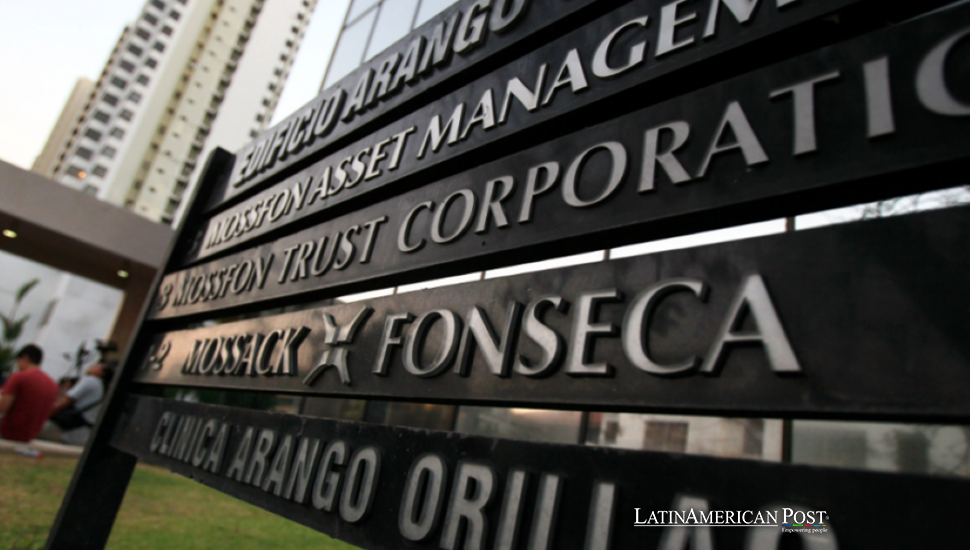
Ten years after the Panama Papers exploded into public view, Panama still stands at the center of a global scandal that exposed hidden wealth, elite secrecy, and the stubborn architecture of inequality that continues to shape Latin America’s political and economic life.
A Leak That Made Secrecy Feel Ordinary
When the Panama Papers surfaced, what shocked the world was not only the scale, though the scale was staggering. More than 11.5 million confidential documents from the Panama-based law firm Mossack Fonseca opened a window into offshore financial networks tied to the global elite. The release, published by the International Consortium of Investigative Journalists and the German newspaper Süddeutsche Zeitung, involved more than 350 journalists in over 80 countries who spent more than a year examining 2.6 terabytes of leaked data. As Al Jazeera reported, the work was grueling, hidden, and patient. One participating editor described it as “looking for a needle in a haystack.” Another recalled that his team spent months simply reading data in a sealed-off cubicle, cut off from the rest of the office, working day and night.
But in Latin America, the real power of the leak lay not just in its size. It was the way it confirmed an old suspicion with documentary precision. Wealth in this region has often moved through shadows while ordinary people live under the full glare of taxation, austerity, inflation, and precarious institutions. The Panama Papers did not invent that feeling. They gave it names, files, contracts, emails, and banking records.
The documents revealed a vast network of offshore shell companies linked to politicians, business leaders, and public figures from more than 200 countries and territories. About two hundred fourteen thousand entities appeared in the material. These structures stretched across tax havens such as the British Virgin Islands, the Bahamas, and Panama, allowing wealth to be moved and stored beyond the easy reach of tax authorities. Among those named were current and former government leaders, including Argentina’s Mauricio Macri. That mattered in Latin America because the region is already marked by deep mistrust toward the relationship between power and money. The leak did not just reveal offshore finance. It revealed how normal elite escape routes had become.
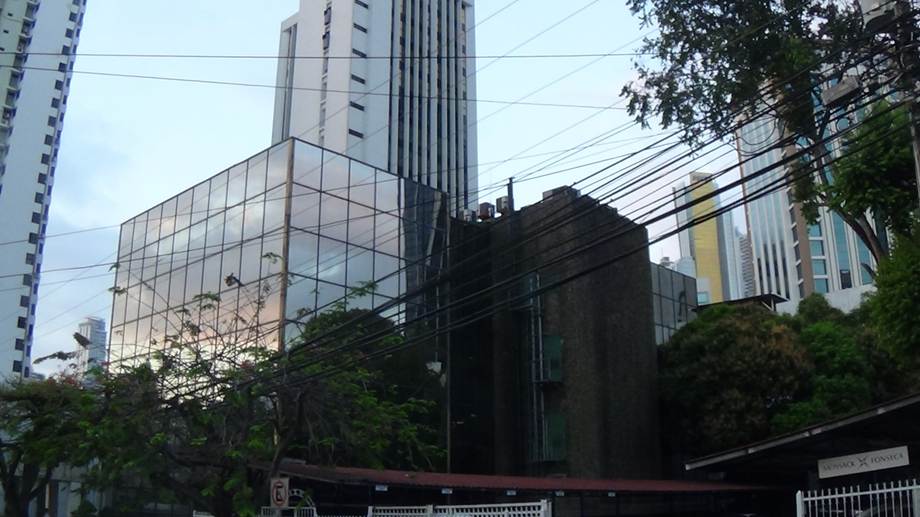
Panama’s role in that story has always been especially painful. The country gave the scandal its name, even though the system it exposed was global, not uniquely Panamanian. That distinction matters. Panama became the symbol, but the architecture was international. The law firm was based there, yes, but the clients, beneficiaries, and financial logic extended across continents. In that sense, Panama became the visible doorway to a much larger house.

The Thin Line Between Legal and Illegitimate
That house was built on ambiguity. As Al Jazeera reported through legal expert Kehinde Olaoye, offshore shell companies are not automatically illegal. Offshore companies are legal entities incorporated outside the owner’s country of residence. Shell companies are entities with “no real substantial business or operations in their place of incorporation or registered office.” They can be used for trusts, estate planning, and lawful asset protection. But, as Olaoye told Al Jazeera, “there is always a thin line between legitimate and illegitimate purposes.” That line may be legal on paper, but socially, it feels much darker.
In Latin America, that thin line is where so much public anger lives. Because even when offshore structures fall within legal boundaries, they often serve a deeper political reality. They help the wealthy behave as if they are only partially governed by the nations that made their fortunes possible. They can draw profit from a country’s workers, markets, land, and public infrastructure, then place part of that wealth into distant legal compartments built for discretion. The result is not just tax avoidance. It is a democratic erosion. Citizens are asked to trust systems that look increasingly designed for selective escape.
That is why the Panama Papers still sting ten years later. They were not merely a corruption scandal. They were a portrait of asymmetry. One world fills out forms, pays consumption taxes, and endures shortages in public services. Another world hires advisers to “structure” money across borders and treaties in search of favorable terms. Al Jazeera’s reporting captured this clearly in the language of legal engineering, financial advice, and treaty shopping. The challenge, Olaoye said, is that there is no single multilateral tax convention, leaving overlapping rules that reward whoever has the sharpest advisers. That is not just a technical gap. In practice, it is a map of unequal power.
The consequences were real, though uneven. Iceland’s prime minister resigned after protests. Pakistan’s prime minister was disqualified and later banned from politics for life. Mossack Fonseca itself reduced staff and shut down in 2018. Yet the aftermath also showed the limits of exposure. The firm’s co-founders and others accused of scandals tied to Brazil and Germany were acquitted by a Panamanian court. The spectacle of revelation did not always become the certainty of punishment.
What Panama Still Means for Latin America
A decade on, the numbers tell a story of partial reckoning. Governments worldwide recovered around two billion dollars in taxes, penalties, and levies between two thousand sixteen and two thousand twenty-six, according to the ICIJ. Some countries recovered hundreds of millions. Others recovered much less. Panama recovered about 14.1 million dollars. Yet Al Jazeera noted that the amount still unaccounted for is significantly higher. In other words, the state recovered money, but not in proportion to the scale of the hidden system itself.
That imbalance matters for Latin America because the region feels the consequences of every missing public dollar. Tax revenue is not abstract here. It is tied to schools that do not expand, clinics that do not stock medicine, transport that does not improve, and institutions that cannot convince citizens they serve the common good. Offshore finance may look like a matter for lawyers and accountants, but in Latin America, its afterlife is social. It settles into everyday life as an absence.
There have been legal reforms. Al Jazeera reported that governments introduced measures such as beneficial ownership disclosure and improved information sharing between tax authorities. The United Nations is considering draft proposals for a Convention on Taxation, and countries have signed treaties meant to reduce tax avoidance. But the same report makes plain that the underlying gaps remain. The system is still fragmented. The incentives for secrecy remain. The shrewdest players still have room to shop for the best arrangement.
That is the real legacy of the Panama Papers for Latin America. Not simply the exposure of offshore shell companies, and not even only the embarrassment of elites caught near them, but the confirmation that inequality in the region is often administered through paperwork as much as through force. Panama became the name attached to the scandal, but what the leak revealed was a continental truth. The richest people in the world do not always hide wealth by disappearing into caves or suitcases. Sometimes they hide it in plain sight, inside the law’s most polished rooms.
And so ten years later, Panama remains less a closed scandal than an open warning. The files showed that secrecy was not an exception to the system. It was one of its working languages. For Latin America, that remains the hardest fact to shake.
Also Read: Peru Polls Revive Keiko Fujimori and an Unfinished National Argument