Latin America TV Survives the Storm by Filming Its Own Future

In Miami, the region’s biggest TV marketplace is booming even as budgets shrink. At Content Americas 2026, executives are gambling on microdramas, shorter novelas, and soccer-driven “event” series—trying to keep Latin America on-screen while the global streaming boom cools.
Miami’s crowded halls, and the empty feeling behind them
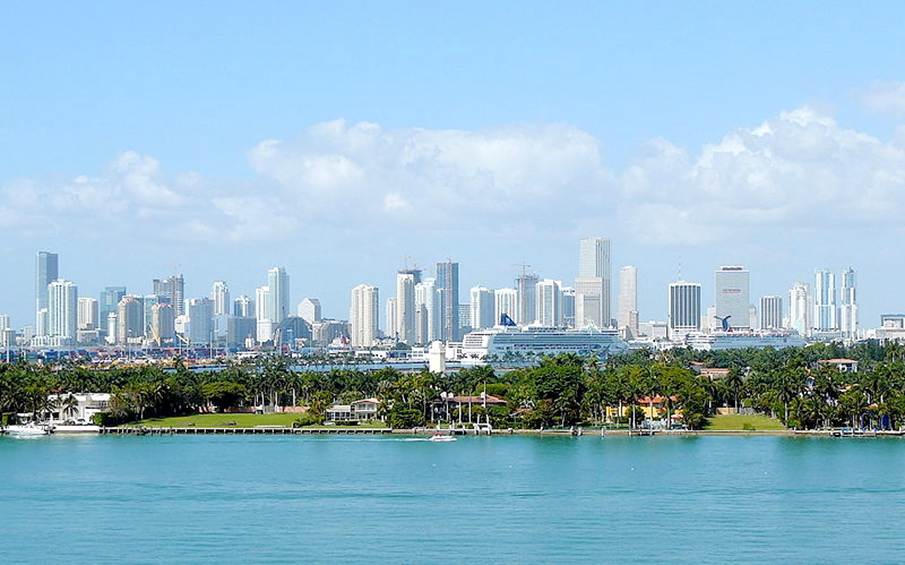
The first thing you notice at Content Americas isn’t anxiety—it’s bodies. People moving fast through hotel corridors, badges flashing, Spanish and Portuguese spilling into English, hands gripping coffees like they’re holding onto time. Launched in 2023, the market has grown with an almost suspicious speed, the kind of rapid consolidation that usually signals either a miracle or an emergency. In 2025, attendance hit 2,278 delegates. For 2026, the exhibition space has sold out. Miami—that familiar in-between city where Latin America negotiates with U.S. power—has become the region’s No. one international TV meet and mart, a crossroads for Latin America, U.S. Hispanic media, and increasingly the global industry looking for new oxygen.
And yet the second thing you notice is what people keep saying under their breath: the room is full, but the market is smaller. Fewer buyers. Fewer greenlights. Less appetite for risk. “The market has really contracted. There’s fewer buyers and less willingness to take risks,” says Erik Barmack of Wild Sheep Content. “These are convulsive times,” adds Ezequiel Olzanski of EO Media. It’s the kind of phrasing you hear when polite business talk can’t hide what’s happening: a system that expanded too fast is now tightening like a fist.
For producers across the region, that contraction doesn’t land as an abstract trend line. It lands as layoffs, as stalled development slates, as projects quietly “pulled,” as sales to free-to-air broadcasters declining. It lands hardest on companies with massive overhead—or those just trying to get started. If you’re a small outfit in Latin America, the turbulence can feel like standing in surf while someone keeps moving the shoreline.
That’s why the conference programming at Content Americas 2026 isn’t just a celebration. It’s a survival workshop dressed in industry language. The gathering, running Jan. 19–22 at the Hilton Miami Downtown, promises guidance for what comes next. A keynote comes from Juan José Campanella, an Oscar winner receiving an honorary Rose d’Or Latino for career achievement—a creative with the authority of someone who has directed in Argentina (“The Secret in Their Eyes”), Spain (“Vientos de agua”), and the U.S. (“House,” “Law and Order”), moving between independent work (“Underdogs”) and platforms like Paramount+ (“The Envoys”) and now Netflix (the upcoming “Parque Lezama”). Around him, the region’s giants arrive with their own maps: Brazil’s Globo drilling down on telenovela strategy, Banijay discussing expansion in Latin America, and Telefé Studios taking shape after Televisión Litoral bought Telefe from Paramount-Skydance last October.
But the real question hovering over every handshake is the same one that has haunted markets from Cannes to Miami: how does television reinvent itself when the old model is broken and the new one is still being invented in real time?
Microdramas And Short Novelas, The New Drug in Your Pocket
The numbers tell the story with a bluntness executives can’t soften. According to Ampere Analysis, global streamer first-run orders in Latin America fell from 67 in the first half of 2022 to 32 in the same period of 2025—a halving that feels less like a dip and more like a climate shift. Outside Brazil, there’s little confidence those orders will rebound quickly.
Producers feel the squeeze in places where television becomes political economy. “It’s still a very challenging market,” says Christian Gabela of Gaumont USA, pointing to rising costs, inflation, and the absence of television production incentives in Mexico, where the pressure is “felt most acutely.” He adds another layer that Latin American creators know too well: decisions made far away can rewrite local realities overnight. The industry is still moving through high-level consolidation, he says, and leadership changes across territories. The result is a “let’s hold steady, wait and see” approach—words that, in practice, can mean months of paralysis for crews who live job to job.
So the region is adapting in ways that feel both modern and deeply familiar. One pathway is the telenovela—Latin America’s most durable cultural engine—being dismantled and rebuilt into new shapes. Global streamers, once the disruptors, are now borrowing the old tools and shortening them for new attention spans. HBO Max Latin America’s first original novela, “Scars of Beauty,” became a major Brazilian hit, with only forty episodes, and the follow-up “Madame Beja” is set to bow Feb. 2, also at forty episodes. Netflix is experimenting with hybrids like “Desperate Lies,” a novela/series blend that became a global non-English No. one in 2024—and it ran just seventeen episodes.
Meanwhile, Globo, still the region’s telenovela queen, is doing something that reads almost like defiance: it’s experimenting in both directions at once. On one side, it’s developing international-standard minis and series with partners like the BBC and Ron Leshem with Janeiro Studios. On the other, it is returning to the “novelão”—the “big novela,” melodrama doubled down, emotion unashamed—placing a major bet on “Three Graces.” In a fragmented media age, that choice signals a conviction that long-form melodrama still works, not despite the chaos of Latin American life, but because of it.
Then there’s the newest appetite: microdramas, designed for phones, built like sugar, engineered for compulsive viewing. In an early session, Omdia’s María Rua Aguete is expected to share stats showing microdrama daily minutes watched on mobile devices already reshaping viewing in parts of the region—enough to make seasoned executives ask to see the slide again. Microdramas come with impossible love, impossibly handsome leads, and a twist every ninety seconds. “With microdramas you’re not reinventing the wheel, you’re inventing a Gen Z telenovela,” says Caroline Servy of The Wit. And if any region knows how to manufacture emotional cliffhangers at scale, it’s the novela heartland. Globo has already begun. TelevisaUnivision’s ViX is integrating microdramas into its AVOD/SVOD ecosystem. What looks like a trend can quickly become a new grammar—one that turns melodrama into a thumb-scrolled addiction.
Soccer Stories, European Routes, And the Hunt for a Livable Model
If microdramas represent the new habit, soccer represents the old faith that still fills stadiums and now fills streaming queues. With the 2026 FIFA World Cup coming to the U.S., Mexico, and Canada, production companies are mining football not just as sport but as identity—the kind of “IP” that arrives with built-in emotion and national memory.
Gaumont USA and Netflix are finishing post-production on “Mexico 86,” starring Diego Luna, about the country’s long-shot bid to host the 1986 Cup. Wild Sheep Content is co-producing “Raza Brava,” focused on the rabid fan group of Chile’s Colo Colo, selected for the upcoming 2026 Berlinale Series Market Selects. And “Pioneers,” about Argentina’s first women’s national team—who beat England at a little-known women’s World Cup in Mexico in 1971—is positioned as a potential standout at the CoPro Pitch. As Gabela puts it, national events can function like a kind of readymade IP, offering “relevancy and parallels” to what’s happening now—including the World Cup’s return to Mexico in 2026.
The industry is also redrawing its trade routes. As global streamers become more local in their commissioning—favoring stories “particularly strong in a market,” anchored by territory, true crime origins, or local star power—local broadcasters are being forced outward, into cross-border co-productions, to compete with higher-budget streaming fare. The irony is sharp: the global platforms are narrowing their scope, while regional players are trying to expand theirs.
That expansion often comes down to one brutally practical question: where can you afford to shoot? “You need to look at territories where budgets make sense,” says Gabela, citing Spain as the prime Spanish-speaking example of successful incentives, and noting that Colombia, Uruguay, and others can help optimize budgets with “soft monies” in an inflationary era. Even when stories take place elsewhere, producers and streamers are considering relocating shoots to make the math work.
One case in point is Gaumont USA working with Argentina’s Mariano Cohn and Gastón Duprat—known for “Official Competition” and “The Boss”—to adapt the Argentine novel “Instructions on How to Rob a Supermarket,” by Haidu Kowsk. The project may be set in Spain, partly for narrative reasons, partly to secure the best budget and incentives possible. In Latin America, where currency swings and political uncertainty can turn a production plan into a crisis overnight, those decisions aren’t merely financial. They shape what stories get told—and which landscapes are allowed to stand in for others.
Some producers, like Barmack, are pushing another model: premium series “that can travel from small markets,” led by directors and writers who “punch above their weight” and don’t always get the international attention granted to Mexico, France, or Germany. He points to Chile’s Hernán Caffiero, showrunner of “Raza Brava,” who won an international Emmy for “The Suspended Mourning.” The bet is that risk-taking, high-quality production on low budgets can still break through—especially if the industry stops assuming that global relevance only comes from the usual capitals.
For global streamers, Brazil remains the region’s momentum machine. According to Ampere Analysis, streamer orders there doubled from seven in the second half of 2024 to fourteen in the first half of 2025. Servy calls Brazil the current center of gravity, with true crime drama emerging as a “big, big thing.” Recent hits cited include Netflix Brazil’s “Rulers of Fortune,” a non-English global No. one over Nov. 3–9, and Prime Video’s “Tremembé,” a true crime series tracking inmates in a prison for celebrity criminals.
And yet, amid all the contraction and reinvention, something else persists: “blue sky” entertainment—glossy, escapist, brightly lit stories that refuse to dim even as real-world anxiety rises. Several CoPro Pitch finalists—“Dr. Sex,” “José Piedra, a Guy With Bad Luck,” and “Sexorcism”—lean into second-chance comedy and dramedy. Even darker source material is being remade into more palatable forms, like “Until You Burn,” a Netflix/Caracol Caribbean rendering of “I Spit on Your Graves,” the 1946 bestseller by Boris Vian—its original acid partially preserved in social critique, then coated in sun, beauty, and a modern arc of empowerment.
In Miami, under the fluorescent calm of a hotel market, Latin America’s television industry is doing what it has always done in harder times: improvising a future with whatever materials are at hand. Shorter novelas. Phone-first microdramas. Soccer histories as national mirrors. European co-production routes. Budget incentives that dictate geography. It’s convulsive, yes—but also alive, stubbornly alive, in the way the region has learned to be: reshaping itself not because change is fashionable, but because survival demands it.
Credit: Adapted from Variety, written by John Hopewell.
Also Read: Latino Entrepreneurs Feel the Pinch as Trump’s Promises Get Costly