A China-Linked Megaport in Peru May Push the Amazon Past Its Breaking Point
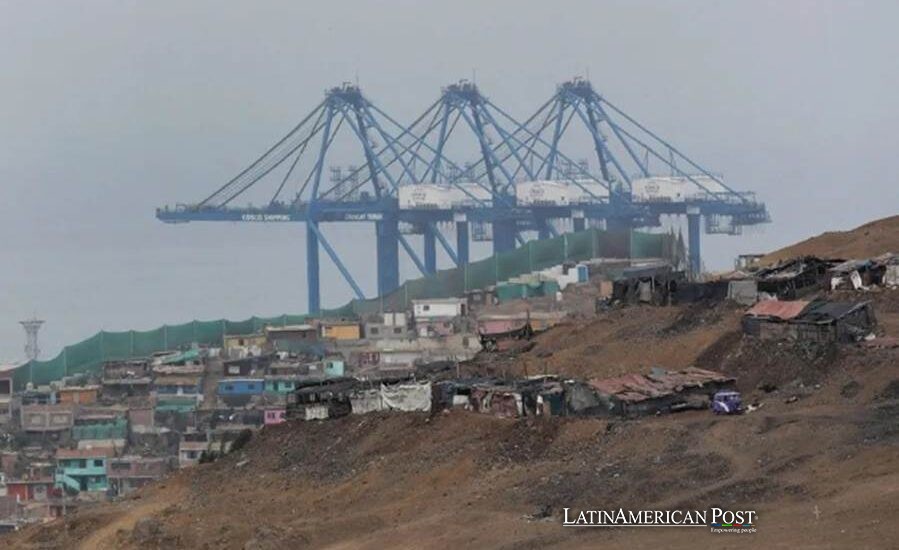
On a once‑sleepy Peruvian beach, a Chinese‑backed megaport promises faster trade with Asia while quietly threatening the forest that stabilises the planet’s climate. As Chancay rises, scientists warn that Peru may soon build a direct highway to the Amazon’s collapse.
Peru’s New Pacific Doorway To China
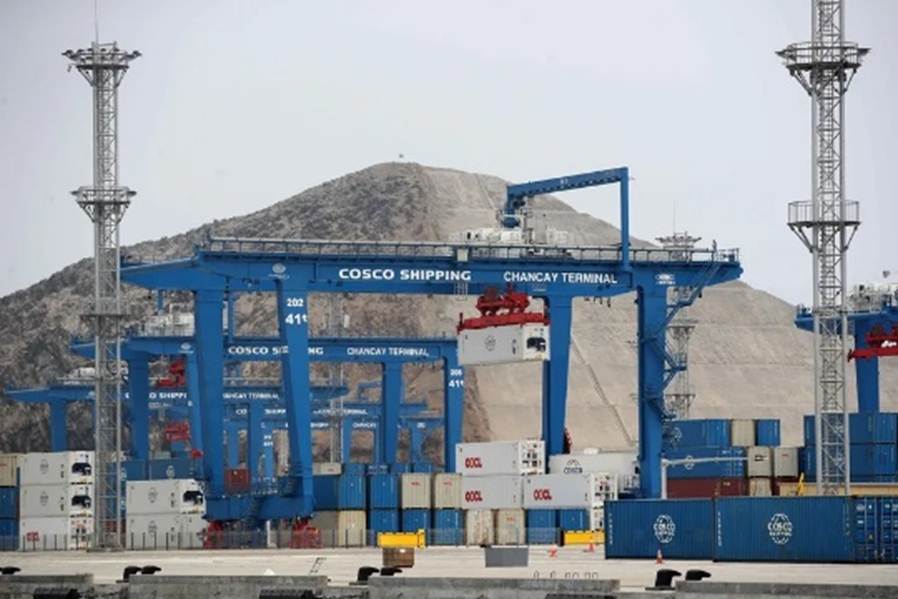
When the elevator doors slide open on the fifth floor of Chancay’s new control tower, they reveal a wall‑sized screen that looks more like mission control than a seaport. A glowing “Operations Productivity Dashboard” tracks every truck, crane, and ship in real time, while bold digital arcs sweep westward across the Pacific to Shanghai and other Asian giants.
Until recently, Chancay was better known for its medieval‑themed amusement park and a modest strip of seaside restaurants. Now it is South America’s most technologically advanced deep‑water port, and the flagship of China’s Belt and Road Initiative in the region. For Peru, the megaport is the culmination of a long‑held dream: to turn the country into the continent’s main Pacific gateway, shaving ten days or more off shipping times to Asia.
For China, the prize is even clearer. The port offers a direct, dedicated route for Latin America’s copper, lithium, timber, soy, and beef to flow east, and a faster way for Chinese cars, machinery, and electronics to flood back in. As Inside Climate News reports, Chancay is intended to be a critical node in Beijing’s global strategy to secure access to Amazon‑linked commodities.
The catch is geography. To reach Chancay, all that cargo from Brazil’s Amazon must somehow cross the Andes, the jagged spine running the length of western South America. There has never been an easy way over those mountains. The port is about to change the politics of that impossibility.
A Magnet For Roads – And For Deforestation
“The port is a magnet,” said Luis Fernandez, executive director of Wake Forest University’s Center for Amazonian Scientific Innovation, in an interview with Inside Climate News. “They’ll find more efficient ways to get over the Andes, to plug into Chancay.”
Those “efficient ways” are what keep ecologists up at night. The megaport has revived old fantasies of transcontinental railways, highways, and river corridors linking the western Amazon directly to the Pacific. In July, China and Brazil formally agreed to study a new rail line that would run from Brazil’s Atlantic coast to Chancay; China has already pledged around $50 billion to regional infrastructure.
Even if that marquee railway is never built, the very prospect of a fast Pacific outlet creates a powerful economic pull. “When you start talking about these big corridors, it creates incentive for a lot of small routes,” said David Salisbury, a University of Richmond geographer who studies Amazon deforestation, speaking to Inside Climate News.
In the Amazon, roads are rarely just roads. Research shows that for every one kilometre of main road cut into the forest, as much as 50 kilometres of smaller, unofficial roads quickly branch off, creating a “fishbone” pattern of clearing visible from space. Those secondary routes have been found to trigger hundreds of times more forest loss than the original highway.
The proposed paving of a 430‑mile road from Brazil’s Cruzeiro do Sul to Pucallpa, in the heart of Peru’s timber belt, would slice through one of the largest roadless, biodiverse regions on Earth, home to national parks and Indigenous peoples in voluntary isolation. From Pucallpa, a road to Chancay already exists.
“It’s a significant place for global conservation and climate goals,” said Chris Fagan of the Upper Amazon Conservancy, whose top priority is stopping that road. If it goes ahead, he warns, it would displace communities and threaten their livelihoods, opening a pristine forest to logging, ranching, and mining—sectors poised to benefit from faster export routes through Peru’s megaport.
Scientists already fear the Amazon is close to a tipping point, where continued degradation would flip it from the world’s most significant terrestrial carbon sink into a net carbon source. “In a world where carbon storage is necessary for sustaining a stable planet, increasing the axes of forest degradation—whether it’s a road or a railway—is a big mistake,” Salisbury said.
Weak Safeguards, Strong Political Incentives
On paper, Peru has plenty of environmental laws. In practice, they are often ignored or rewritten when big projects appear. That regulatory weakness is one reason Chinese state‑owned firms and partners chose Peru, environmental lawyers told Inside Climate News. “China came to the perfect place,” said Wendy Ancieta of the Peruvian Society for Environmental Law.
The Chancay project, now 60 percent owned by COSCO Shipping Ports and 40 percent by Peruvian mining giant Volcan, sailed through environmental review despite what local and international experts describe as gaping flaws. Fewer than half of the identified issues were meaningfully addressed before regulators approved the project in December 2020, highlighting how weak safeguards can allow environmental harm to proceed unchecked.
Later, Peruvian media reported that six SENACE officials from the agency overseeing large‑project assessments were charged with environmental crimes linked to parts of the port approval process. COSCO’s Peruvian subsidiary and SENACE insist they complied with the law and engaged extensively with communities.
But the broader trend runs against scrutiny. Peru recently passed a law barring advocacy groups from bringing environmental or human rights lawsuits against the government, a measure Amnesty International and Human Rights Watch have condemned. This weakening of protections makes it easier for projects like Chancay to proceed without accountability, underscoring the urgent need for stronger safeguards.
Over the border in Brazil, Congress has advanced a so‑called “devastation bill” easing licensing for “priority” infrastructure. At the same time, the government challenges the landmark Soy Moratorium that helped slow Amazon deforestation. Together, these moves lower the guardrails just as Chancay’s gravitational pull grows stronger.
Politically, however, mega‑infrastructure remains irresistible. “Roads are a good way to get elected,” Salisbury noted. They bring construction jobs, contracts, and the illusion of development—even when, as economist Leolino Dourado points out, moving bulk commodities over the Andes to the Pacific makes little economic sense compared with existing Atlantic routes.
A Port That Doesn’t Feel Like It Belongs To Peru
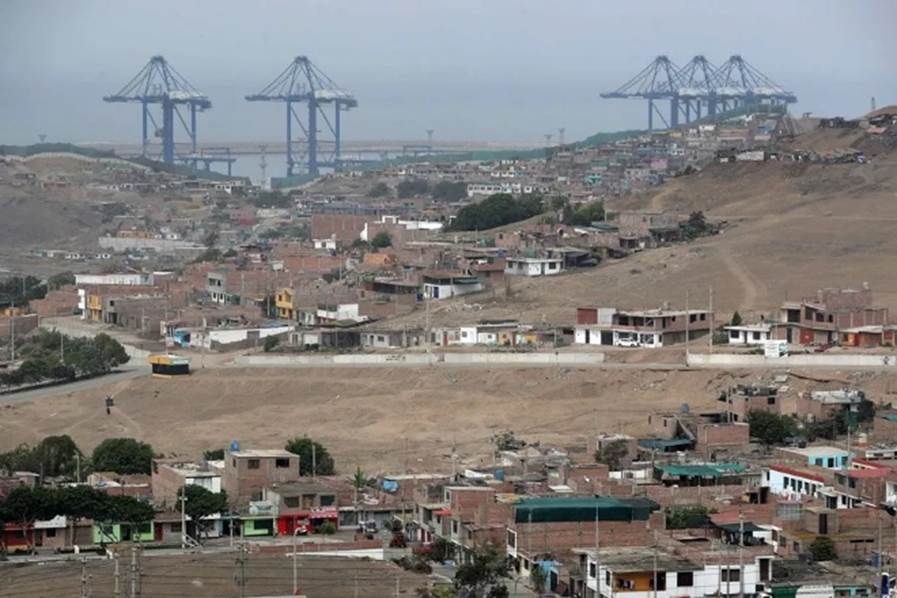
For the people of Chancay, the environmental risks of the port are not abstract—they are etched into their walls. Artist and shopkeeper Miriam Arce remembers the day in 2016 when explosions began without warning. Over two years, 438 blasts flattened coastal hills, cracked houses, and shook a town of 60,000. “They were exploding the hills, the tunnels, at the port—all at the same time,” she told Inside Climate News. “Can you imagine? It was crazy.”
Arce formed the Chancay Defense Front after discovering that the original environmental study had been approved with minimal public input, and says she received death threats for her activism. Fishermen complain that fish stocks and “luxury” species like corvina have plummeted since construction began. Some associations accepted payouts and scholarships; others, like those represented by Antonio Luis, refused, calling them “bribes to shut up.”
From the port’s sleek command center, safety manager Jason Guillén Flores proudly shows off 500 driverless electric trucks and fully electric cranes—”all electric,” he repeats—as evidence that Chancay is a green, automated gateway. Containers of Peruvian blueberries and asparagus can now reach Shanghai in 23 days, he says. Eventually, he predicts, a special economic zone will draw giants like Apple, GE, and Samsung to build regional hubs beside the docks.
Yet on the other side of the fence, many residents feel the project has taken their ocean, their town, and their voice. On inauguration day in November, locals like Arce and Luis say they were kept outside perimeter fences while dignitaries and police filled the secured area. “The city’s new port did not belong to the city,” Arce recalled.
That is the paradox at the heart of Peru’s megaport gamble. Chancay may well succeed in making the country a Pacific gateway and deepening ties with the world’s second‑largest economy. But without strong safeguards, transparent planning, and real local consent, the port is also poised to accelerate Amazon deforestation, empower unaccountable elites, and push the rainforest closer to a point of no return—all while the people living in its shadow wonder if there will still be a place for them.
Also Read: Mexican Axolotl Banknote Turns Tiny Salamander Into National Treasure Today