Brazil Oil Dreams Are Clearing Forest Faster Than Prosperity Arrives
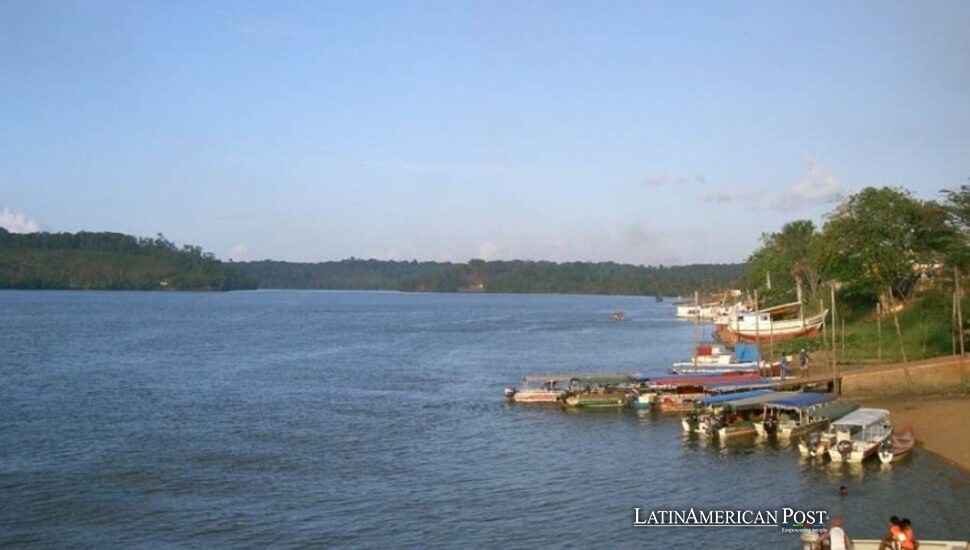
Oiapoque is swelling on the promise of Petrobras drilling, drawing migrants into the Amazon mud while exposing Brazil’s oldest development question: can oil wealth lift a poor frontier enough to justify the forest lost, the pressure building, and the waiting.
A Boomtown Before the Boom
On a recent morning in Oiapoque, Reginaldo Nunes Fonseca sat on the porch of a friend’s wooden shack, smoking and watching the rain come down over Nova Conquista, or New Conquest, where pristine rainforest stood a year ago. AP found him there in the pause between hope and fact. The rain kept him from building his own house or picking up odd jobs. But the weather was only part of the stoppage. Like thousands of others who have arrived in this small city in Amapa, he is waiting for an economic boom that still exists mostly in the grammar of expectation.
That waiting has a name now: Petrobras. AP reports that the rush began after Brazil’s state-run oil company secured environmental licensing last year for offshore drilling in the Equatorial Margin near the mouth of the Amazon River, about one hundred and eighty kilometers off Amapa’s coast. Fonseca told AP he saw a television report about the licensing in January, then left Maranhao because he was unemployed and saw in Oiapoque the outline of a future. “I thought, well, that’s good,” he said. “The city is going to grow, and there will be a lot of job opportunities.”
There is something painfully familiar in that sentence. In Latin America, development often arrives first as rumor, then as migration, then as land clearing, and only later, if it arrives at all, as wages. Oiapoque is living inside that sequence now. The boom has not yet become a boom, but it has already become a force. People have moved. Forest has fallen. Settlements have spread. The city has begun reorganizing itself around a promise.
That promise lands especially hard in Amapa because Amapa has long been poor and underdeveloped. AP notes that Oiapoque’s economy depends on fishing, illegal gold mining, and the daily crossings of visitors from French Guiana, who spend euros that hold value better than the Brazilian real. It is a frontier economy, improvised and fragile, tied to extraction, border circulation, and whatever cash comes through. Oil enters that landscape not as a technical issue alone, but as a dream of escape from smallness.
Yet the texture of the place matters. AP’s reporting makes clear that what is happening is not a clean industrial expansion onto empty land. It is unplanned urban growth in a city that already struggles to function. That is why the optimism feels so unstable. When a poor place receives the signal that money may be coming, it does not wait politely for final permits and formal hiring rounds. It expands immediately, because poor people cannot afford to arrive late to an opportunity, even an imagined opportunity.

The Old Bargain of Extraction Returns
The larger dilemma, AP suggests, is bigger than Oiapoque and bigger than one drilling campaign. It is the old bargain that hangs over developing countries, especially resource-rich ones. How do you curb the emissions that drive climate change while still using oil revenue to transform local economies that have been left behind for generations?
That question cuts directly through President Luiz Inácio Lula da Silva’s public posture. AP notes that Lula has made stopping deforestation a major part of his government, and that Brazil hosted the U.N. climate summit, COP30, last year. At the same time, he has made clear that poverty in Amapa is not, in his view, something to be preserved in the name of moral purity. “We don’t want to pollute a single millimeter of water, but no one can stop us from lifting Amapa out of poverty if there is oil here,” Lula said last year, according to AP.
That is not just a quote about drilling. It is a statement of the developmental creed that still shapes much of Latin American politics. The state says it can protect nature and exploit it. It says extraction can be disciplined, contained, and turned toward justice. Sometimes that is presented as realism. Sometimes, as national dignity. Sometimes, it is the only available route for regions that have spent decades watching wealth leave in other forms, while public investment never quite arrives.
But in Oiapoque, the contradiction is already visible before any confirmed bonanza. AP reports that Petrobras met with politicians, business owners, and community leaders on March ten to present its plans. Company representatives said drilling for an exploratory well began in October and would last about 5 months. If large quantities of oil are found and if Petrobras wants to extract them, more government permits would still be needed, a process that could take months or even years.
That means the social effects are running ahead of the industrial ones. Oiapoque is serving mostly as a helicopter base for offshore crews because it is the closest land point, AP reports. In contrast, administrative operations are based in Belem, in neighboring Para. So, the city, which is absorbing the speculation and disorder, is not even the project’s full operational center. It is bearing the pressure of proximity more than the certainty of investment.
At the same time, environmental and Indigenous groups have sued the government and Petrobras to halt exploration, arguing that traditional communities were not properly consulted, that spill risks were underestimated, and that climate impacts were not adequately assessed. Federal prosecutors have also asked IBAMA to annul or suspend the license, arguing that Petrobras’ studies are insufficient and that the company is concealing the full extent of environmental impact. AP reports that no ruling has been issued.
This is another old Latin American pattern. The state appears not as one clear actor but as several, pushing and pulling at once. One arm licenses. Another question. One speaks the language of growth. Another warns of damage. In the middle are local people, moving with the only clock they can trust, the one that says opportunity rarely waits for the poor.
Mud, Waiting, and a Narrow State
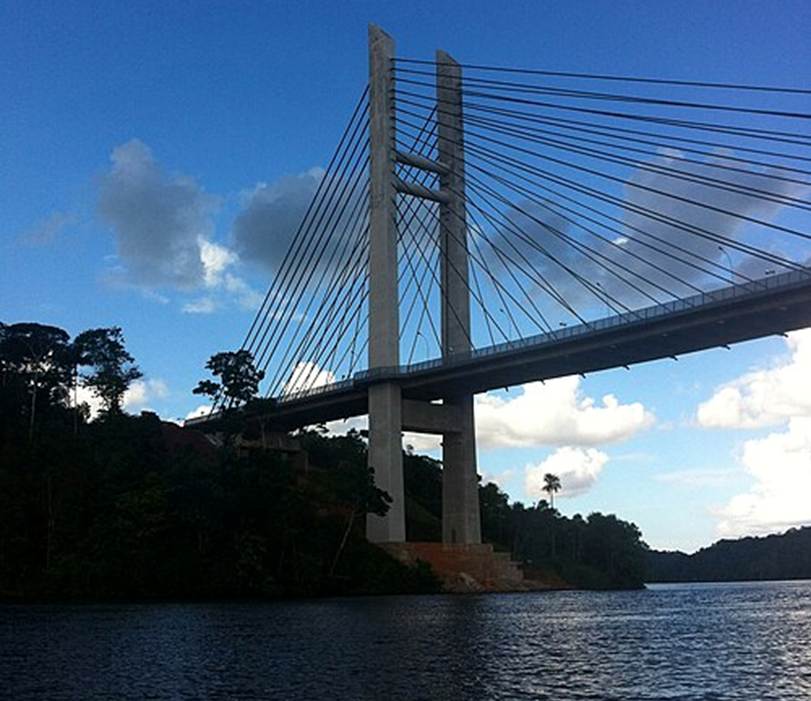
The most revealing detail in AP’s report may be the name locals use for the new settlements: invasions. That word carries the moral mess of the whole story. These are not planned neighborhoods. Residents have cleared public rainforest, carved out informal plots, and raised rough homes from mud, wood, and need. Fresh tree stumps, wooden stakes, and makeshift shacks now stand where the forest stood. AP describes homes with only the basics: a kitchen, a bed, and a rudimentary bathroom.
Oiapoque was already precarious before the oil rush. AP cites official data showing that less than 2% of households have adequate sewage systems,, and only 0.2% are on properly structured streets. Councilman Tiago Vieira Araújo told AP that the city has seen significant population growth over the past 18 months, that 7 new neighborhoods have already emerged, and that social problems have accompanied them.
That is what this episode says about Brazil at ground level. Not simply that oil still seduces, though it does. Not simply that the Amazon remains a contested frontier, though it is. It says that when the state signals future wealth in a place marked by scarcity, people move before institutions do. They arrive before sanitation. Before paved streets. Before certainty. Before protection.
Fonseca told AP, “We know it’s not right to clear the forest. Everyone knows it’s wrong. But space is limited.” There is no easy villain in that sentence. Only compression. Poverty presses against environmental principles. National ambition presses against local fragility. The forest becomes the first thing spent, not because people do not understand its value, but because they are trying to enter the map of survival before the gates close.
Oiapoque, then, is not just waiting for oil. It is showing, in real time, how a development promise can begin altering land, politics, and conscience long before prosperity becomes real. In Brazil, as in so much of Latin America, the frontier still fills with people before it fills with answers.
Also Read: Brazil Turns Bankers Into Forest Guards as Amazon Politics Harden