Latin America Dollar Temptation Returns as Washington Smells Influence Again
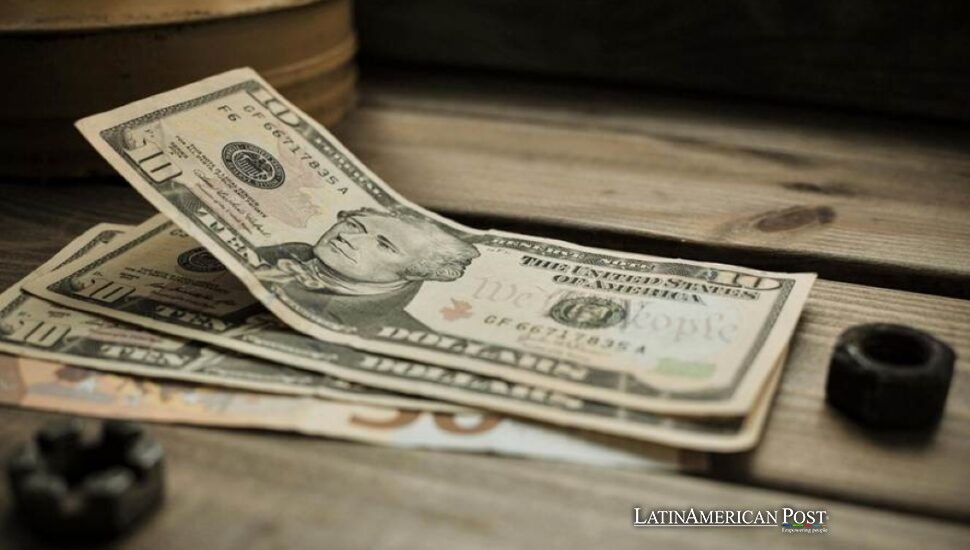
After Nicolás Maduro’s removal, U.S. power is re-entering the hemisphere with a softer weapon: currency. A revived push for dollarization raises old Latin American questions about sovereignty, stability, and whether Washington wants neighbors who share its money—or owe it something.
A New Map Drawn in Banknotes
The fall of a dictator is usually narrated in speeches and street scenes—flags, chants, silhouettes against a palace gate. But the text you provided insists the more consequential story may be quieter: what comes after Venezuela when Washington senses a fresh opening in the hemisphere. The removal of Nicolás Maduro, it argues, “portends greater U.S. involvement in the Western Hemisphere,” and the next lever may not be military or even overtly political. It may be monetary.
The central question is blunt: does it serve America’s interests to expand its soft power by encouraging countries throughout the Americas to adopt the U.S. dollar, already the world’s dominant reserve currency, through more formal arrangements for trade and financial relations? In Latin America, where the memory of external influence is not theoretical but lived—through debt crises, structural adjustments, and sudden swings in foreign capital—“soft power” rarely feels soft. It feels like gravity. The dollar, in that sense, is not just a means of payment; it is a way of ordering the room.
The text contrasts this hesitation in Washington with Europe, where leaders deliberately forged a monetary union to deepen integration and strengthen regional security. The eurozone now boasts twenty-one nations using a shared currency issued by the European Central Bank. The Americas, by comparison, remain a patchwork of more than three dozen official currencies. Only Ecuador, El Salvador, and Panama have adopted the U.S. dollar as their national currency. The implication is that the hemisphere remains economically fragmented not because a common currency is impossible, but because the United States has never fully decided whether it wants that intimacy with its neighbors.
The argument has been on the table before. A 1999 Senate Banking Committee hearing considered whether the U.S. should officially encourage dollarization, and no firm resolution emerged. But the text suggests Washington’s current focus on “regional advancement” has sharpened the trade-offs. The moment, it says, calls for a reassessment of pushing the dollar in America’s backyard.
The Promise of Stability and the Cost of Obedience
For many Latin Americans, currency is a kind of national nerve. It carries the pride of independence and the fear of collapse. The text lays out the benefits of dollarization with the clean logic of accountants and central bankers. Dollarizing nations, it says, effectively give the U.S. the profit from printing money—seigniorage—which functions like an interest-free loan to Washington. The shared currency reduces the cost of doing business and lowers uncertainty about future exchange rates. That reduction in risk, the text argues, increases the capacity for productive capital and trade flows. It also eliminates the “unfair trade practice” of currency manipulation.
And yet even the pros carry a shadow that Latin America recognizes instinctively: the more seamless the economics, the tighter the political knot can become. The text’s list of cons reads like a warning written by history itself. Dollarized nations might assume they now have a claim on U.S. support. If Washington offers no special assistance in difficult times, resentment could grow that they surrendered domestic monetary sovereignty for a promise that never truly existed. Instead of staying committed to sound economic and fiscal reforms, leaders might deflect blame for internal problems onto Washington.
This is where Latin American perspective changes the temperature of the debate. Dollarization can be sold as stability, but it can also be lived as surrender—especially if ordinary people feel the loss of policy tools without receiving the protections they imagined came with the flag on the banknote. The text insists any move would have to be clearly voluntary and paired with a hard boundary: adopting the dollar would grant no privileged access to the Federal Reserve’s liquidity and funding facilities, and U.S. monetary policy would not be influenced by another country’s decision to dollarize. In plain language, a country could take the dollar, but it could not take the steering wheel.
The author’s strategic wager is that if dollarization expanded U.S. participation in Latin American markets, the United States would benefit disproportionately from the region’s growth. Greater financial stability and rapid development in emerging-market nations within the hemisphere could serve U.S. national interests, the text argues, because shared prosperity strengthens political alliances. In Latin America, where alliances have often been tested by asymmetry, the phrase “shared prosperity” can sound hopeful and threatening at once—depending on who writes the rules.
Trump, BRICS, and the Dollar as a Weapon
The text then asks a question that sounds reasonable until you remember how power works: if the dollar already has a fifty percent share of international payments, why does it matter whether other nations conduct trade and investment in U.S. currency rather than another? The answer, it says, is political—and it is personal to President Donald Trump.
“The idea that the BRICS Countries are trying to move away from the Dollar while we stand by and watch is OVER,” Trump wrote on Truth Social in November 2024, referring to the bloc seeking to challenge the dollar’s dominance. The text notes the bloc—Brazil, Russia, India, China, and South Africa—has enlarged to include Egypt, Ethiopia, Indonesia, Iran, and the United Arab Emirates. Trump demanded a commitment that they would neither create a new BRICS currency nor back any other currency to replace the dollar, warning they would face one hundred percent tariffs and should expect to “say goodbye” to selling into the U.S. economy.
Then comes the scene that Latin America reads with particular clarity: July, Rio de Janeiro, the BRICS summit hosted by Brazilian President Luiz Inácio “Lula” da Silva. Trump, the text says, posted a reminder of increased tariffs for “any country aligning themselves with the Anti-American policies of BRICS BRICS.” The repetition in that phrase almost feels like a drumbeat—an insistence that monetary independence will be treated as disloyalty. In a hemisphere where the boundary between trade policy and political discipline has often been thin, currency becomes not just a tool but a warning shot.
From Bretton Woods to the Americas’ Next Deal
The text anchors this power story in history. The connection between military capabilities and monetary arrangements is long-standing, it argues, quoting Nobel laureate Robert Mundell: “great powers have great currencies.” Mundell, described as an intellectual force behind President Reagan’s supply-side economic agenda and as a father of the euro, posed the central dilemma: when is it advantageous for countries to relinquish monetary sovereignty to join a monetary union or fixed exchange-rate system?
It is not too early, the text says, to plan how monetary arrangements in the Americas might evolve “in beneficial ways.” It reaches back to July 1944, when World War II was still raging and the U.S. convened representatives from forty-four allied nations in Bretton Woods, New Hampshire, crafting a system of fixed rates anchored by a gold-convertible U.S. dollar. In “Changing Fortunes,” former Fed Chairman Paul Volcker wrote that the world economy’s performance in the first twenty-five years after Bretton Woods was “exceptional.”
The piece ends with a hope framed in Trump-era language: that strategic currency proposals might help make America’s money great again. From a Latin American vantage point, the closing question is quieter and harder: if the hemisphere is asked to hold the dollar tighter, will it be invited into the room where its future is priced—or only asked to accept the rate once it’s already set?
Credit: The Wall Street Journal — By Judy Shelton
Also Read: Venezuela Oil Bargain With Trump Puts Sovereignty On Auction Block