Bolivian Alasita Miniatures Turn UNESCO Heritage Into Living Street Ritual
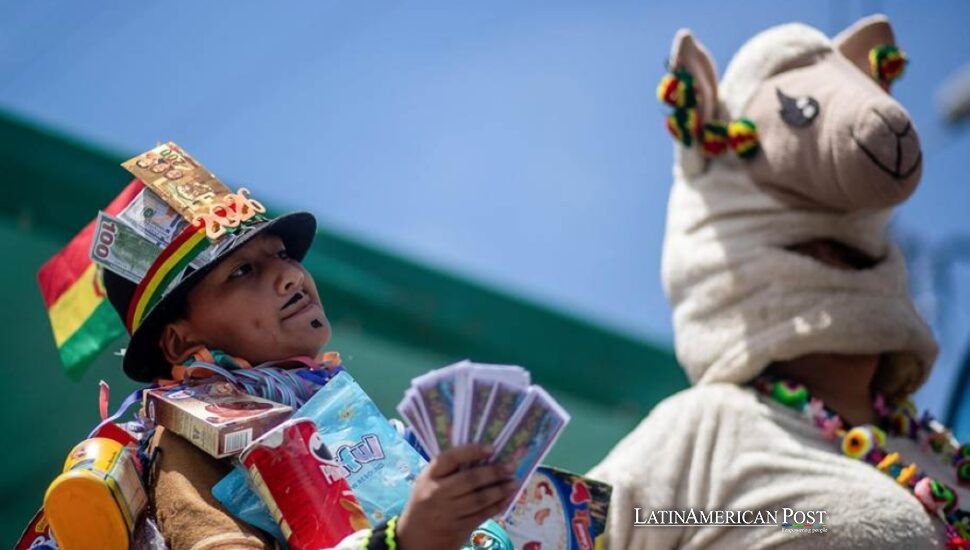
In Bolivia’s Alasita fair, tiny houses, bills, and cars stand in for real hopes, inspiring viewers to feel hopeful and connected to the tradition. This week, artisans chose new Ekeko representatives as La Paz works to safeguard the ritual routes UNESCO recognized. Preservation, here, is also politics and memory.
A Runway of Ponchos and Painted Mustaches
At Parque Urbano Central, the fair has been running since January 24, and by Wednesday, the space held a different kind of crowd. Not just buyers drifting between stalls, weighing miniature bundles in their hands, but families watching a small pageant unfold. A passarela. A runway, bright with ponchos, dark trousers, and the soft scuff of ojotas on the ground.
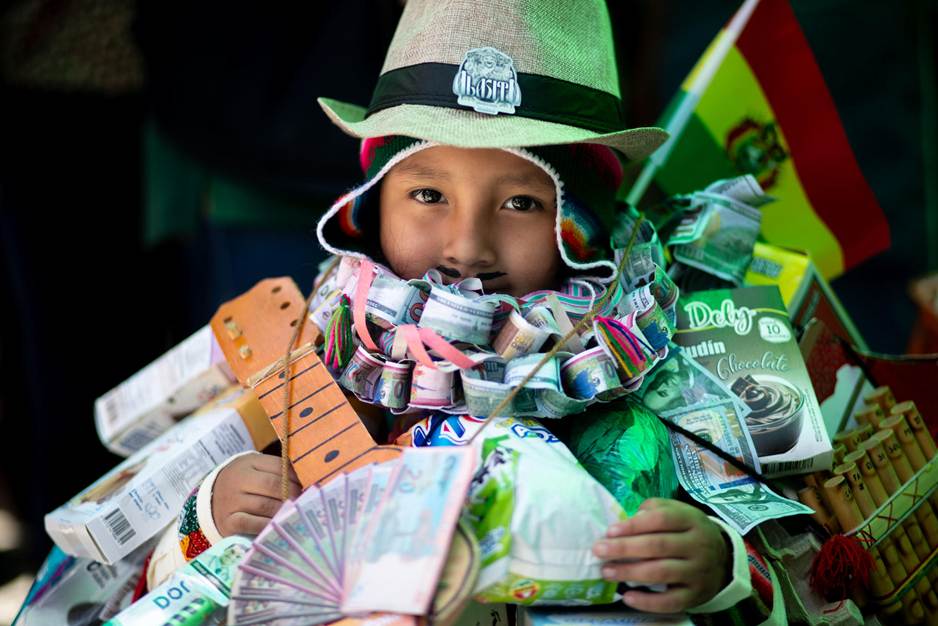
Six children and one adult entered the contest to represent the Ekeko, the Andean god of abundance. Each wore a ll’uchu, a knitted cap, topped with a felt hat. On the children, the detail that pulled adults closer was the mustache, painted on, an intentional exaggeration that made them look both serious and playful at once. The sensory detail was the layered fabric itself, the way wool and felt hold warmth and smell faintly of sun and dust after hours outside.
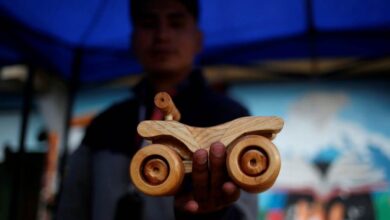
They carried goods strapped to their bodies, the notes say, as if the future could be balanced by string and patience. Viveres. Little bills. Miniature vehicles. The objects were small enough to fit in a palm, but the desire behind them did not feel small.
They walked and danced with enthusiasm. That is the everyday observation implied by the scene. People will perform hope even when the year has been heavy. They will laugh at a painted mustache and still mean it when they say they want abundance.
The child Ian Limpias was chosen as Ch’iti Ekeko, the small Ekeko. The artisan Rubén Titirico became Jach’a Ekeko, the big one. Their selection was organized by the Federación Nacional de Artesanos Expositores de Navidad y Alasita, known as Fenaena, and the municipal culture office, as part of activities coordinated with the La Paz municipality to “safeguard” the festival.
What this does is place a living ritual inside an administrative frame. A tradition is not only practiced. It is documented. It is reported upward. It is defended.
Safeguarding a Ritual That Refuses to Sit Still
Américo Gemio, the municipal secretary of cultures, described the purpose plainly. Through these activities, he said, “lo que busca es la salvaguarda de la Alasita,” he told EFE.
The need for safeguarding is not abstract. The ritual routes carried out during Alasita in La Paz were declared Intangible Cultural Heritage of Humanity by UNESCO in [2017], highlighting its global cultural importance. That recognition is an honor, and it is also an obligation, a promise to maintain what has been recognized without freezing it into something lifeless.
Gemio put the stakes in generational terms. “Lo que estamos haciendo es salvaguardar porque los niños y toda la gente tenemos que recordar la existencia y la esencia del Ekeko y eso nos va a permitir documentar y decirle a la Unesco en los próximos 5 años ‘quiero la validación de mi categoría patrimonial’,” he told EFE.
The complexity of Alasita-being both ancestral and urban, serious and playful-should make viewers feel admiration and respect for its enduring cultural significance. It is an old Andean tradition and also an urban one. It is ancestral and mestizo. It is a ritual and a fair. It is serious and playful. It is all of these at once, and that is precisely why people keep returning.
The fair’s name itself, Alasita, means “cómprame” in Aymara. The act of buying is part of the ritual language. On January 24 at midday, paceños bless the miniatures that represent their desires, a practice that continues today. The fair extends for weeks, turning the city’s calendar into a long corridor of wanting, choosing, blessing, and carrying.
Gemio described what the Ekeko signifies for Bolivians: abundance, dreams, and desires to be fulfilled. Those words can sound generic in policy language. Here they land as specific because the objects are specific. A tiny stack of bills. A tiny vehicle. A tiny home. You can point to it, and by pointing, you confess what you need.
Rubén Titirico, now the Jach’a Ekeko, tied the meaning back to the crowd that sustains the tradition. The Ekeko represents prosperity and abundance, he said, and people come to the fair to buy “cosas en miniaturas” with the hope they will become reality, he told EFE.
The wager here is simple but profound: that repeating a ritual can help pull a future into being, or at least help a person endure the wait.
From Tunupa’s Stone to a Colonial Doll
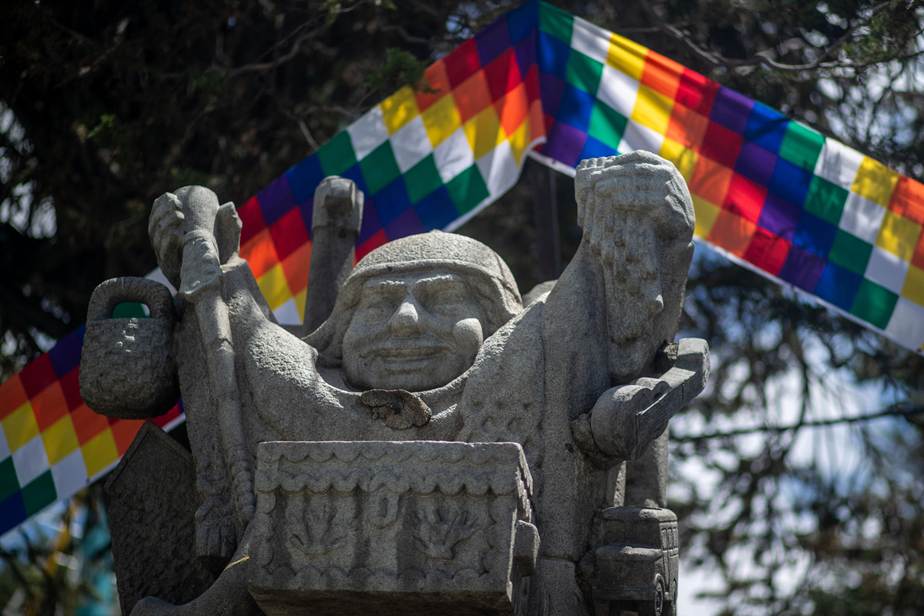
Alasita has transformed across centuries, and the figure of the Ekeko carries that history in its very body. In prehispanic times, what is now known as an illa, a stone effigy of the god Tunupa, represented Ekeko. Later, during the colonial period, the Ekeko emerged in the form that persists today: a chubby doll with white skin, light eyes, rosy cheeks, loaded with goods on its back.
That depiction is not neutral. Historians, the notes say, suggest it may have alluded to the appearance of the Spanish landowner Francisco de Rojas or his son-in-law, Sebastián de Segurola, then governor of La Paz. The Ekeko, in other words, is not only an Andean abundance god. It is also a record of colonial imposition and local adaptation, a symbol that carries the tension of who gets represented and how.
Segurola is also credited in the notes with ordering the festival’s move from December to January. Originally, the celebration marked the Southern Hemisphere summer solstice on December 21, with miniatures placed before Andean deities such as the illas, so that the desires they represented would become real throughout the year. The shift to January was tied to commemorating victory and resistance after an Indigenous siege punished La Paz for months in 1781.
So a festival about blessing desires is also a festival born from conflict and rearranged by power, which should make viewers feel awareness of the deeper political history behind the celebration. That is the deeper political reality beneath the stalls and the laughter. A city can preserve a tradition and still be preserving a history of who controlled the calendar, who wrote the official story, and who survived.
And yet, the ritual persists. It persists because people continue to make it, and because the fair remains a place where the intimate and the collective meet. A child with a painted mustache can carry miniature goods and dance on a runway, and an adult can watch with the knowledge that this is not merely cute. It is continuity. It is documentation. It is a demand, softly spoken in miniature form.
UNESCO recognition can sometimes feel like a glass case. Alasita resists the glass. It keeps moving. It keeps buying. It keeps blessing. In a city that remembers sieges and governors and transformations, the smallest objects still carry the largest insistence: that abundance is not only a word, but it is also a practice.
Also Read: Trinidad and Tobago Carnival Turns Regional Tension Into Feathered Street Theater