Caracas Wakes To Champagne Dreams, Checkpoint Dawns After Maduro’s Fall
After Nicolás Maduro was seized by U.S. Special Forces, Caracas tasted a rare breath of hope, then swallowed it. Within 48 hours, arrests, checkpoints and an emergency decree returned fear to the streets, even as Donald Trump claimed control publicly.
Saturday Joy, Monday Dread
On Saturday, Venezuelans who have learned to ration optimism let it spill anyway. Group chats filled with relief. Some people cried. In one home in Caracas, a family opened a bottle of champagne saved for a day that felt impossible.
The celebration was cautious, shaped by memory. “It feels like it did after the presidential elections in 2024,” said María, 55, who asked to be identified by her first name. “We won, but we also lost,” she added, recalling an election in which Maduro claimed victory despite tallies showing the opposition had prevailed.
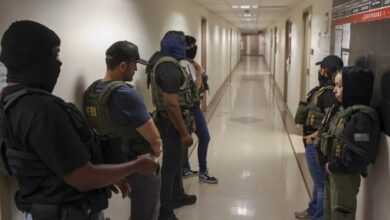
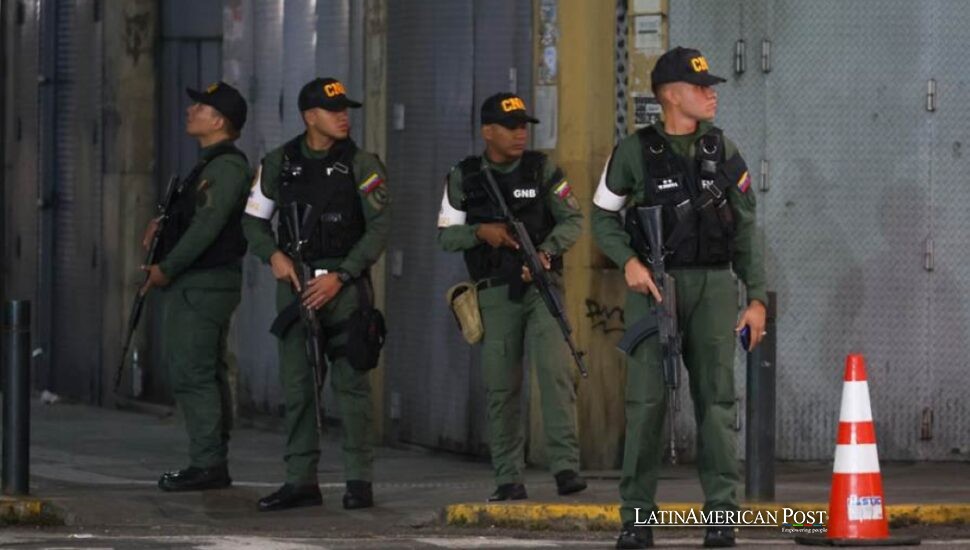
By Monday, the reversal arrived. Hope tightened into dread as Venezuela’s government moved to suppress public support for Maduro’s ouster, detaining journalists, arresting civilians and deploying armed groups across Caracas.
An Interim President, A Permanent Warning
The crackdown unfolded as Delcy Rodríguez, Venezuela’s vice president, was sworn in as interim president on Monday at the National Assembly. Senior military officials pledged loyalty to her, signaling continuity in the power structure even with a new name at the podium. In Latin America, where transitions so often arrive under uniforms, that pledge sounded less like reassurance than a lock clicking shut.
Outside the ceremony, at least 14 journalists and media workers were detained on Monday, including 11 working for international outlets, according to the National Press Workers Union. Most were held for several hours and later released, but several said military counterintelligence officers searched their phones.
Authorities also moved against ordinary citizens under a decree declaring a “state of external commotion.” The order directed police to search for and arrest anyone “involved in promoting or supporting the armed attack by the United States of America.” It took effect on Saturday but was published in full on Monday, suspending the right to protest and authorizing broad restrictions on movement and assembly.
In the state of Mérida, police arrested two people in their 60s for shouting anti-government slogans and for “celebrating the kidnapping of President Nicolás Maduro and First Lady Cilia Flores,” according to state authorities. The wording mattered: kidnapping, not capture, was the story citizens were required to repeat.
Checkpoints In The capital, And A Superpower Speaking Over It
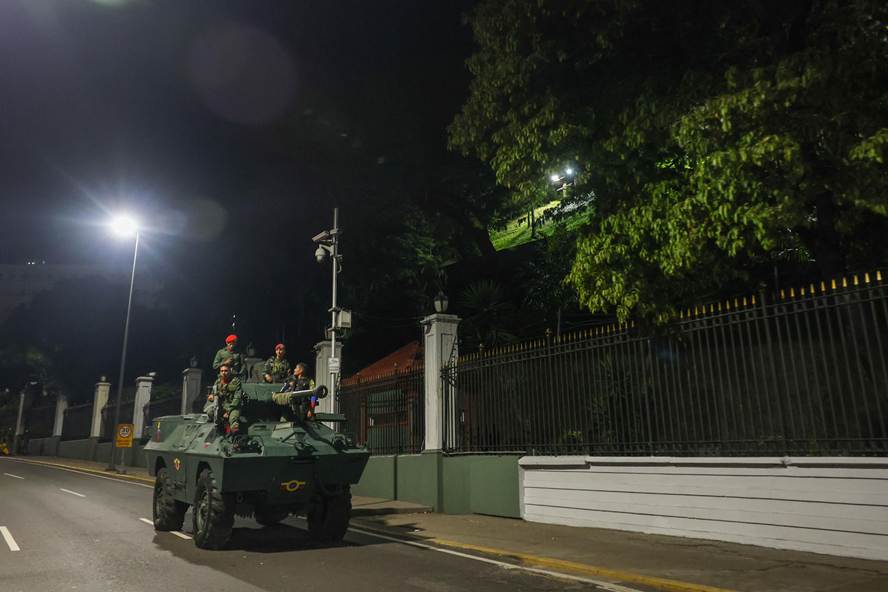
Across Caracas, paramilitary “colectivos” set up checkpoints, including along the Cota Mil highway north of the city. Residents said they were pulled over, questioned and forced to hand over their phones while armed men scrolled through messages and social media, searching for anything that could be framed as support for the U.S. raid.
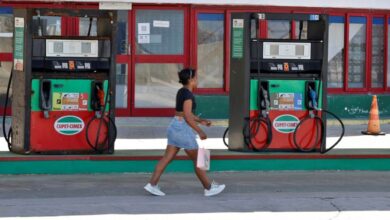
“We’re texting each other routes to avoid,” said a Caracas resident. “You hear ‘don’t go there — they’re stopping cars with machine guns.’” On Tuesday, some businesses reopened and people ran errands, but the city felt “as if it were a Sunday,” residents said.
From the United States, Donald Trump said repeatedly that the U.S. was “running” Venezuela, though it was unclear what influence his administration was exerting over authorities in Caracas. He said the job would fall to Marco Rubio, Pete Hegseth, Stephen Miller—and himself. In an interview with NBC on Monday, he said Venezuela was not in a position to hold elections. “We have to fix the country first,” he said. “We have to nurse the country back to health.”
In Caracas, those claims collided with what people could see. Foro Penal said more than 860 political prisoners remained in state custody. “Of course I have hope things could get better without Maduro,” a 30-year-old man in Caracas told The Washington Post. “But from where I am, all I see is the same people who destroyed my country still in power. They’re still persecuting us. And we’re still afraid.”
On Tuesday, Sen. Rick Scott of R-Florida warned Delcy Rodríguez on X that any steps outside U.S. wishes would bring “the same fate” as Maduro. Hours later, Rodríguez answered that no “external agent” was governing Venezuela: “To those who threaten me, I say that my destiny is decided only by God,” she said.
Opposition leader María Corina Machado, who left Venezuela in December to accept the Nobel Peace Prize in Norway, called the crackdown “really alarming” in an interview with Fox News’s Sean Hannity and urged international monitoring. Late Monday, gunshots rang out near the Miraflores presidential palace; the Communication and Information Ministry later said police fired warning shots after unauthorized drones flew overhead. “The entire country is completely calm,” the statement said.
This feature is adapted from the original reporting, interviews and quotes by The Washington Post journalist María Luisa Paúl.
Also Read: Honduras Noose Neighborhood Youth Choose Life While Gangs Rewrite Borders