Colombian Thallium Raspberries Murder Mystery Exposes Bogotá’s Elite And Hidden Brokers
After Bogotá teenagers ate chocolate-covered raspberries, thallium killed Inés de Bedout, 14, and Emilia Forero, 13. Now an Interpol Red Notice targets Zulma Guzmán Castro, while investigators chase a phone-linked intermediary known as Zenai across borders and whispers this winter.
The Gift That Arrived Without A Name
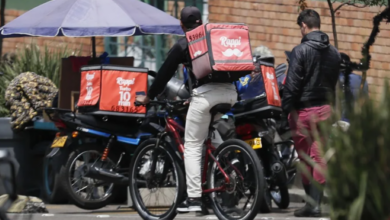
It began the way so many privileged-city afternoons begin in Colombia,with the soft confidence that nothing truly bad can reach a guarded building in Rosales, north Bogotá. On Friday, April 4, three students from Colegio Los Nogales gathered to bake cookies at an apartment where the routines were familiar: deliveries, a front desk, a kitchen door, the quiet choreography of an upscale neighborhood that runs on couriers and trust. Then a package arrived: chocolate-covered raspberries, no sender, presented as a gift meant for Martín de Bedout, the son whose name the building staff recognized because so many orders were addressed to him.
The details are small and cruel, as tragedy often is. A household employee reportedly told the delivery worker the package was not for that apartment. The delivery worker insisted it was; later, investigators would say he had been urged to insist, tempted by a phone-offered tip. Inside the apartment, the dessert looked harmless, almost celebratory, the kind of sweet someone sends as a casual kindness. Thallium, prosecutors say, is designed for precisely this kind of invisibility: colorless, odorless, tasteless, and lethal in the right dose. Medical literature in journals such as Clinical Toxicology and the Journal of Medical Toxicology has long described how heavy metals can masquerade as ordinary illness, slipping past intuition until the body’s collapse forces a different kind of attention.
That attention came quickly. The girls ate. According to later accounts given to investigators, Emilia Forero consumed eight raspberries, Inés de Bedout ate five, and a third girl ate three and survived,though her recovery later required care outside Colombia, a quiet exile imposed by physiology. A 21-year-old brother tasted one, and that single cautious bite, almost nothing, left enough of the dessert for forensic confirmation. The girls reached Fundación Santa Fe conscious, still able to say what they had eaten: raspberries, sushi, cookies,before the poison began to rewrite the story in their blood. The first death came on Saturday, April 5; the second followed four days later, a calendar that now divides families into “before” and “after.”
At first, the country’s reflex was to blame the food, to treat the incident as a nightmare accident. But the Secretaría de Salud de Bogotá rejected the idea of a broader contamination threat. Its secretary, Gerson Bermont, said the toxicology pointed to something beyond routine surveillance: “Según las pruebas toxicológicas, lo sucedido no responde a una intoxicación por alimentos sino a un agente que no es objeto de vigilancia por parte de la Secretaría.” The Instituto Nacional de Medicina Legal confirmed thallium in the victims’ bodies, and the case crossed an invisible threshold,from tragedy to targeted violence.
Tracing The Phone Pings To Spain And Argentina
For months, CTI investigators worked under near-total secrecy. That silence, in Bogotá, is never empty; it fills with speculation, WhatsApp voice notes, and the kind of social paranoia that thrives when the official narrative lags behind private grief. By mid-October, prosecutors had already pushed for international action, including a blue notice request and the identification of at least three alleged accomplices. Still, the public image of the crime remained incomplete: an elegant apartment, a delivered dessert, a poison associated in global memory with rare, high-profile cases rather than neighborhood life.
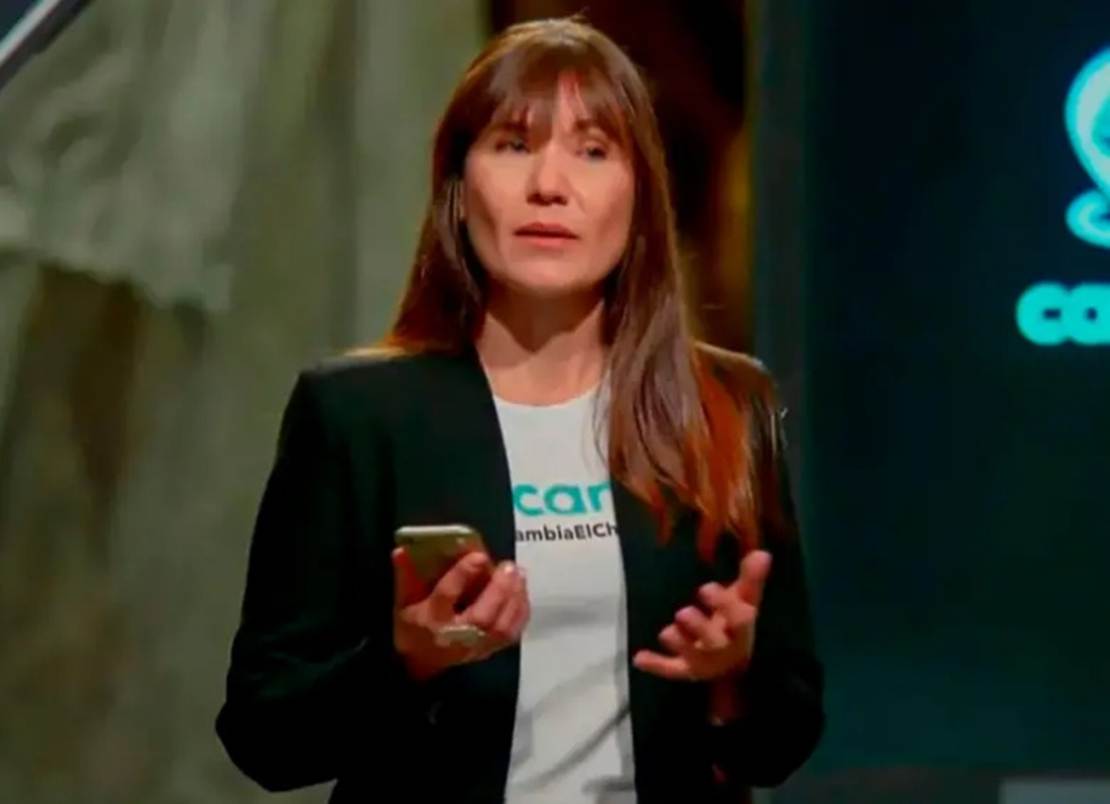
The case shifted when Juan de Bedout Vargas, an economist and investment professional, sat down with prosecutors 17 days after the deaths and spoke under oath for 3 hours and 20 minutes. His statement did not just recount a family’s last hours of normalcy; it opened a private corridor into motive. He disclosed an extramarital relationship with Zulma Guzmán Castro, described as a 54-year-old Tolima-born businesswoman known in some Bogotá circles for ventures tied to electric cars, including Car B. The relationship, he said, occurred between 2017 and 2018, elsewhere referenced as 2018 after a concert in Cartagena, and the timeline matters less than the emotional architecture it suggests: intimacy turned into a possible instrument of harm.
His testimony also gave investigators a behavioral detail that, in hindsight, reads like a warning sign. He said Guzmán once posed as a real estate agent to enter his building and install a GPS tracker on his vehicle, an intrusion captured on security footage. When confronted, she allegedly offered no elaborate justification,only that she wanted to know what he was doing. Later, after he had been widowed and was dining with a new partner, he said he received a message from Guzmán that felt less like closure than a flare of continuing fixation: “En serio, con cualquier garra, pero yo no. Qué tamaño de imbécil.”
Investigators built outward from that intimate account into the cold mechanics of telecommunications. They found the delivery worker; he had changed jobs, not his phone number,and extracted the numbers used to coordinate the drop-off. A report dated Sunday, December 14, 2025, described how the trail led to two phones linked to the same email account, both pointing toward Spain. One of the devices carried an identification code associated with Argentina, where investigators believe Guzmán spent long periods. That same phone, according to the investigative record, pinged cell towers near a dental clinic she visited and a veterinary clinic that treated her cats, ordinary errands turned into coordinates.
There is also the scene investigators say may have tipped her off. In mid-September, authorities raided the office of a personal “coaching” figure and “mentalist” whom the suspect frequented. In the Latin American imagination, where self-help, spiritual services, and social climbing often overlap, the detail carries a strange symbolism: a private world of influence and reassurance suddenly entered by the state’s hard hand. Whether that raid changed the suspect’s behavior is a question prosecutors have not publicly resolved, but the timing hangs there, suggestive.
Throughout, Guzmán has insisted that she is being turned into a character rather than being treated as a citizen with rights. In a message circulated via WhatsApp and echoed by media outlets, she wrote: “Los que me conocen saben que no hui a ninguna parte.” She claimed she had been working in Argentina for more than two years and had begun a master’s degree in journalism. She described traveling through Spain, stopping in Brazil, and then to the United Kingdom because of her son. “Me acusan, me imagino, pues tuve una relación clandestina con el papá de una de las niñas,” she added, framing the accusation as punishment for a secret relationship rather than evidence. In an interview referenced in the case file, she said the effect was to destroy her image “antes de cualquier proceso judicial,” as if the public verdict had arrived before the legal one.

When A City’s Private Pain Becomes A Public Test
The most unsettling turn in the investigation is not the romance, not the international travel, not even the chilling precision of a poisoned dessert. It is suggested that the raspberries may not have been the first exposure. Authorities have explored a hypothesis of prolonged poisoning after thallium appeared in toxicology exams of Juan de Bedout and another of his sons, who never ate the raspberries. They are also scrutinizing the medical history of Alicia Graham Sardi, De Bedout’s wife, reported as having died of cancer in 2020 and elsewhere referenced as 2021, with indications that thallium had been detected in her body before her death. De Bedout told prosecutors the initial finding occurred during the pandemic while the family was isolated on their farms, a moment when investigators believed any ingestion might have been accidental. But when the poison reportedly appeared again months later,after a detoxification attempt,the family’s private alarms turned into a prosecutorial question: could there be a link between a mother’s illness and a daughter’s death?
In his account, De Bedout emphasized that his wife did not die from thallium, but from cancer,“una enfermedad muy dolorosa”,and described doctors explaining the body’s desperate attempt to defend itself, producing “células buenas y malas.” The language is not medical, but it is human: a widower trying to map science onto grief, searching for narrative coherence where there may be none. Academic work in Forensic Science International and the Journal of Analytical Toxicology has discussed how toxicological traces can be interpreted over time, sometimes raising as many questions as they answer, particularly when exposures are intermittent, symptoms are nonspecific, and life events like illness create overlapping explanations.
Then there is the name that surfaced like an alias in a city that lives on nicknames: Zenai. Investigators have said they are trying to locate a woman known in some circles by that name, whose phone they believe was used to place calls tied to the delivery. The theory is not theatrical; it is practical. If the suspect was the alleged architect, prosecutors want to understand who, if anyone, served as the bridge between intention and execution,who contacted the delivery worker, who made sure the package crossed the building’s threshold, and who offered the tip that turned refusal into persistence. Majer Abushihab, attorney for the Forero family, praised the investigative team’s work and described a “muy amplio y serio caudal probatorio,” adding: “Sabemos que hay más personas en la mira de la Fiscalía.” The case, he suggested, is moving toward a network rather than a lone actor.
Investigators have also been blunt about what the dessert represented. “La dosis era letal,” they said. “Las querían acabar.” That phrase, so stark it sounds like a knife, captures the moral terror at the center of the story. This was not a random contamination. It was, prosecutors believe, a planned act aimed at children, carried out through the same delivery systems that make modern urban life feel easy. The case makes Bogotá look at itself: at how convenience depends on anonymous labor, at how wealth creates the illusion of safety, at how private grudges can metastasize into public violence.
The father of Emilia, Pedro Forero, wrote of his daughter’s life beginning 14 years earlier, full of “hopes, joys, and dreams,” and called it “incomprehensible” that someone could take that away. It is a sentence that could have been written in any Latin American country, in any era,because the region understands, in its bones, how violence steals futures and how families are forced to mourn not only deaths but the unlived lives that were promised.
Now the case sits at the intersection of the intensely local and the unmistakably global: a poisoned dessert in Rosales, a phone trail pointing toward Spain and Argentina, an Interpol Red Notice across 196 countries, an ultimatum demanding Zulma Guzmán Castro surrender before December 31 or face proceedings as a fugitive. Justice, if it arrives, will do so through paperwork, tower pings, testimony, and forensic results. But the damage has already traveled through a different medium,fear, which in Colombia moves faster than official statements and lingers longer than headlines.
What remains is the hardest part for any society to hold: uncertainty without surrendering to rumor, grief without turning it into spectacle, and a demand for accountability that does not confuse allegation with proof. Somewhere inside this case is a simple, unbearable truth: the girls believed a gift could be a gift. And Bogotá, watching the investigation widen to include Zenai, to include old toxicology reports, to include the private history of a marriage and an affair, is being forced to confront how fragile that belief can be.
Also Read: Bad Bunny Redefines Global Fame, With Career Built On Risk And Puerto Rican Identity