Brazilian and Chilean Women Bring Berlinale Stories That Won’t Sit Still

At the Berlinale, two Latin American filmmakers arrive with different tools and the same nerve. Brazil’s Grace Passô premieres her first feature about grief and family repair. Chile’s Maite Alberdi brings a documentary about motherhood pressure and punishment. Together they map what society asks of women.
Two Films, One Festival, and the Same Old Weight
In a film, a house can be just a house. A set of rooms, a door that sticks, a corner where dust gathers and no one wants to deal with it.
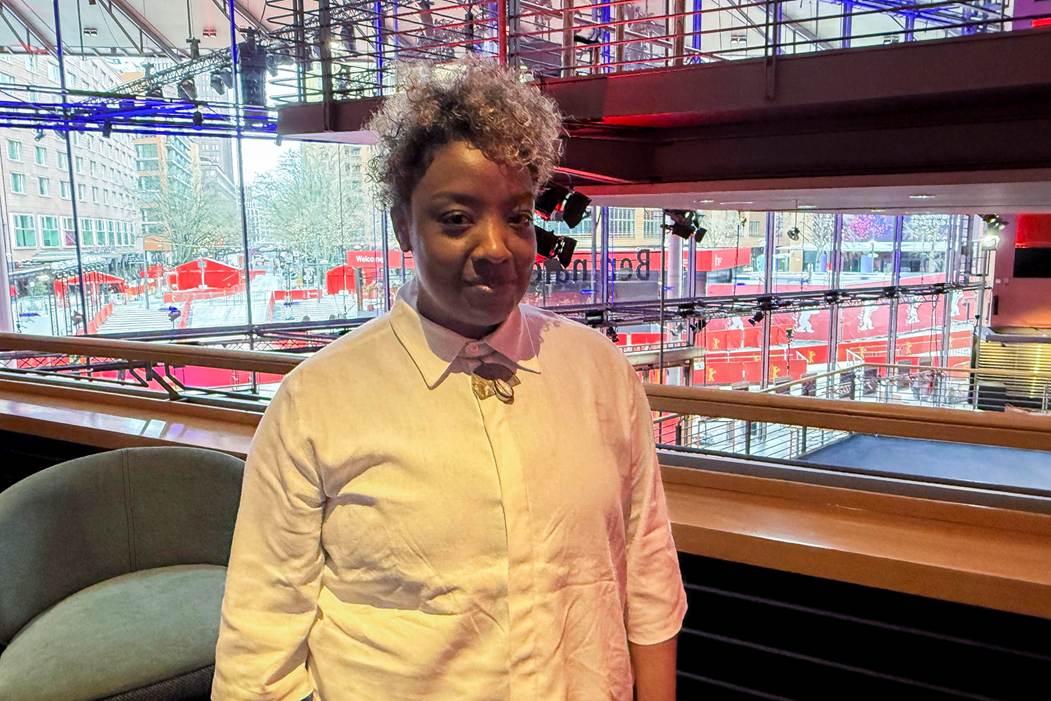
In Grace Passô’s Nosso segredo, the house is not just background. It is a character. It holds a family’s grief, and it holds a secret, and it holds the slow work of cleaning up after something has collapsed. Passô premieres the film Saturday at the Berlinale, her first feature, and she calls it an intimate drama that insists on showing affection being built even in the hardest moments.
The sensory truth of a house under strain is implied more than described. The labor of rebuilding leaves marks. The air changes when a room is cleared. The trouble is grief does not stay politely inside one person. It moves through walls. It settles into silence. It becomes a daily presence.
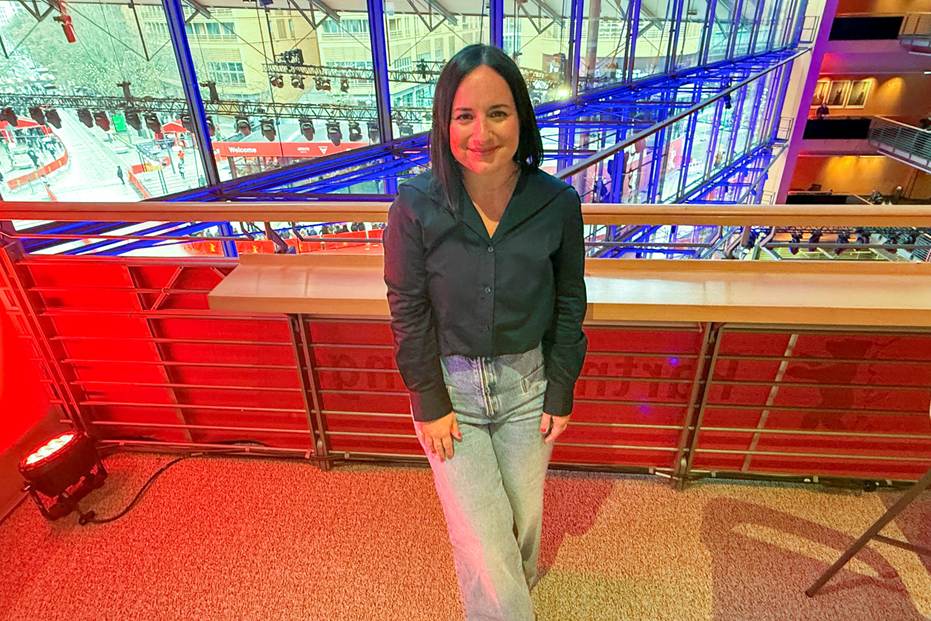
Just down the festival program, Maite Alberdi arrives with Un hijo propio, a documentary that follows a different kind of interior pressure. The story begins with something that sounds impossible until you remember how far people will go to survive expectations. A young woman, driven by a deep desire to be a mother and the constant pressure of her surroundings, fakes a pregnancy for the full term. She convinces others. She changes her body. And then she crosses an irreversible line.
Alberdi’s film revolves around a real case, Alejandra Marín, who was sentenced to more than thirteen years in prison for kidnapping a newborn from a public hospital. The movie is about her, but it is also about everyone around her. The social debt. The judgment. The way a community can tighten like a fist.
Two works, one festival, and a shared question that does not go away: what happens when women are cornered by what others insist they should be.
Passô and Alberdi do not present policy papers. They present lives. But the policy dispute is there anyway, embedded in the details. Who gets supported in grief? Who gets punished for longing? Who is allowed to fall apart and who is expected to hold the world together while smiling?
A House Built Slowly, Then Shaken by Loss
Passô’s movie follows a Black Brazilian family from Belo Horizonte trying to rebuild after a recent loss. Each person develops private rituals of escape as pain thickens in the quiet. The youngest son senses what remains unsaid and intuits a secret kept inside the house itself, pulling the family toward what they have been avoiding.
For much of the film, Passô says, viewers see the characters separately because each one, alone in their own world, seems able to operate their grief that way. Then something bigger happens, something impossible and surreal, and the family comes together for the first time on screen.
That structure is also an argument. It says that suffering is individual until it is not. It says community is not sentimental. It is a mechanism of survival.
Passô links that instinct to memory. “I am Brazilian, and in my memory, the moments of greatest union of my family, whether together cleaning the house, whether together building a wall or having a party, the moments when my family united the most were the moments when we had to solve some problem together,” she told EFE. She adds that coming from a Black family makes this deeply rooted for her.
She remembers hard moments as those that became, unexpectedly, the most joyful. Not because pain is good, but because unity can be. “The difficult moments, in my childhood memory, were also the happiest moments, the moments when, finally, we united. And that for me is very important in the film,” she told EFE.
There is something quietly political in that. In much of Latin America, home building is not a metaphor, it is life. Families construct houses over years, adding walls, fixing roofs, cleaning after storms, pushing through shortages. Passô points to that as something she loves about her family’s history, the long years spent building their home, a common reality across Brazil and the region, where a house can stand for a dream made solid.
In the film, the house becomes that dream and its collapse. It is the thing that gets dirty and must be cleaned with effort. It is the thing that must be rebuilt, like the family’s future.
The trouble is that when a house represents survival, any crack in it feels like a crack in everything.
Passô comes from theater, and she describes her directing instincts as shaped by that world. Acting and directing are different, she says, but in author-driven projects, the implication feels similar. You carry it with your whole body. You do not get to pretend you are merely observing.
Her film, a Brazil-Portugal co-production, screens in the Berlinale Perspectives section, competing for a best first feature prize. It is a debut that speaks in a familiar Latin American language: family as the last institution standing when the others fail.
Motherhood as Demand, Then as Sentence
Alberdi’s film arrives from another angle, but it is still about institutions failing women, then blaming them for the fallout.
She says what first caught her was the sheer strangeness of it: a woman faking pregnancy for the whole duration, convincing everyone, transforming her body. But the deeper pull was emotional. A universal theme beneath the spectacle. The pressure on women around motherhood.
“What can lead a woman to simulate a pregnancy like that and to suffer like that and to be so alone? That for me was the big question of the film, and it still is,” she told EFE. She connects that question to what she calls a social debt and to how little freedom women have over the desire to mother and over the experience of motherhood itself.
Un hijo propio spans fifteen years of the protagonist’s life, which Alberdi says was a challenge because the film needed to move backward to explain context while also living in the present of the last three years. She describes using tools associated with fiction alongside observation, interviews, and archival material. But she insists it is not a hybrid or fiction. It is a documentary that experiments with genre to tell the story in the only way it can be told.
To represent the protagonist’s testimony and subjective perspective, Alberdi says, the best method was to use actors and staged scenes, even while remaining, for her, fully documentary.
The everyday observation implied here is simple and brutal: many women recognize this pressure because they live it. Alberdi recalls that during casting, she heard painful stories from actresses about that pressure, even among very young women. What struck her was how personal it was for all of them, and how much of it came from pain.
She met Alejandra thirteen years after the case became public, Alberdi says, and from a different place than the one where media representation had fixed her. She met Alejandra when Alejandra had already lived through the process, was close to completing her sentence, and had already served what Alberdi calls the social sentence as well. Only then could Alejandra look back with perspective.
That is where Alberdi places another question, quieter but sharp: what responsibility does society have toward someone after they have already paid, after they have already been processed by the system and by public judgment?
Alberdi says the protagonist loved the film, understood that some viewers would understand her and others would not. She had lived the judgment already; she had heard the same things echoed in the film. But Alberdi says she was content and calm that the movie contextualizes her story from the place Alejandra wanted it to be seen.
Here, the policy dispute is not a law on the page, but a structure in the air. The way motherhood becomes an obligation. The way women are pushed toward an identity, then condemned when they break under it. The way punishment can extend beyond prison walls and into the permanent glare of social judgment.
Passô’s film says family can rebuild a world after loss. Alberdi’s film asks what happens when the world refuses to rebuild anything for a woman and demands she do it alone.
Different stories. Different genres. Same region, same undertow.
And a shared insistence, in the middle of a European festival, that Latin American women are not here to decorate the program. They are here to name the pressure and show its cost.
Also Read: Puerto Rican Song Tailor Tite Curet Turns Rain into Memory