Guatemala City Faces Unrest as El Gallito Reopens and the City Feels Under Siege
After ten police killings and a state of siege, armed patrols enter El Gallito, a neighborhood long ruled by gangs, revealing how fear, emergency powers, and daily life collide in Ciudad de Guatemala as residents, officers, and mistakes turn fatal.
A Neighborhood Entered Only with Permission
El Gallito, a densely populated barrio just two kilometers from the historic center of Ciudad de Guatemala, has long existed beyond the city’s invisible borders. Enter without permission from the criminal structures that dominate the area—or without armed state protection—and the odds tilt toward not leaving alive. That reality returned with force three days ago, when two young men entered the neighborhood by mistake and were met with gunfire. One, twenty-two years old, died from his wounds.
The shooting occurred on Tuesday morning, after the government had already declared a national state of siege. The decree followed the killing of ten police officers on Sunday in different parts of the capital, attacks authorities attribute to gang retaliation. For residents of El Gallito, the coincidence was bitter: emergency powers arrived not as prevention, but as aftermath.
Historically, El Gallito has been a prohibited zone for outsiders. Access to its most volatile streets requires approval from local bosses and strict compliance with unwritten rules, such as driving with car windows down to show who is inside. The neighborhood’s geography—tight alleys, stacked homes, limited exits—has long favored criminal control over public authority.
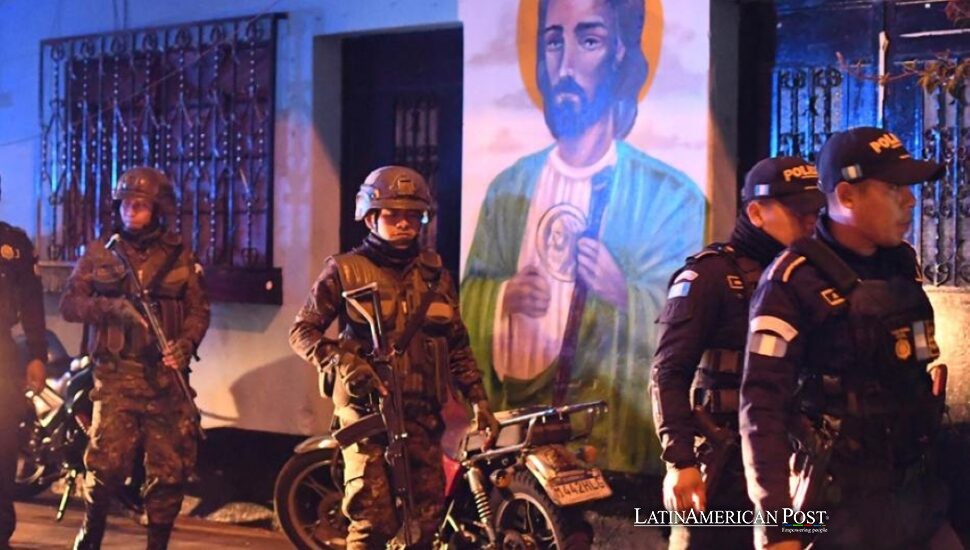
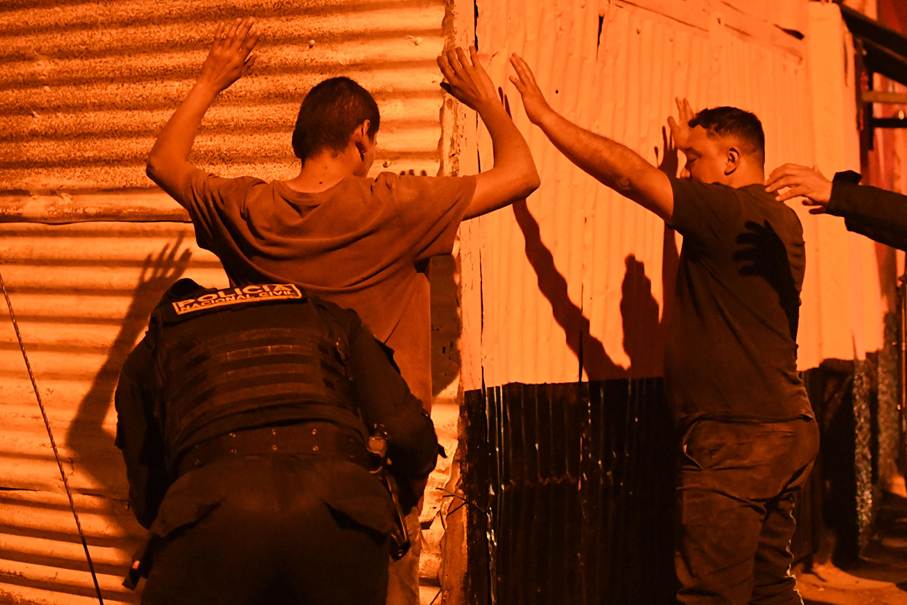
This week, that balance shifted, at least temporarily. Soldiers and officers from the Policía Nacional Civil entered with armored vehicles and rifles, conducting patrols that would have been unthinkable without the legal cover of the state of siege. Journalists accompanying the security forces did so under heavy protection, a reminder that visibility itself remains risky.
Emergency Powers and Old Enemies
The government’s decree allows the detention of anyone suspected of terrorism without a judicial warrant, a measure previously applied in other so-called “red zones.” In El Gallito, the order translated into constant patrols and door-to-door pressure, aimed at dismantling the structures blamed for the killings of police.
“We are carrying out patrols to prevent further attacks against our colleagues and to pursue the terrorist gang members who have caused serious damage to the institution,” Édgar Lainez told EFE, a third officer with the Policía Nacional Civil, during an operation in the neighborhood. Behind the language of procedure lay raw grief: among the ten officers killed were colleagues known personally to many on the ground.
Authorities say the attacks were carried out by alleged members of Barrio 18, one of the country’s most powerful gangs. The violence, officials argue, was retaliation after security forces regained control of three prisons following riots and hostage-taking the previous Saturday. The message, in their view, was clear: challenge gang power inside prisons, and the streets will respond.
Lainez insisted that patrols had not slowed since the killings, only intensified. “They haven’t been affected; they’ve been reinforced with more personnel to provide greater support and face any situation with these criminals,” he told EFE. The statement reflected a security doctrine shaped by decades of confrontation, prioritizing presence and pressure over negotiation.
The operations have extended beyond El Gallito to the north of the capital, to municipalities such as Villa Nueva to the south, and Mixco to the west. By Wednesday, authorities reported nearly three hundred arrests, including twenty-three gang members allegedly linked directly to the attacks on police.
Women In Uniform, Alert and Unbroken
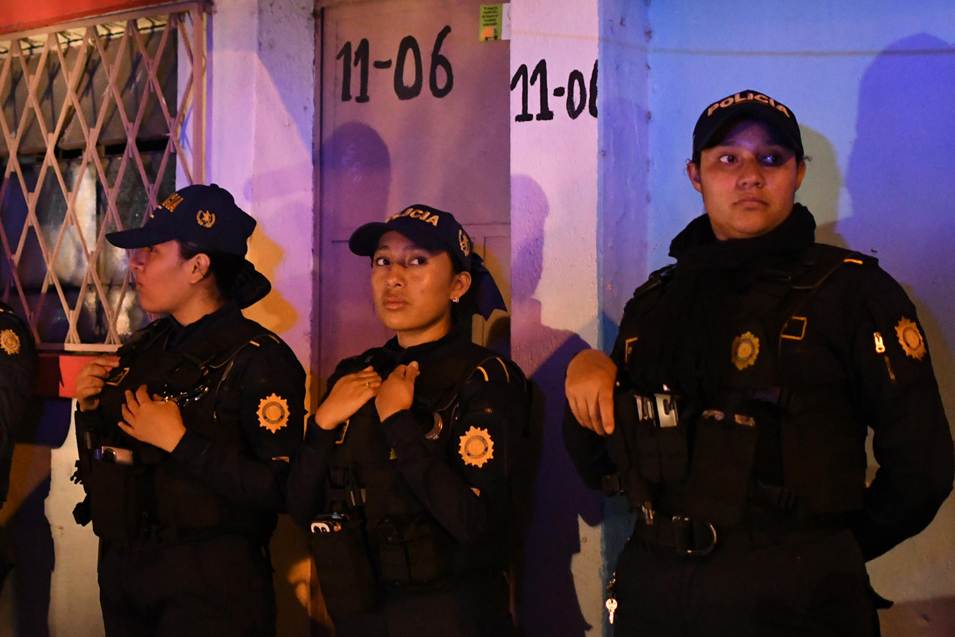
The killing of two female officers among the ten dead struck a particular nerve within the force. In a profession where risk is assumed, gender still shapes perception—both inside the institution and beyond it.
“The alert remains. We don’t let our guard down at any moment,” Élida Chavajay, a police agent with nearly five years of service, as she joined foot and motorcycle patrols in El Gallito told EFE. She acknowledged that society often views women as more vulnerable, but rejected that framing. “We take our self-protection measures, and we don’t trust,” she said.
Chavajay’s presence in the patrols was not symbolic. Women officers have increasingly taken frontline roles in Guatemala’s security forces, even as gangs have targeted police families and homes. Academic studies in Latin American Research Review have noted how prolonged militarized policing reshapes institutional culture, normalizing constant exposure to risk and blurring distinctions between war and public security. In Ciudad de Guatemala, that blurring is lived daily.
The sense of emergency has not faded with the first wave of arrests. On Thursday morning, the government announced that it was conducting more than 20 search operations in high-crime areas. By midday, officials reported the capture of over one hundred people, including four alleged terrorists, identified by their aliases: Killer, Negro, Gatica, and Maco.
For residents of El Gallito, the names mattered less than the atmosphere. Patrols brought temporary order but also tension. Homes were searched, movements questioned, routines disrupted. The state returned, but with the weight of suspicion.
The two young men who entered the neighborhood by mistake have become a grim shorthand for that reality. In a city fractured by invisible lines of control, a wrong turn can still be lethal, state of siege or not. The emergency decree may empower authorities, but it cannot erase the deeper map of fear etched into daily life.
As Ciudad de Guatemala braces for what comes next, El Gallito stands as both a warning and a mirror: a place where criminal power flourished in the absence, and where the return of the state arrives armed, urgent, and uncertain of how long it can stay.
Also Read: Puerto Rico’s Bigheads March Again With Peace, Plena, and Memory