Latin America Counts Its Babies and Rewrites Its Future Now
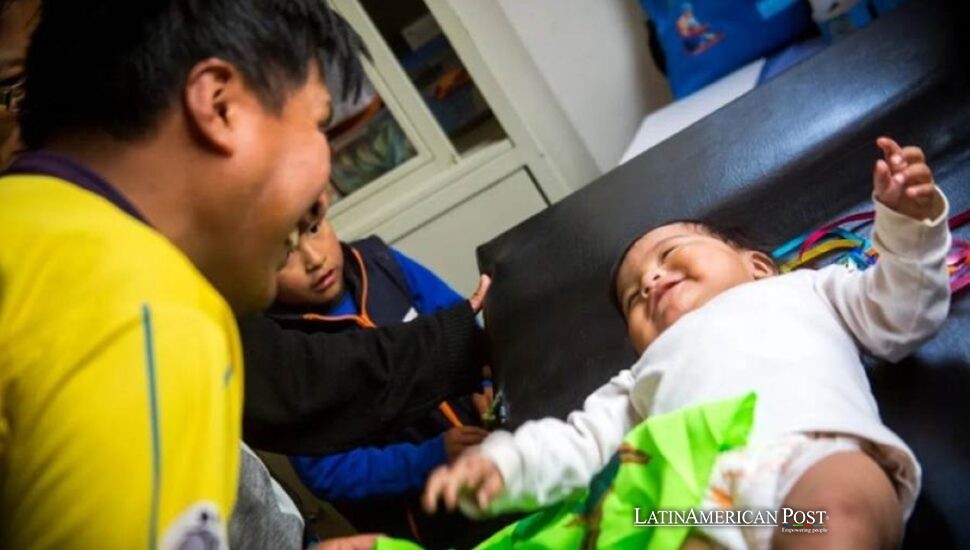
Latin America’s sharp drop in birth rates is now a major force changing schools, jobs, care, housing, and politics. Governments must now face issues like aging, inequality, and a generation less sure that being a parent is essential to adulthood.
The Family Script Is Changing
A small but telling detail stands out in Latin America’s changing demographics. In Santiago, a real estate ad highlights green spaces, barbecue areas, and a pet-friendly zone. In a wealthy part of Mexico City, pet grooming prices that once seemed shocking are now normal. Buenos Aires and Quito now have more dogs than children. These are not just lifestyle trends—they show that the region’s values are shifting.
The trend of treating pets like family in Latin America and the Caribbean is more than a fad. It’s a clear sign of a generational shift. Motherhood and parenthood are no longer assumed steps in life. The numbers show this change: the region now averages 1.8 children per woman, below the replacement rate of 2.1. In the 1950s, the average was 5.8.
This is a huge societal change that has happened in just a few decades.
Simone Cecchini of ECLAC told CNN that this change is happening faster in Latin America than in Europe, and even faster than the United Nations predicted 20 years ago. This matters because Latin America is not just repeating what other regions did, but is moving quickly with less time to adjust. ECLAC estimates that the region’s population will continue to grow until 2053, then begin to decline. Some places, like Cuba, Uruguay, and several Caribbean islands, are already seeing their populations shrink.
This is where the politics begin. A falling birth rate is never just about private preference. This is where politics comes in. A lower birth rate is not just a personal choice—it affects how governments plan schools, healthcare, and pensions, and how families think about stability. It also challenges old political messages about family values, since fewer people now see children as the main part of adult life. upying an increasingly marginal place in younger generations’ life projects. That is an elegant way of describing something deeper than personal taste. It means the old social script is weakening. For Latin America, a region where family has long been treated as both moral refuge and political slogan, that shift is enormous.

Inequality Still Decides Who Can Be a Parent
But this story is not just about modern life, personal choice, or city dwellers choosing pets over children. The drop in birth rates is not uniform across Latin America, and this unevenness is a key part of the Latin American experience.
Cecchini told CNN that women with lower incomes often have more children than they want, while wealthier women often have fewer than they would like. This is not just about numbers—it shows that both groups face barriers. In a region with deep inequality, even having children is shaped by unequal access to time, money, childcare, and stability.
Motherhood can make these gaps even wider. Women from poorer families often face more job barriers because they cannot afford childcare. Education also plays a role. According to Our World in Data, Mexican women had an average of 3.4 children and 6.4 years of schooling in 1990. By 2020, they had 1.9 children and over 10 years of schooling. Similar patterns are seen in Colombia, Brazil, and other countries. As Cecchini told CNN, women’s work, gender inequality, and fertility are all closely linked in a “very complex knot.”
This complex situation matters for politics because it affects how governments should approach family policy. It’s not just about encouraging people to have more children. Experts warn that such efforts rarely work well. Countries that offer bonuses or generous parental leave usually see only small or short-term changes. Cecchini points out that in Europe, these policies may lead women to have children earlier, but they do not change the overall trend.
Yopo Díaz takes this idea further. She says some people will not want children, no matter what policies are in place. This is an important point for democracy. The state should not try to force society back to old ways. Instead, it should help those who want to be parents but are held back by costs, time, or instability. She suggests focusing less on birth rates and more on making sure having children is not a burden, mainly for women.
This may be the main political lesson for Latin America. The fertility debate cannot be solved by looking back. It needs to be addressed through better housing, jobs, care systems, reproductive rights, and by asking if adults can raise children without risking poverty.
The notes make another important point here. A major driver of declining fertility has been the drop in teenage pregnancies. In Chile, Yopo Díaz told CNN, teen pregnancy fell by nearly 80% over the past decade, a public health success linked to reproductive autonomy and better access to contraception. Across the region, births among girls and young women aged 15 to 19 fell from 70 per 1,000 in 2014 to around 50 in 2024, according to ECLAC. That is undeniably progress. Yet even then, Latin America and the Caribbean still have higher teen pregnancy rates than any region other than Africa. So the region is moving forward while still carrying old inequalities in its bones.

An Older Region Will Demand a Different State
The effects are already showing up in daily life. In Chile, people are talking about closing maternity wards because there are fewer births. In Argentina, news reports mention schools closing amid declining enrollment. CNN cites a report saying school enrollment in Argentina could fall by 27% by 2030. In Uruguay, there are 15% fewer students aged 3 to 17 than there were 30 years ago. UNESCO and the International Institute for Educational Planning say that from 2015 to 2023, there were 1.2 million fewer births in the region. By 2030, there will be 11.5 million fewer school-age children and teens than in 2020.
This kind of change affects the whole structure of a country. With fewer births and people living longer, the population is getting older. This puts more pressure on health care, pensions, and public budgets, since fewer workers must support more retirees. But it’s not all negative. Some experts CNN spoke to say that having fewer children could mean more resources per student if governments and families make good choices during this transition.
Latin America now faces a choice. One option is to give in to panic, nostalgia, and political promises to bring back old family models. The other is to do the harder work of rethinking care, redesigning schools, changing labor policies, and creating systems that support parenthood as a real choice, not a risky bet.
Most experts agree that there is no single reason for the decline in birth rates. Instead, it’s a mix of health and education policies, economic gaps, changing gender roles, and a culture where having children is no longer required. This last point may be the most important. Latin America is not just having fewer babies—it is rethinking what life should be about.
This is why the pet-friendly billboard in Santiago is more important than it looks. It does not show decline, but rather a shift in what people hope for. The region now faces a political challenge that touches both private life and public policy: how to govern a society where family still matters, children are no longer a given, and the future will be older, smaller, and more demanding than before.
Also Read: Cuba Blackouts Transform Childbirth into a Regional Warning Signal