Mexico’s Water Reckoning Leaves Texas Thirsty and Northern Borderlands on Edge
At the edge of a bullet-scarred canyon in northern Mexico, a river no one sees has become the fault line of a growing crisis, where drought, politics, and history collide, binding Texas cities and Mexican states to the same vanishing water.
A River Few Texans Know, And Many Depend On
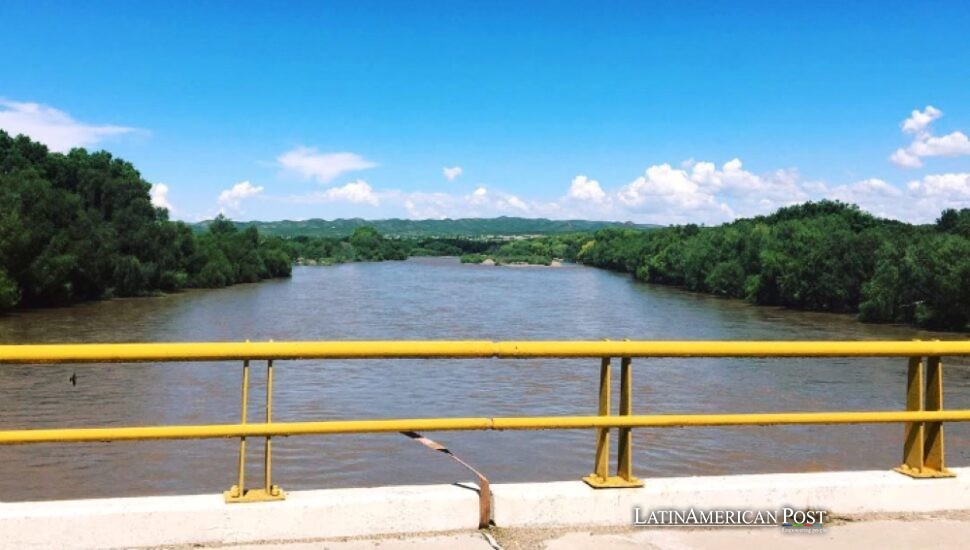
From a scenic overlook above the Cañón del Pegüis in Chihuahua, the land drops suddenly into a ravine so deep it seems to swallow sound. At the rim stands a crude concrete monument, three slabs forming an X, their surfaces cratered by bullet holes. Locals say it is where gunmen come to vent their anger. Standing there in early December, reading President Donald Trump’s social media threats about water and tariffs, the irony was impossible to miss. Hundreds of feet below, almost hidden by distance and brush, ran the thin green thread Trump wanted so badly: the Río Conchos.
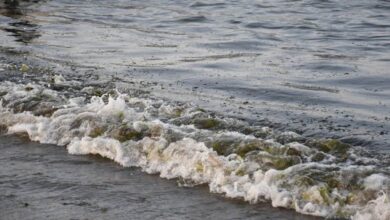
Most Texans have never heard of the Río Conchos, yet their future quietly depends on it. The river rises in the Sierra Madre, cuts across the deserts of Chihuahua, and eventually meets the Rio Grande near Presidio, Texas. Without it, the Rio Grande no longer reliably reaches the Gulf of Mexico. Decades of dams, canals, and overuse upstream have reduced the once-mighty border river to an algae-choked trickle south of El Paso, sometimes disappearing entirely through the Forgotten Reach, a two-hundred-mile stretch of dust and weeds.
When the Conchos flows, it rescues the river. When it does not, cities like Laredo, McAllen, and Brownsville—some relying on the Rio Grande for one hundred percent of their drinking water—face the unthinkable prospect of dry taps. Farmers in the Rio Grande Valley already know what scarcity looks like. The collapse of the Texas sugar industry has been partly blamed on the lack of fresh water. Citrus and cotton could be next.
Treaties Written In Ink, Rivers Written In Dust
The crisis is governed by the nineteen forty-four water treaty, a diplomatic document that divides rivers with mathematical precision but never imagined a hotter, drier century. Under its terms, Mexico owes the United States a fixed volume of water over five-year cycles, much of it expected to come from the Río Conchos. In December, Trump accused Mexico of violating the treaty and threatened a five percent tariff if water did not immediately flow north.
Facing economic pressure, President Claudia Sheinbaum announced Mexico would release more than sixty-five billion gallons by the end of the month. The Trump administration declared victory. Sheinbaum sounded far less triumphant. At her daily morning conference, she reminded reporters that Mexico could not send water it did not have. “There was a drought—because there wasn’t water,” she said. “It’s simple as that.”
Soon, reservoirs opened and water surged toward Texas. But it was not the water Texans wanted. Instead of drawing significantly from the Conchos basin, Mexico released water from the Río San Juan, which feeds Monterrey and enters the Rio Grande downstream of major reservoirs. The water counts toward Mexico’s treaty obligations, but it arrives salty, difficult to store, and sometimes barely usable.
“Is that water good? No,” Dante Galeazzi, president and CEO of the Texas International Produce Association, said. “But it’s water that’s wet. Not theoretical water.” In recent summers, the salinity grew so severe that Texas asked Mexico to stop sending San Juan water altogether. It was useless for crops and risky for infrastructure.
Monterrey’s Thirst and Chihuahua’s Fury
Sending San Juan water north comes at a cost Mexico knows all too well. In two thousand twenty-two, during a historic drought, Monterrey, one of Latin America’s wealthiest industrial cities, ran out of water. Entire neighborhoods went dry for months. Bottled water vanished from shelves. Residents described scalpers reselling plastic buckets at inflated prices, a black market born of desperation.
Why would Sheinbaum risk repeating that trauma—especially with World Cup visitors set to arrive—rather than send water from the Conchos? The answer lies west, in Chihuahua, Mexico’s largest and most rugged state. The region has long resisted federal control, a defiance older than Pancho Villa’s cavalry. In two thousand twenty, when President Andrés Manuel López Obrador ordered water released from La Boquilla, Chihuahua’s largest reservoir, growers and campesinos revolted. Highways were blocked. The military intervened. Two farmers were shot; one died. The federal government retreated.
Since then, Conchos water has become politically radioactive. Sheinbaum has signaled she is unwilling to test Chihuahua again, especially as her administration rolls out a controversial national water law asserting that all water ultimately belongs to the state. The law limits the sale of private water rights and proposes a national registry to crack down on unlicensed use, a widespread practice in arid states. In December, farmers drove tractors onto freeways and even across the international bridge near El Paso, protesting what they see as an existential threat.
For now, the government has limited releases from small reservoirs near the border, avoiding the deeper Conchos system. Most of the water heading north continues to come from the San Juan.
Bandaids On a Dry Future
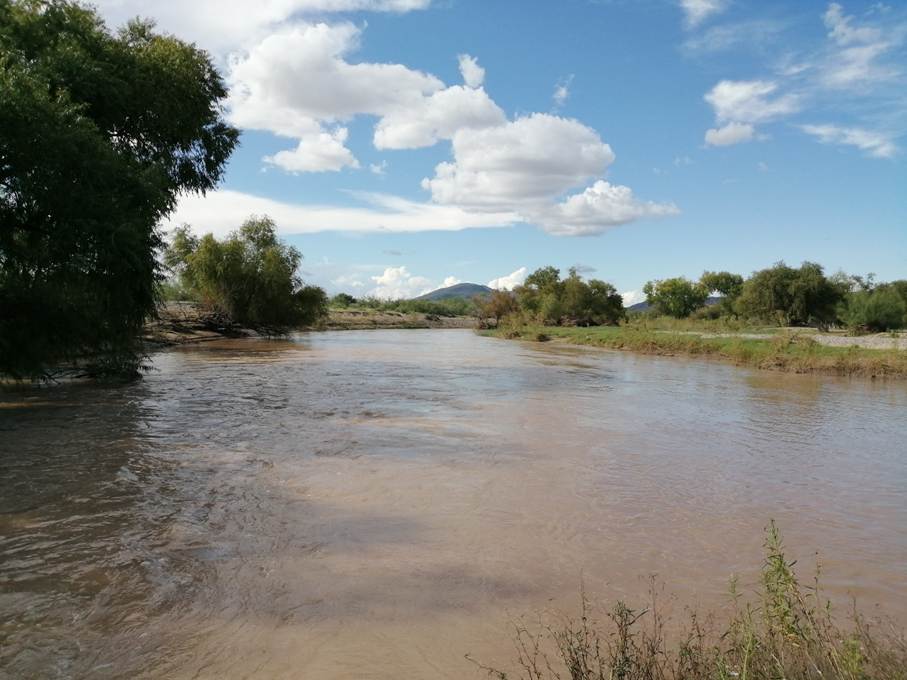
Water experts warn that these maneuvers are temporary fixes masking structural failure. “These are just bandaids,” said Rosario Sanchez, a senior research scientist at the Texas Water Resources Institute. Even if Mexico drained San Juan reservoirs entirely, she explained, it would not meet treaty obligations or future needs. There simply is not enough water. “We are seeing the limits of the treaty,” Sanchez said. “Mexico is not able to fulfill that amount of water.”
South Texas farmers are sympathetic to drought but furious about overuse. Over the past thirty years, pecan orchards in Chihuahua have more than doubled. Tree nuts are among the most water-intensive crops in the world, a fact documented in agricultural studies published by journals such as Agricultural Water Management. As orchards expanded in Chihuahua, similar growth occurred along the Rio Grande in West Texas and New Mexico, compounding shortages downstream.
“What Chihuahua is doing is farming in the desert,” Galeazzi said. He offered a blunt analogy: imagine replacing Las Vegas with pecan groves. The water demand would multiply several times over. To Texas growers watching their livelihoods evaporate, Chihuahua’s orchards feel like a betrayal of shared scarcity.
Yet even Galeazzi concedes a harder truth. Even if Mexico delivered every last drop owed from the Conchos, it would cover only about one-third of the Rio Grande Valley’s long-term needs. Without massive investment in infrastructure, conservation, and difficult decisions about crop choices on both sides of the border, the region is headed toward disaster regardless of Mexico’s actions.
Water, Power, And A Border Under Pressure
In January, Trump escalated his rhetoric. After the dramatic arrest of President Nicolás Maduro of Venezuela, Trump suggested Mexico was effectively controlled by cartels and again floated the idea of military action. “Something is going to have to be done with Mexico,” he said. The comments rattled markets and underscored how quickly water disputes can slide into geopolitical brinkmanship.
From a Latin American perspective, the crisis exposes an old pattern. Treaties drafted in distant capitals ignore local realities. Rural communities absorb the costs of decisions made far away. Drought becomes not just a natural disaster but a political weapon. In Chihuahua, farmers fear losing control over water they see as their birthright. In Monterrey, residents remember empty taps. In South Texas, families wonder how long reservoirs can hold.
The Río Conchos flows quietly through canyons marked by bullets and history, carrying more than water. It carries the weight of two nations trying to survive a hotter century with rules written for a cooler one. The river does not care about borders or tariffs. It responds only to rain, snowmelt, and the relentless pull of gravity. Whether governments can learn to respond with equal humility remains the unanswered question, as the green line below the canyon rim grows thinner by the year.
First reported and adapted from Texas Monthly. Original reporting by Jack Herrera.
Also Read: Mexican Enchiladas Traveled Far Enough to Lose Their Birth Certificate