Venezuelans’ Hope Turns to Phone Fear After Maduro’s Sudden Capture
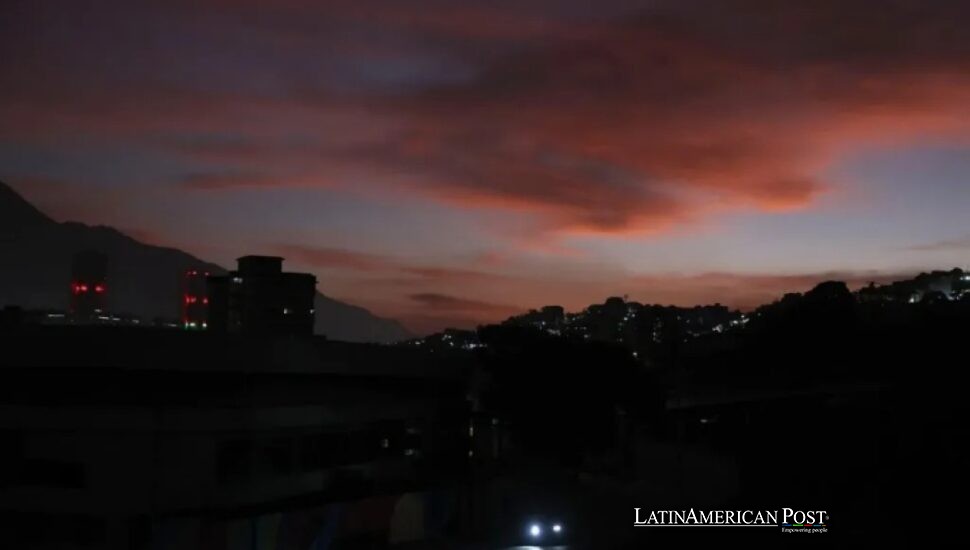
After U.S. forces struck Caracas on Jan. 3, 2026, and seized Nicolás Maduro, the celebration lasted hours. Now Venezuelans delete messages, hide apps, and avoid checkpoints run by colectivos, fearing a phone search could turn dissent into prison before dawn again.
Thunder That Wasn’t Thunder
At first, Isabel thought the sound was the weather. It was late, and she was doing what people do when they borrow a little peace from a country that rarely offers it—chatting with friends, music playing, beer bottles collecting on a table, the night stretching beyond midnight in Caracas. Then the house began to shake. The first blasts didn’t announce themselves as war. They arrived like a storm rolling in from the mountains, the kind of thunder you try to ignore until it stops.
But it didn’t stop. Someone looked out the window and saw the plume of smoke rising from a nearby military base. The room changed instantly, from laughter to counting seconds between booms. More blasts hit, and the air in the house seemed to tighten around everyone’s chest. Isabel, a graphic designer in her twenties, found herself huddling until dawn, breathing through two panic attacks as she tried to force her body to believe it was still safe. “The noise is something I’ll never forget,” she said in a phone interview with TIME Magazine. By morning, she ran home and has rarely ventured out since, as if the city itself had been rewired overnight.
This account, adapted from TIME Magazine reporting by Brian Bennett, captures a truth that doesn’t fit neatly into headlines about raids and rulers. After the bombs, the loudest change was the quiet that followed. In the days after the operation to capture Nicolás Maduro, Caracas did what it has learned to do: lower its voice, shorten its routes, and treat ordinary movement like a risk calculation.
When the news first raced across social media early that Saturday morning, the reaction was raw, almost primal. People banged pots and pans in celebration. Shouts of hijo de puta cut through the streets. For a moment, it sounded like release—like the city’s long-held breath had finally been exhaled. But that flush faded quickly as a harsher reality set in: the regime that supported Maduro remained in power, and the machinery of control remained intact.
So Venezuelans emerged again—not into freedom, but into an aftershock. They went grocery shopping, visited family, and returned to work. And many began leaving their phones at home.
Checkpoints, Colectivos, and the New Ritual of Deleting
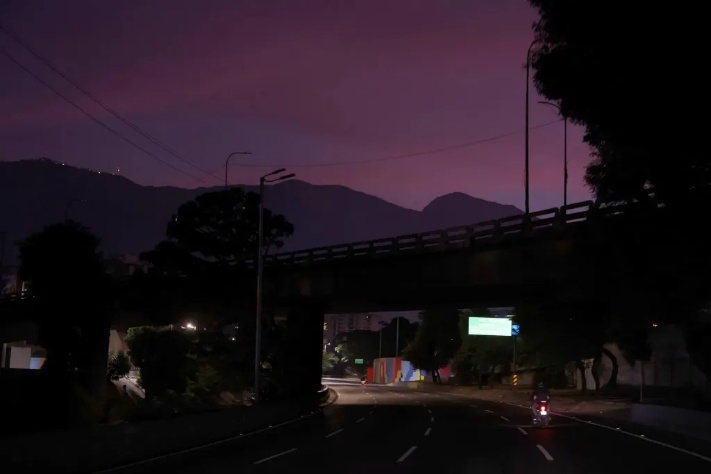
In the aftermath of Maduro’s capture, fear didn’t only live in the sky. It moved to the street level, to places where armed men can turn daily life into a test. Residents told TIME Magazine that the possibility of phone searches by pro-government armed supporters known as colectivos began guiding behavior. Outsiders might mistake this for paranoia—until they understood what a single message, screenshot, or “like” could mean at a checkpoint.
“You can go to jail just for thinking differently from the government,” said C., a designer in Caracas who spoke to TIME using only her first initial. She deleted everything—photos, conversations, even Instagram. “There is a lot of uncertainty,” she said. “We fear speaking, fear sharing online. Especially, we fear that nothing will change.”
That last line is the one that lingers, because it exposes the psychological trap: the terror isn’t only punishment. It’s the suspicion that sacrifice will be wasted. People can endure hardship when they believe it leads somewhere. What corrodes the soul is the sense of cycling back into the same darkness.
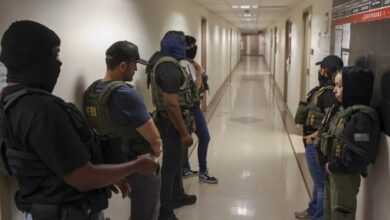
Isabel described the same tightening in her circle. Friends stripped their phones down to blankness—deleting photos, wiping text chains, removing apps. It was like people sweeping footprints from wet cement. She refuses to venture outside her immediate neighborhood. Isabel avoids the roads where colectivos might stop cars. “Everyone lives in fear at this point,” Isabel said. “I know what they’re capable of doing.”
A meme circulating among Venezuelans captured the strange, bitter humor of the moment. Against a purple background, it compared these new precautions to the frantic hiding of evidence by someone cheating on their spouse. It read: “We are like married people with lovers… reading and deleting everything, to not get caught,” followed by three emojis that cry and laugh at the same time. In Latin America, humor often becomes the last public language left when direct speech feels dangerous.
The fear was not only informal. On that Saturday, the State Department sent an alert advising U.S. citizens inside Venezuela to leave immediately. It warned of reports of armed colectivos searching cars at checkpoints for evidence of U.S. citizenship or support for the United States. In a country where loyalties are policed, identity itself becomes contraband.
Lighter, Not Free
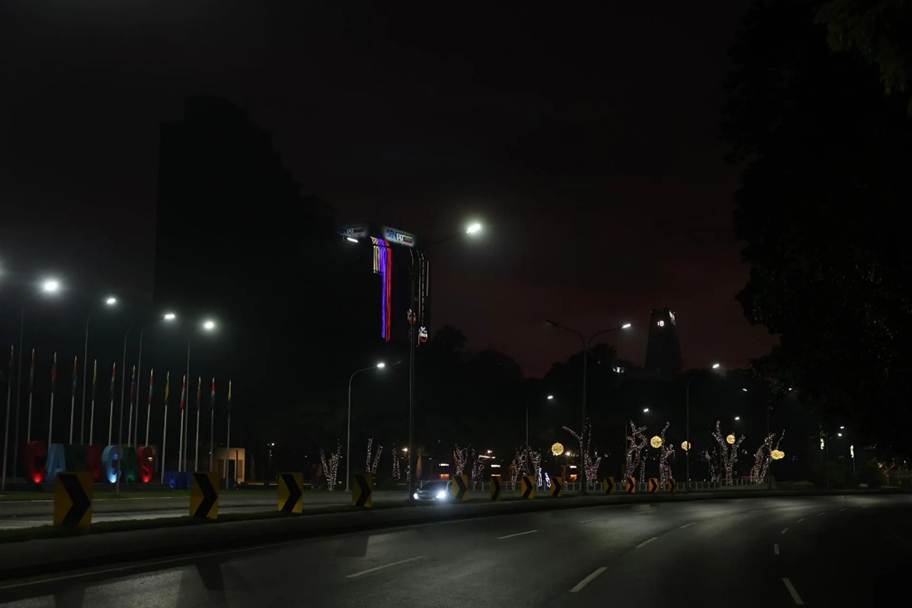
Camila, a medical professional in Caracas, slept through the blasts and the buzz of American helicopters that carried off the dictator. She woke around 10 a.m. to a phone lit up with messages from friends. The news didn’t feel like a celebration. It was a jolt—one of those historic ruptures that arrives before your body catches up.
She didn’t leave her house until Wednesday. Her fear had a destination name: El Helicoide. The pyramid-shaped building in the center of Caracas was designed as a shopping mall but is instead known as a site used by Venezuela’s intelligence agencies for interrogations and torture since the 1980s. It is one of those places that functions like a national ghost story. The outside world rarely sees it up close, but it is always present in the imagination of those who live under it.
Camila said she heard a rumor that the militia were stopping people at gunpoint and forcing them to plug phones into a special electronic device designed to find anti-regime messages. She jokingly called the device “Tronchatoro”—or Trunchbull—after the sadistic headmistress in Roald Dahl’s Matilda. The joke mattered because it was a way to touch fear without letting fear swallow you whole. But the response was practical. Camila said she planned to return to her office soon, leaving her usual phone at home. Instead, she bought a new cell phone for $60, with a clean memory and a new number—an emergency identity, like a spare passport for survival.
Despite the fear of Tronchatoro, Camila said she feels “lighter” since Maduro’s capture, though still uneasy. That is the emotional math of Venezuela’s recent decades: relief tempered by the memory of disappointment. She has dared to hope before. There was a moment after Hugo Chávez died in 2013, when the future felt briefly negotiable. There were the 2024 elections, which the opposition won, only for Maduro to refuse to accept the result. Each time hope rose, the system found a way to slam it back down.
“You get, like, punched so many times in the face that you’re scared to have hope,” Camila said. “I have a little hope, but you never get fully hopeful because it might be another punch in the face.”
That sentence is not a political slogan. It is a survival technique. In Caracas right now, hope is being rationed the way people ration food in a shortage. Small amounts, carefully measured, never wasted. The bombs may have been the dramatic opening act, but the daily story is quieter. A country navigates what comes after the impossible happens, while the familiar structures of fear still patrol the streets, asking to see your phone.
Also Read: Caracas Wakes To Champagne Dreams, Checkpoint Dawns After Maduro’s Fall