Chile Night Sky At Risk As Green Energy Dims Stars and Astronomy Potential
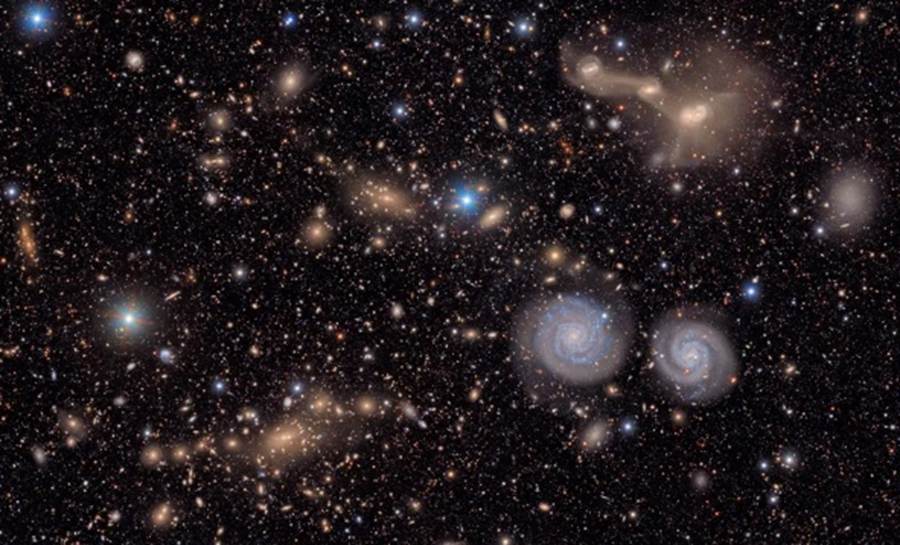
On clear nights in northern Chile, the Atacama Desert turns into a cathedral of stars. From mountaintop observatories, astronomers peer into the early universe through some of the darkest, driest skies on Earth. Now that the vast cosmic window faces an unexpected threat from a massive green-energy project rising in the same desert.
A Perfect Cocktail For Astronomy Under Threat
Chile’s Atacama Desert has long been revered as a natural observatory — a marriage of extreme dryness, altitude, and remoteness that creates one of the clearest night skies on the planet. This rare environment is a cultural treasure that unites scientists, locals, and visitors alike, making its preservation vital for all.
Now, however, astronomers are warning that an industrial-scale renewable energy and hydrogen complex planned just a few kilometres away threatens to unravel decades of scientific achievement. In an open letter to the Chilean government, 30 leading scientists, including Nobel laureate Reinhard Genzel, describe the project as “an imminent threat” to humanity’s ability to study the cosmos.
“The damage would extend beyond Chile’s borders,” the group writes, stressing that global research on everything from planet formation to early-universe physics depends on Paranal’s uniquely pristine skies, reminding us that this issue affects the entire scientific community.
Green Energy Meets A Cosmic Red Line
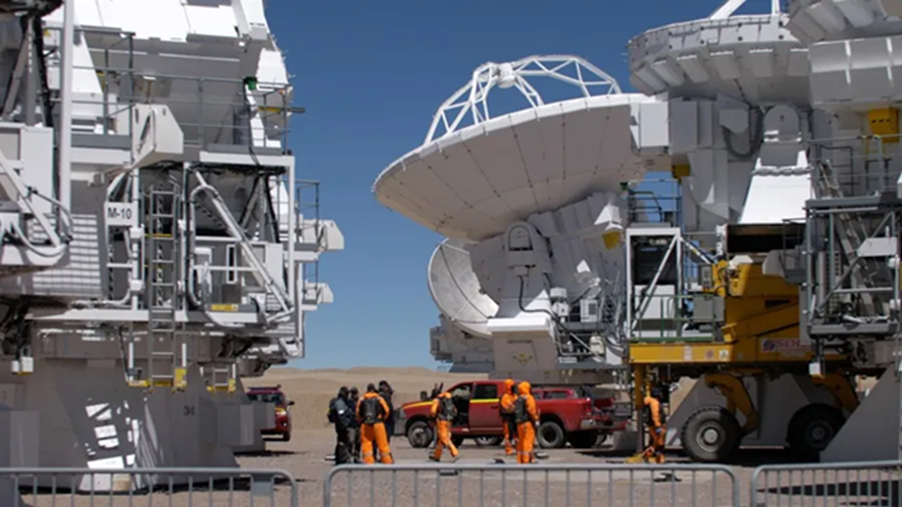
The project, promoted by AES Andes, would blanket nearly 3,000 hectares of desert with wind turbines, solar installations, a desalination plant, and a new port. For astronomers, the issue is not renewable energy per se, but the location. At just 3km (1.9 miles) from Paranal’s telescopes, every truck, floodlight, and fan becomes a potential source of contamination.
AES insists its studies show the project is fully compatible with astronomy and compliant with Chile’s strict light-pollution rules. “We encourage trust in the country’s institutional strength,” the company said in comments to AP reporters Nayara Batschke and Isabel DeBre.
Astronomers warn that dust, ground vibrations, and increased atmospheric turbulence — factors that cause stars to twinkle — can degrade the stability of the sky and compromise ultra-sensitive data. If these disturbances increase, the ability to conduct precise observations diminishes, threatening decades of scientific progress and global research efforts.
“At the best sites in the world for astronomy, stars don’t twinkle,” said Andreas Kaufer, ESO’s director of operations. ESO estimates the project would increase light pollution by 35%. If the sky brightens artificially, Kaufer warns, “We cannot do these observations anymore. They’re lost… and if they’re lost for us, they’re lost for everyone.”
Why Losing Atacama’s Darkness Would Hurt The World
Chile is now the global capital of astronomy, home to 40% of the world’s astronomical infrastructure. The Atacama hosts the Very Large Telescope, the under-construction Extremely Large Telescope, and dozens of international projects exploring exoplanets, dark matter, and relic light from the birth of the universe.
These observatories are not easily moved. Site selection takes decades, and there are only a handful of places on Earth with the same unique conditions. Meanwhile, light pollution worldwide is making the night sky roughly 10% brighter every year. “Major observatories have been chased out to remote locations,” said Ruskin Hartley, director of DarkSky International. “Now they’re chased out to the last remaining dark-sky locations on Earth… and all of them are at risk.”
Chile’s challenge exemplifies a global dilemma: expanding renewable energy without destroying the environmental and scientific resources that inspire such efforts. This is not a simple battle between fossil fuels and green power but a complex trade-off between advancing clean energy and preserving the unique conditions that enable groundbreaking astronomical research and environmental conservation.
The Future Of The Atacama Hangs In The Balance
Supporters of the project highlight jobs, hydrogen exports, and climate goals. Astronomers counter that once an industrial hub is built beside a world-class observatory, the damage cannot easily be undone. Some disturbances can be mitigated, but not eliminated, and subtle atmospheric changes may only be detectable after harm is irreversible.
Beyond scientific data, the Atacama’s darkness represents a cultural and even spiritual asset. Tourists, locals, and researchers alike describe the overwhelming shock of seeing the Milky Way sweep across the sky in complete clarity from horizon to horizon — a view almost impossible anywhere else on Earth.
Whether that view remains depends on Chile’s regulators, who must now weigh climate leadership against scientific legacy. The open letter does not reject hydrogen development; it simply calls for relocating this particular project away from a site that cannot be replicated.
As Batschke and DeBre report, observatories have already been pushed to the literal edges of the world in search of darkness. If even those places are sacrificed, the loss will be measured not just in data but in knowledge — in questions we may never answer.
Once a pristine night sky is gone, astronomers like to remind us, it is almost impossible to bring back, underscoring the critical need to safeguard this natural resource for future generations.
Also Read: Latin America Fossil Swamps Reveal Ancient Giant Anacondas And Climate Secrets