Ecuador’s Galápagos Tortoises Return to Floreana and Stir New Questions
For the first time in more than one hundred eighty years, young giant tortoises are moving across Floreana again. Their return is a conservation milestone, but it also brings an older argument back to the surface: how Ecuador protects a living symbol while people depend on it.
A Release Meant to Be Quiet, and Could Not Be
The moment does not need a speech, and still, it lands like one.
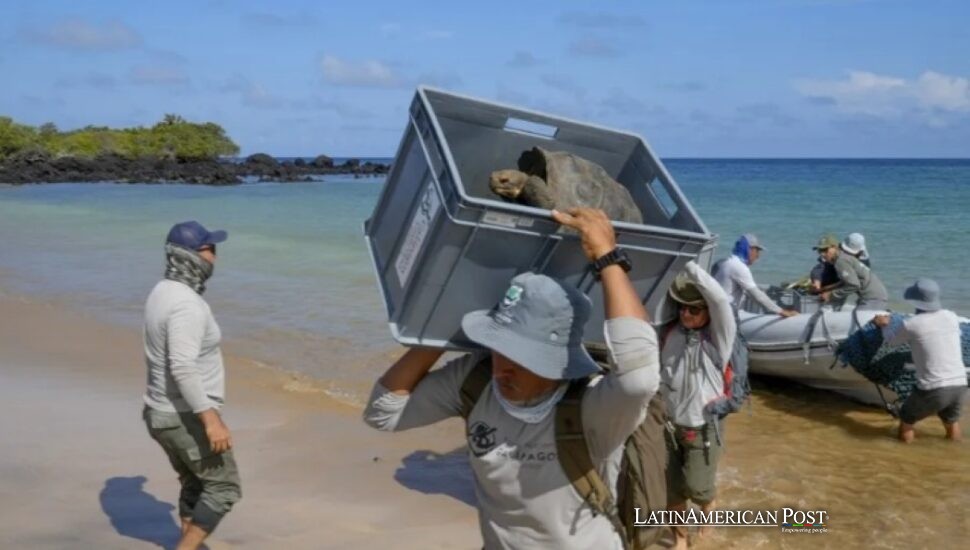
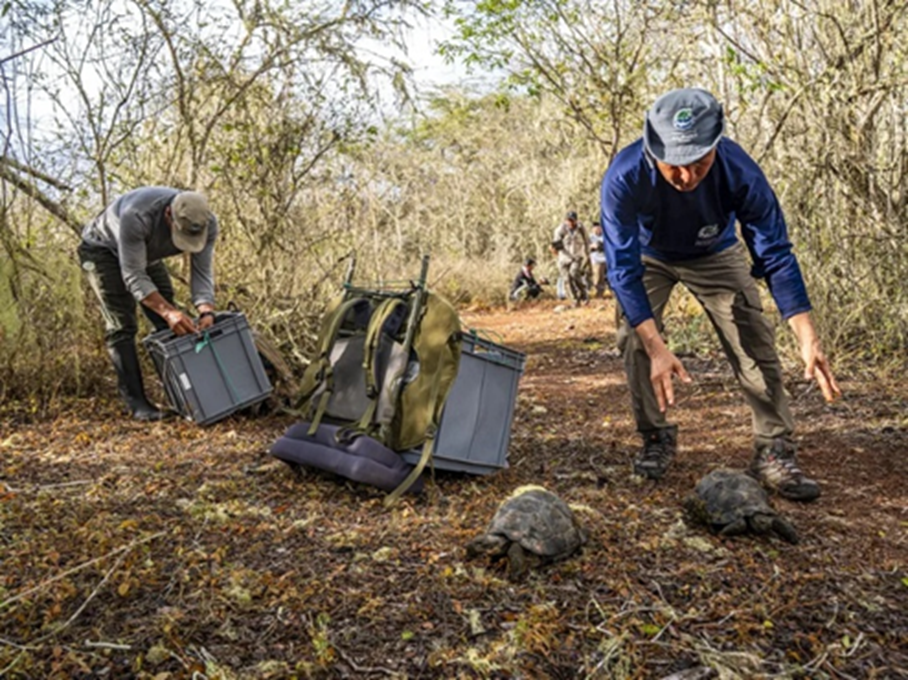
On Floreana, the lids come off, and the work turns physical. Hands steady the juveniles. Then the animals meet the ground, one by one, and start doing what tortoises do best: taking their time, refusing to be rushed, making their own small decisions in public. There is a faint scrape as shell and claw find purchase. A dry, earthy smell rises where the soil has been disturbed. For a second, the scene is almost ordinary, like setting something down carefully and watching to make sure it stands.
Except nothing about this is ordinary.
A total of one hundred fifty-eight captive-bred juvenile tortoises were released onto the island as part of the Floreana Ecological Restoration Project led by the Galápagos National Park Directorate. Conservationists have called it a milestone. The Galápagos Conservation Trust went further, saying in a statement that the restoration of Floreana had reached “a hugely significant milestone” with the release, and arguing that the “long-anticipated moment gives hope” not only for Floreana but also for island restoration elsewhere.
Hope is the easy part to say out loud. The trouble is what hope commits you to afterward.
Because this release is not just about adding animals to a landscape, it is about deliberately rebuilding a relationship broken long ago.
Floreana’s native giant tortoise, Chelonoidis niger niger, was driven to extinction in the eighteen forties, after sailors took thousands from the island for sustenance during long voyages. In that sentence, the history feels blunt. Not evil, not mysterious. Practical. Hunger and distance and the logic of ships. And then, absence.
So when the juveniles begin to roam, it reads like a correction, but also like a reminder of how quickly a place can be emptied when the outside world decides it is useful.
The wager here is that restoration can be more than symbolic, that it can function. That the island can hold tortoises again, and that tortoises can help hold the island together.
Rebuilding an Animal Through Genes, Patience, and Time
This return did not come from a single breakthrough. It came from a long, careful argument with time.
Scientists discovered tortoises carrying Floreana ancestry on Wolf Volcano on Isabela Island in 2008. That discovery opened the door to a back-breeding program, formally launched in two thousand seventeen, after researchers recognized that genetic lineage linked to the extinct Floreana tortoise still lived, diluted but present, in hybrids.
It is a strange kind of resurrection. Not a lost animal found intact, but a lineage traced and reassembled through deliberate breeding choices, like pulling a faint thread out of a larger fabric and trying to weave it back into something recognizable.
Researchers selected twenty-three hybrid tortoises with the closest genetic links to the extinct subspecies and began breeding them in captivity on Santa Cruz Island. By two thousand twenty-five, more than six hundred hatchlings had been produced, with several hundred now large enough to survive in the wild.
Dr. Jen Jones, the Galápagos Conservation Trust chief executive, described the release as “truly spine-tingling,” the statement said, and framed it as validation of two decades of collaboration between scientists, charities, and the local community.
That last phrase matters, even if it sounds like the kind of line that can slide past a reader. Collaboration is not decorative in a place like this. It is the difference between a project that exists on paper and one that survives the next political season, the next budget fight, the next wave of attention.
And attention always comes to the Galápagos. It is one of those names that never fully belongs to the people who live closest to it. It belongs to the world. It belongs to science. It belongs to tourists. It belongs to anyone who ever learned about the islands through Charles Darwin and the theory of evolution by natural selection, and then wanted to see the classroom made real.
The islands are also administratively part of Ecuador, and their largest source of income is tourism, according to the notes. So the story cannot be about biology alone. It is also about economics, identity, and the everyday reality that a protected place is still a place where people try to make a living.
In that context, the tortoises do something quietly political just by existing in the open. They insist the ecosystem is not scenery. They insist the island is not a museum label.
The Tortoise as Engineer, and the Island as Argument
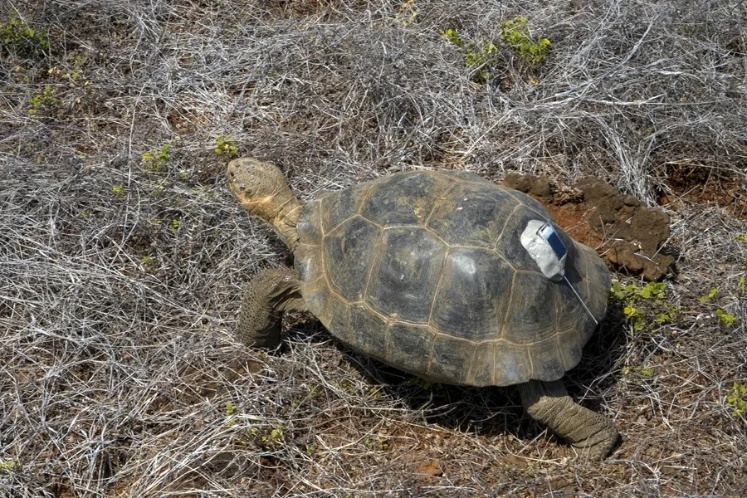
The Galápagos Conservation Trust calls giant tortoises “ecosystem engineers,” emphasizing in its statement that they play an “outsized role in restoring degraded ecosystems” by shaping landscapes through their activity.
That idea is scientific, but it is also a cultural provocation. It asks the public to see a slow animal as a force. It asks policymakers to treat reintroduction not as a photo opportunity, but as a tool with consequences. If tortoises reshape landscapes, then releasing them is not a neutral act. It is a decision about what kind of landscape should exist in the first place.
And that is where the policy dispute lives, even when everyone agrees on the beauty of the headline.
Ecuador’s Galápagos are officially recognized for their extraordinary wildlife value, and the notes describe a model that includes ecological tourism aimed at preserving species. But tourism, even when it calls itself ecological, is still an industry. It brings money. It brings pressure. It creates incentives to brand the islands as “enchanted,” to sell wonder as a product, to keep nature legible and accessible.
Restoration can rub against that.
Not because people necessarily oppose tortoises, but because a serious restoration project requires patience, restrictions, and long horizons. It asks the public to accept that some places are not primarily for viewing, and that some decisions will be made for the ecosystem first, not for the visitor experience. It asks, in a Latin American reality shaped by uneven development and hard trade-offs, who gets to set the rules and who bears the cost.
The return of tortoises to Floreana is, in other words, not the end of a story. It is the start of a new version.
Back at the release site, the juveniles keep moving. They do not perform urgency. They do not look over their shoulders. They go, slow and certain, as if the island has been waiting for them and they have always known the way.
That is the memorable thing, and maybe the unsettling thing too: the animal makes it look simple.
It is not simple. But it is real. And in Ecuador’s Galápagos, reality has always been the hardest thing to protect.
Also Read: Costa Rica Unearths Giant Sloth and Mastodon Fossils, Rewrites Memory