Mexico Turns Satellites And Sensors Into A Lifeline For Jaguars
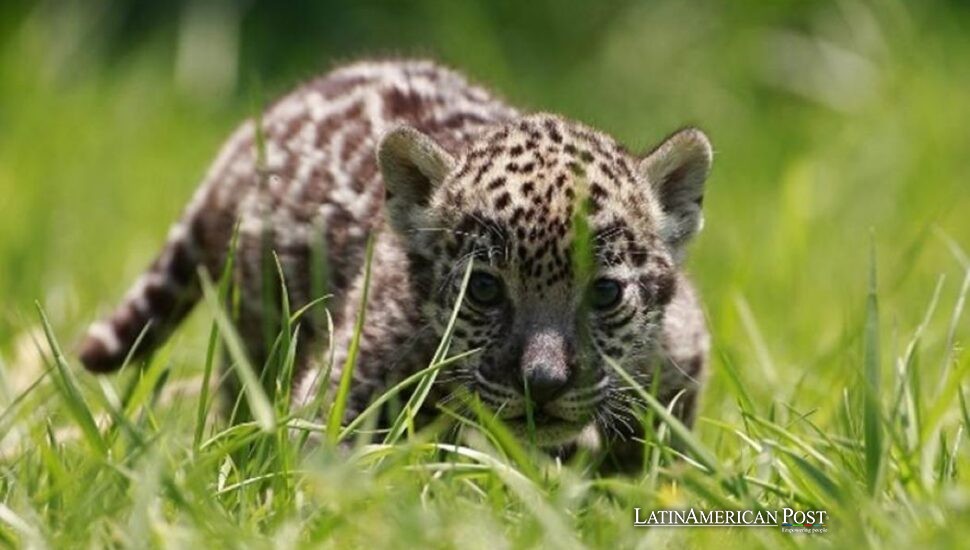
Deep in the Maya forest, Mexico is quietly rewriting conservation math, using satellite collars, community paychecks, and a fragile green fortress to reverse the jaguar’s decline. At the same time, much of the Americas watches its remaining big cats edge toward silence daily.
Counting Jaguars Where Cell Service Ends
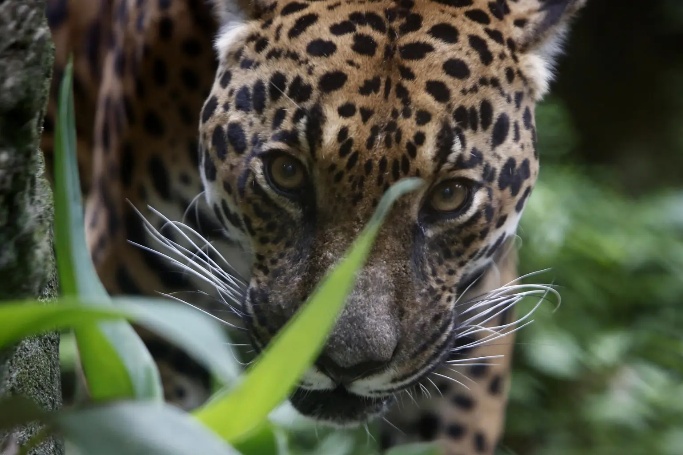
Hours before dawn in Laguna Om, an ejido in Campeche near the border with Guatemala, the cell signal dies, and another kind of grid takes over. Here, the dominant presence is Panthera onca, the jaguar that the ancient Maya called Balam, guardian of night and the underworld. In this humid edge of the Selva Maya, a team of biologists, former hunters, and community leaders fan out through the dark. WIRED is there as they prepare a strangely modern ritual for such an ancient animal: they are not trying to kill it, but to plug it into the cloud.
In Maya cosmology, the jaguar embodies the duality of the universe, femininity and ferocity, darkness and rebirth, the sun as it travels through the underworld. Today, that same animal has lost roughly 50% of its historic range. It is considered extinct in El Salvador and Uruguay, and in the southern United States, fewer than 10 males have been recorded since 1963. While most of the continent watches its big cats fade, roughly half of all surviving jaguars cling to fragmented strongholds in Brazil’s Amazon. The rest are scattered in small, vulnerable subpopulations under hunting pressure and encroaching settlements, including those of the Mexican Pacific and the Selva Maya.
On paper, the International Union for Conservation of Nature lists the species as “Near Threatened,” with sufficient recent data to suggest it may soon be reclassified as “Vulnerable,” indicating a high risk of extinction in the wild. Against that backdrop, Mexico has become an outlier. It is the only country in the Americas with a complete national jaguar census, and the numbers tell a rare good-news story. The 2010 census estimated about 4,000 individuals. By 2018, the figure climbed to 4,800. The third census, completed in 2024, counted 5,326 jaguars, a rise of about 30% in just over a decade.
Much of that pivot is tied to Gerardo Ceballos González, a biologist at UNAM’s Laboratory of Ecology and Wildlife Conservation and coordinator of the National Alliance for Jaguar Conservation. As he told WIRED, his obsession with extinction started at 12 or 13 after reading a novel about the last surviving bird of a species, a lone male calling for a mate who would never come. “That image brought me terrible anxiety, imagining being alone in the world,” he recalled to WIRED. Public education in Mexico and scholarships from CONACYT enabled him to turn that childhood unease into a career spent trying to prevent species from disappearing.
Satellites, Jaguars, And A New Social Contract
When Ceballos and colleagues first asked, around 2010, how many jaguars were left in Mexico, their back‑of‑the‑envelope estimate was barely 1,000. To settle the question, they launched the first national census and were stunned to find about 4,100 animals. Since then, the work has become both more precise and more high‑tech. Over a 90‑day sprint for the latest count, around 50 researchers and community leaders monitored roughly 414,000 hectares across 15 states, deploying 920 motion‑sensing camera traps and satellite GPS collars. It was the most extensive census effort ever mounted for a mammal in the country.
At the camp near Calakmul, WIRED watched as the alliance worked with former jaguar hunters who now track for conservation. The routine starts around 4:00 A.M., racing against the tropical sun to intercept a cat before it beds down. The goal is chillingly similar to a hunt, a precise shot with a sedative dart, but the outcome is different: a GPS collar, a quick health check, and then hours of data flowing to orbit instead of a skin nailed to a wall. “We went from manually triangulating radio‑collar signals to get maybe 40 locations a year to satellite collars that give us thousands of positions in near real time,” Ceballos told WIRED. That shift mirrors what many ecologists writing in journals like Science and Conservation Biology have described as a revolution in wildlife monitoring: large‑scale, continuous data that turn elusive animals into mappable realities.
Technology alone, however, does not explain why the jaguar curve bends upward in Mexico while declining elsewhere. The stage for this recovery is the expanding Calakmul Biosphere Reserve, now part of what officials call Gran Calakmul: a forest block of about 1.5 million hectares, recognized by SEMARNAT as the second‑largest tropical forest reserve in the Americas, after the Brazilian Amazon. This corridor shelters an estimated 500 jaguars, more than 60,000 species of plants and animals, 94 mammal species, 350 bird species, and roughly 160 species classified as threatened. Tropical forests like this, as studies in journals such as Proceedings of the National Academy of Sciences have stressed, are not just carbon warehouses; they regulate rainfall, anchor regional climates, and stabilize rural economies that depend on water and soil.
Infrastructure, Extinction, And The Price Of Survival
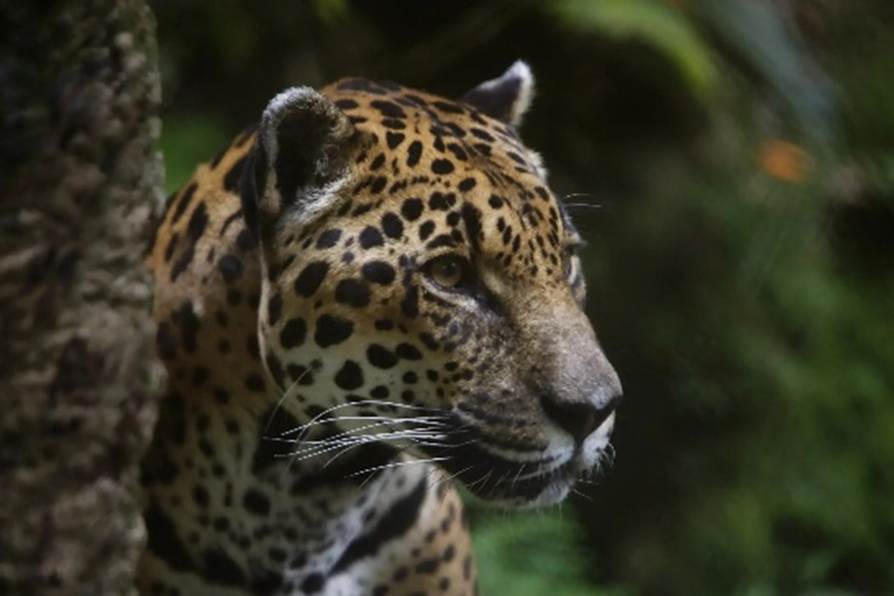
Scale does not guarantee safety. Calakmul faces illegal logging, deliberate fires for land‑use change, and wildlife trafficking. In that contested landscape, the Mexican strategy has embraced a distinctly Latin American pragmatism. “It is vital not to romanticize,” Ceballos told WIRED. There is a persistent myth, familiar across the region, that rural communities automatically live in harmony with nature. In reality, when there is poverty and no economic return from keeping a forest standing, chainsaws win. The alliance’s answer has been to make the jungle pay. Through payments for environmental services, community forestry, ecotourism, and carbon projects such as REDD+, ejidos like Laguna Om receive money for keeping the forest intact. International groups such as Global Conservation have invested around 100,000 dollars annually over the past six years to fund patrols, equip rangers who walk up to 10,000 kilometers annually, and maintain monitoring systems. As the conservation team likes to put it, people protect the jaguar’s house because that house now helps pay their bills.
This logic pushes back against a long Latin American history in which conservation has sometimes meant fencing off land and excluding the very communities that live there. Instead, the jaguar program is closer to what social scientists describe in Ecology and Society or World Development: a new rural social contract, where biodiversity protection is treated as work that deserves wages, not as a moral obligation imposed by capital or from abroad. In a country grappling with inequality, violence, and contested land rights, a 30% increase in the population of a top predator becomes more than a biodiversity statistic; it is proof that when local people are paid for stewardship, the forest can be worth more alive than burned.
The tension between development and survival is written into the tracks of the Tren Maya, the flagship infrastructure project reshaping the southeast. For a species that may require between 2,500 and 10,000 hectares each, habitat fragmentation is often a death sentence. Ceballos told WIRED that scientists knew they could not stop the train, so they focused on limiting the damage. Guided, as he puts it, by science rather than ideology, his team modeled the risks, roadkill, population isolation, and the slicing of forest corridors and negotiated with the government agency Fonatur. The result, he says, is a line with an unprecedented number of wildlife crossings and a route that avoids the core zones of reserves and respects buffer areas. It is still controversial, but it reflects a broader Latin American reality: infrastructure is coming, often fast; the question is whether it will be built with or against the living systems it cuts through.
In his recent book Before They Vanish, Ceballos warns that the current wave of extinctions rivals the one that ended the age of dinosaurs, echoing what many biologists in Science have called the planet’s “sixth mass extinction.” Lose enough species at this pace, he argues, and the foundations of modern civilization, food, water, and climate stability, start to give way within a few decades. In Calakmul, that abstract warning becomes daily work. Rangers with GPS units, scientists parsing satellite data, and ejidatarios debating land‑use choices form a fragile frontline between a functioning forest and a cleared one.
Despite the country’s broader crises, the jaguar numbers are moving in the right direction. “Despite how complicated the situation is in the country, the population has increased. It shows that when you have an articulated strategy, things work,” Ceballos told WIRED. As night falls over the camp in Laguna Om, the collars continue to ping, drawing ghostly lines of movement across a digital map. “We are at a crucial moment,” he says. “If we consolidate this, there will be jaguars in Mexico forever.”
Also Read: Chile Night Sky At Risk As Green Energy Dims Stars and Astronomy Potential