Argentina Eyes Rugby Crown as Latin America Seeks Global Stage
Argentina’s 2035 Rugby World Cup bid extends beyond sport, testing whether South America can leverage stadiums, regional cooperation, and rugby’s credibility to gain geopolitical influence, attract investment, and foster a renewed continental identity.
A Bid Bigger Than the Ball
Argentina’s bid to host the 2035 Rugby World Cup appears to be a sports project, but it reflects a deeper Latin American desire to move from the background to the center stage.
This bid matters beyond rugby fans. If successful, it would bring the tournament to South America for the first time. Argentina aims to involve Brazil, Chile, and Uruguay, making it a regional effort that demonstrates Latin America’s ability to organize and present itself positively on the world stage.
In the region, sport often expresses ambitions that politics cannot. A stadium can communicate what summits cannot. A tournament projects competence, order, and hospitality beyond what speeches achieve. In a continent often defined by debt, disorder, migration, or violence, Argentina offers a different image: capacity.
Gabriel Travaglini, president of the Argentine Rugby Union, said, “We want a World Cup that reflects the passion and development that rugby has achieved in every corner of our territory.” Passion is expected from Latin America; development signals infrastructure, institutional growth, geographic reach, and seriousness. Argentina is selling readiness, not just atmosphere.
This is a geopolitical story. Major international events are about trust, visibility, and hosting the world on one’s terms. Latin America produces talent and spectacle but often lacks top institutional recognition.
South America Tries Speaking With One Voice
A key aspect of the bid is its regional approach. Argentina aims to involve Brazil, Chile, and Uruguay, making the tournament a South American platform rather than a single-country effort. This is significant given Latin America’s history of solidarity but challenges in cooperation.
A World Cup demands practical coordination, not ideology: transport, venues, scheduling, security, broadcasting, and shared presentation. Even if centered in Argentina, involving neighbors shows the region attempting to act as a bloc rather than separate ambitions.
This matters because Latin America is symbolically strong when united but institutionally weak in turning symbolism into structure. A multinational bid does not erase these contradictions but can temporarily align them, testing the region’s ability to cooperate beyond rhetoric.
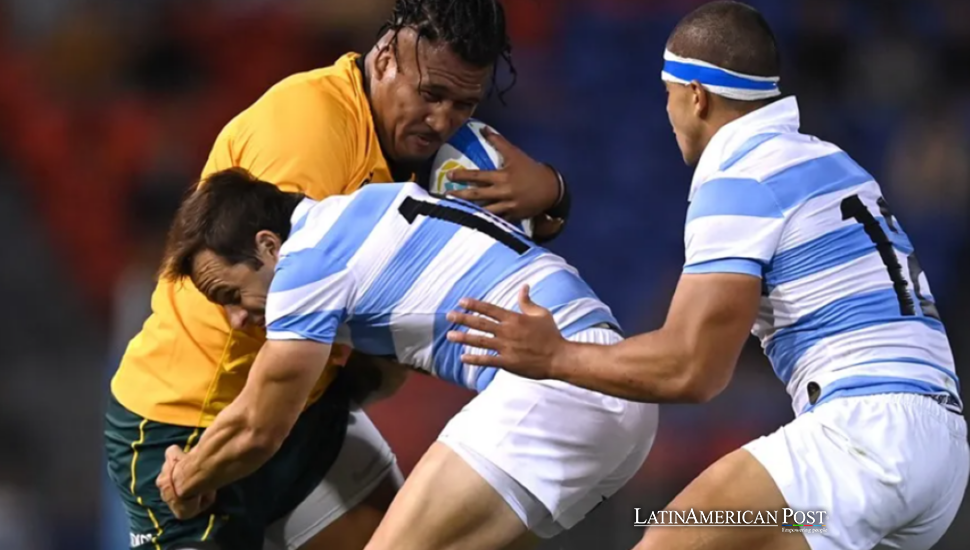
Argentina enters this discussion with real sporting authority. It has played in all ten previous Rugby World Cups and reached the semi-finals in three of the past five stagings. That history gives the bid credibility that goes beyond regional desire. Argentina is not asking for a sentimental exception. It is asking from within the sport’s serious competitive tradition.
Argentina can highlight venues that convert sporting legitimacy into commercial viability. Los Pumas play home matches in multipurpose stadiums nationwide. In July, they face Scotland at Estadio Mario Alberto Kempes in Cordoba, Wales at Estadio San Juan de Bicentenario, and England at Estadio Unico Madre de Ciudades. The Estadio Mas Monumental in Buenos Aires, South America’s largest stadium, with a capacity of over 85,000, stands out.
These details are more than logistics. In global sport, infrastructure signals confidence. A large, functional venue shows that governing bodies there have revenue potential, audiences, and market appeal. Latin America increasingly understands that hosting requires both passion and proper facilities.

The Real Contest Lies Beyond the Pitch
Still, Argentina is not bidding into an empty room. Japan and Spain have confirmed their intention to compete for the 2035 tournament. Italy has previously expressed interest. A joint Middle East bid involving Saudi Arabia, Qatar, and the United Arab Emirates has also been rumored. That lineup reveals the deeper terrain on which this decision will be made.
World Rugby balances two priorities when selecting hosts: maximizing commercial returns and expanding into new markets. These goals sometimes conflict, creating an opportunity for Argentina. Japan hosted in 2019, and the United States will in 2031, indicating a focus on growth over repetition. Argentina must show South America is more than a romantic frontier; it must prove the region offers sufficient scale, security, and symbolic value to justify the risk.
Here, the politics intensify. A successful Argentine bid would signify that Latin America is central to rugby’s future. It would demonstrate that a South American country, supported by neighbors, can compete with traditional rugby regions and the financial appeal of the Middle East and emerging markets like Japan and the United States.
Such a win would resonate beyond sport, offering Latin America a rare story of rising institutional trust—not nostalgia, grievance, or exported talent, but a moment when the region was chosen to host the world.
If Argentina falls short, it will signal that despite pedigree, infrastructure, and a multinational vision, global decision-making power remains elsewhere. The region will remain admired and invited but not fully entrusted.
For now, Argentina’s campaign sits at that charged intersection between sport and status. Alan Gilpin’s fact-finding visit is part of the slow ritual before formal applications are submitted in the latter half of 2026. After site visits and assessments, World Rugby will identify a preferred host in May 2027, with a vote to follow in November.
Between now and then, Argentina is making a broader case: that South America is not only passionate but central; not only fertile but organized; not only a source of memorable crowds but a legitimate architect of the global sporting calendar. In Latin America, these distinctions matter—they determine whether the region is merely observed or truly respected.
Also Read: Venezuelan Sushi Chants Expose Baseball’s Delicate Cultural Divides in Miami