Argentine Messi Tour Turns Latin Cities Into Pre-World Cup Temples
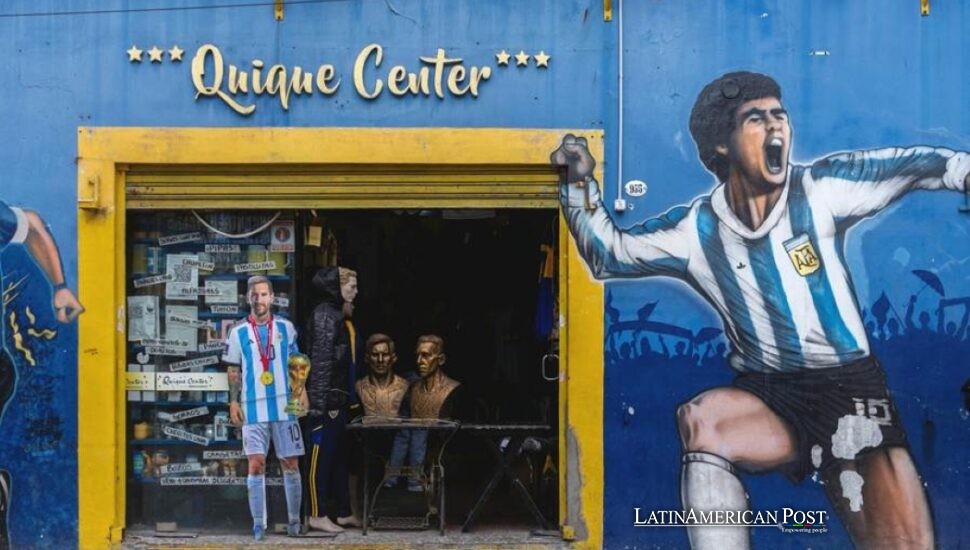
With the 2026 World Cup nearing, Lionel Messi is a moving economy. After chaos in Kolkata, Inter Miami brings him to Colombia, Peru, and Ecuador, where organizers promise safety, sellouts, and proof that Latin crowds can host history without breaking again.
A Tour Born From A Warning
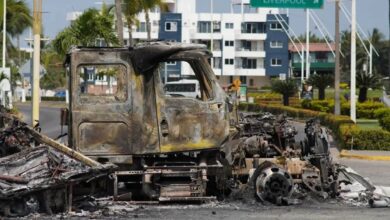
As reported by The Athletic and Denny Alfonso, the hunger to see the reigning world champion has turned into a global contest of wallets, logistics, and nerves—especially after an earlier attempt to stage Messi as a traveling spectacle ended in turmoil at Salt Lake Stadium in Kolkata, where unrest spilled into the stands and the event’s main organizer was detained by police. For many fans, that episode wasn’t just a bad night out; it was the fear that modern football’s most precious commodity—certainty—can evaporate at the gates.
In Latin America, though, the same craving for the No. 10 arrives with a different rhythm. It is still expensive, still tense, still vulnerable to rumor—but it is also rooted in decades of stadium culture that knows how to hold joy and danger in the same hand. Inter Miami has confirmed its Champions Tour, a preseason series that will put Messi, the club’s captain, on a short route through Colombia, Peru, and Ecuador as head coach Javier Mascherano prepares his team. The promise is straightforward: local fans will see the man they have watched since boyhood, now just months before the planet gathers again for 2026.
The operation is run by Never Say Never (NSN), a company owned by former Spain international Andrés Iniesta—Messi’s longtime teammate at FC Barcelona—alongside Stoneweg Places & Experiences. The names alone carry their own kind of persuasion in this region, where football is both art and credential. NSN also held the rights to Inter Miami’s Latin American tour in 2024, which produced the one outcome that matters most to anyone buying a ticket: Messi played in every scheduled match. That reliability, more than any press release, is what opened the door for making the tour a recurring preseason ritual.
Behind the scenes, the partnerships are local and intensely practical. NSN works closely with Ricardo Leyva, president of Latir, which, alongside Molina Corp, is responsible for organizing the tour legs in Ecuador and Colombia. Leyva told The Athletic that after Peru hosted a tour stop last year, organizers were eager to return to Lima—this time to face Alianza Lima—after Inter Miami met rival Universitario de Deportes in 2024. It’s not just scheduling; it’s a careful threading of rivalry, nostalgia, and civic pride.
Tickets Priced Like A Festival Of Kings
When Messi arrives, pricing stops behaving like ordinary football economics. The matches have been marketed with the kind of grand language that Latin fans recognize instantly—half celebration, half pressure—because once you call something “historic,” people expect the night to deliver. In Medellín, tickets for the January 31 match against Atlético Nacional range from $60 to $350. In Lima, Inter Miami will play Alianza Lima on January 24 at Alejandro Villanueva Stadium, where tickets begin around $140, while luxury boxes exceed $900 (about 3,125 soles). In Guayaquil, the club faces Barcelona SC on February 7 at Estadio Monumental, with prices ranging from $40 to $450.
The sticker shock is real in a region where many fans measure leisure in weeks of work, not spare change. Yet Leyva argues that ticket sales are not the sole heartbeat of the business model. The tour is built on a broader mix of revenue streams, including sponsorships, with prices set by what the market will tolerate—an argument he illustrated by comparing the operation to “bringing three Bad Bunnies.” He pointed to the scale of large events Medellín already absorbs, saying that the same week of the match is crowded with concerts, and that the city’s venues have hosted major artists “from Madonna onward.” In other words, the infrastructure is not hypothetical; it is rehearsed.
And the economic pitch is bigger than football. Leyva said the impact on Medellín already exceeds $40 million, framing the match as a civic investment that pays back through hotels, restaurants, transport, and the soft power of global attention. In Latin America, where mayors are judged by whether they can deliver order without killing the party, this kind of event becomes a test of modern governance disguised as sport.
Guarantees, Politics, And The Thin Line Of Trust
Security, however, is the hinge on which everything swings—especially after the images from Kolkata, where frustration turned physical and parts of the venue were damaged. In Colombia, organizers are coordinating closely with local authorities through the PMU, a rapid-response group designed to manage crowd control, prevent violence, and mitigate risks around large gatherings. Leyva said planning is being done “as a team” with Atlético Nacional, with logistics, security, and police “radically committed” to making the event work. The language is intense because the stakes are, too: one viral video can undo months of planning and stain a city’s reputation in a single night.
Yet the deepest anxiety among fans is not about fences or police lines. It is about absence. The fear that Messi won’t play has become the modern curse of superstar touring, sharpened by Inter Miami’s 2024 Asia trip, when Messi and Luis Suárez missed a match in Hong Kong due to injury and organizers were forced to refund 50 percent of ticket costs. In a region where many supporters are stretching their budgets to buy a seat, the question isn’t philosophical. It’s personal: will the man be there, or will the night become an expensive story of disappointment?
Asked about availability, Leyva was blunt, pointing to official promotional materials released on December 29 and insisting that Messi wouldn’t be featured if he wasn’t coming. He also leaned on the structural guarantee he believes matters most: NSN, he said, is “completely close to Inter,” and last year Messi played in all three matches on the Latin America tour. It is not a legal contract written in public, but it is the kind of assurance that circulates in football culture—reputation as collateral.
The tour’s anticipation has even spilled into politics. Ecuadorian president Daniel Noboa publicly welcomed Inter Miami and Messi on X, presenting their arrival as a sign of international confidence and an Ecuador open to major investments and world-class events. Leyva highlighted the importance of that institutional backing, adding that Medellín mayor Federico Gutiérrez offered similar support once the announcement became official. In Latin America, political blessing can mean practical coordination: permits, security deployments, transport plans, and the quiet alignment of agencies that keeps a massive crowd from becoming a headline for the wrong reasons.
Still, the business behind the spectacle carries its own shadows. The tour unfolds amid recent legal scrutiny involving NSN. According to El Mundo earlier in December, Peru’s Attorney General’s Office cleared Iniesta of an alleged fraud charge tied to a complaint from businessmen connected to an NSN subsidiary that raised up to $600,000 for events—including soccer matches—that did not take place. Iniesta denied the accusations, and Peruvian authorities ultimately ruled in his favor. The clearance removes a cloud, but it also underscores the fragile truth of the modern football roadshow: when a legend becomes a traveling industry, trust has to be earned city by city.
For fans in Medellín, Lima, and Guayaquil, none of this is abstract. It is the difference between witnessing something they will tell their children and feeling cheated by a promise that never arrived. And for a region that has always understood football as a mirror of power—economic, political, cultural—the tour is more than preseason. It is a referendum on whether Latin America can host the world’s most coveted athlete on its own terms: with pride, with order, and with a night that actually happens.
Also Read: Argentina Faces 2026 World Cup Draw With Messi’s Final Question