Brazilian Star Vinicius Junior Contract Standoff Rattles Real Madrid Hierarchy
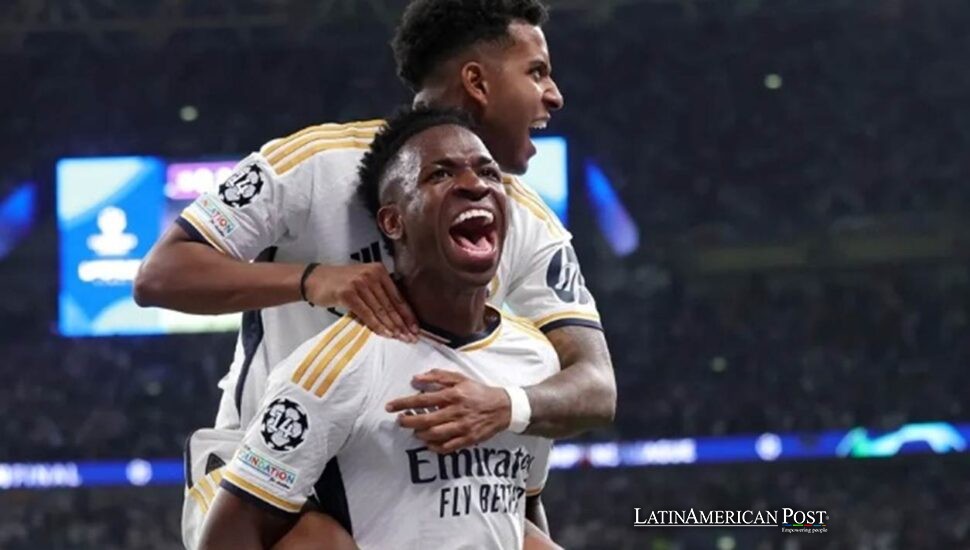
Vinicius Junior is a key figure for Madrid’s plans, and highlighting his significance can make fans feel hopeful about resolving the contract issues.
A Brazilian Icon At A Crossroads
For months now, Vinicius Junior’s future has dominated conversations around the Bernabeu, but the situation has sharpened dramatically in recent weeks. His current deal runs only until June 2027, and while that still sounds distant, big clubs do not like seeing their crown jewels edging towards the final two years of a contract without a clear plan.
Mario Cortegana revealed that Vinicius recently told club president Florentino Perez he won’t sign an extension while tensions with coach Xabi Alonso persist, adding emotional weight to the negotiations.
On the pitch, the 25‑year‑old has become one of Madrid’s defining stars. Signed from Flamengo for €45 million in July 2018, shortly after his 18th birthday, he struggled initially but has since grown into a decisive attacking force. He has scored in two victorious Champions League finals and lifted three league titles, contributions that make him both a sporting and commercial pillar. From an accounting point of view, the original transfer fee is long since amortised. From a footballing point of view, Madrid know these should be his prime years.
The club’s stance is clear: they want to renew his contract, but unresolved tensions with Alonso and the wage dispute could disrupt Madrid’s team cohesion and future planning, raising concerns about long-term stability.
Money, Power, And The Mbappé Benchmark
The raw numbers underline just how big this standoff has become. As The Athletic details, Vinicius currently earns around €18 million net per year under the renewal he signed in 2022, whose details became public the following year. Madrid has already tried to move that figure upwards, offering a rise to around €20 million net.
Vinicius’ demand for up to €30 million per season, including bonuses, challenges Madrid’s strict hierarchy, highlighting the delicate balance between ambition and tradition.
Complicating everything is the Kylian Mbappé factor. As things stand, Madrid’s highest earner is believed to be Mbappé, once wages and bonuses are combined. The French forward reportedly agreed an annual salary of around €15 million net when he joined on a free transfer, but that headline number tells only part of the story. He also received a massive signing‑on fee, widely reported at €100 million to €130 million, and – crucially – retained all of his image rights, an exception at a club that usually controls those revenues.
Within that context, Vinicius’ request to push his total package towards €30 30million a year feels, to Madrid, like a direct challenge to the pay structure. The club can argue that, for now, Mbappé remains the more decisive star: his seven‑minute Champions League hat‑trick against Olympiacos this week was only the latest reminder of his game‑breaking power.
The raw statistics back up that perception. So far this season, Vinicius has scored five goals and provided six assists. Last season, he managed 22 goals and 19 assists. Mbappé, by comparison, hit 44 goals and five assists last term and already has 22 goals and three assists in 2025‑26. Since missing out on the Ballon d’Or last year, Vinicius’ level – judged against his own very high standards – has dipped. Madrid’s hierarchy will not ignore that when weighing his demands.

Renew, Sell, Or Gamble On The Clock
From here, the future branches into several paths. One is straightforward on paper: Madrid decides to accept Vinicius’ conditions, relations with Alonso improve, and the Brazilian signs a long‑term deal on his terms. Given the sums involved and the message that would send to the rest of the squad, that outcome currently feels remote.
The next, and perhaps most realistic for the club, is a compromise. Madrid wants to lock down a premium asset while also preserving some semblance of their internal salary scale. They could try to nudge Vinicius’ fixed wage above the €20 million they have already proposed, sweeten performance bonuses, and maybe add a smaller renewal bonus without fully reaching the €30 million total his camp floated. In exchange, they might push for a shorter contract than usual, giving the player scope to come back to the table from a position of strength in a few years.
The problem is that such a compromise is only viable if relations with Alonso improve and Vinicius remains committed; otherwise, Madrid risks losing a key asset, which could impact their competitive edge and long-term strategy.
Financially, Madrid cannot ignore the possibility of selling Vinicius, which could signal a shift in their transfer strategy and affect their market reputation, especially if they prioritize short-term gains over long-term talent retention.
There has already been interest from outside Europe. In 2024, a delegation linked to Saudi Arabia’s Public Investment Fund (PIF) sounded out the idea of Vinicius joining the Saudi Pro League, though it never advanced to concrete negotiations. Any transfer in the next couple of windows would, logically, reduce the room his next club has to offer the kind of mega‑salary he is seeking at Madrid. That is the trade‑off: a fee for Real Madrid, but lower individual leverage for the player.
Ramos, Ronaldo, And The Weight Of Precedent
The most dramatic scenario is also the one Madrid dreads most: Vinicius runs down his contract and walks away on a free in 2027. From January 2027, he would be free to negotiate with other clubs as a pending free agent. Without a transfer fee involved, he could command a huge signing bonus and salary, just as Mbappé did when he arrived in Madrid.
For the club, losing a player of that calibre for nothing would be a nightmare. They would be deprived not only of his on‑field impact and global marketing power but also of the funds needed to sign a replacement. The Athletic points to two recent examples that still shape thinking inside the Bernabeu: Sergio Ramos and Cristiano Ronaldo.
Ramos, the long‑serving captain and centre‑back, left as a free agent in summer 2021 after tense renewal talks with Florentino Perez collapsed. Madrid withdrew their offer, and the then 35‑year‑old joined Paris Saint‑Germain, ending a 16‑year stay abruptly. Ronaldo’s case, three years earlier, took the opposite form. In 2018, after he had scored 44 goals in 44 games and delivered a third straight Champions League title, Madrid sold him to Juventus for €100 million rather than meet his wage demands.
Inside the club, those two departures are still often cited as examples of Madrid’s willingness to be ruthless with legends rather than risk shattering its financial structure. In Ronaldo’s case, the fee for a 33‑year‑old was seen as an innovative business model. Ramos’ exit coincided with a strategic shift toward investing in younger talent rather than locking ageing stars into huge final contracts.
Vinicius does not fit neatly into either template. At 25, he is entering his peak, not leaving it. He is already fully amortised, but also central to how Madrid imagines their attack over the next five years. That is why his case feels like a potential new precedent: he has the profile to push the club harder than almost anyone since Ronaldo, and he knows it.
For now, as The Athletic’s reporting makes clear, the situation remains fluid and unpredictable. Everything hinges on whether egos can be soothed, numbers can be nudged, and a Brazilian star who has grown up at Madrid can be convinced that his future still lies at the Bernabeu.
Also Read: Moto2 King Diogo Moreira Rewrites Grand Prix History Forever