Uruguayan Clásico Swaps Keep Montevideo Burning Long After Full-time Whistles
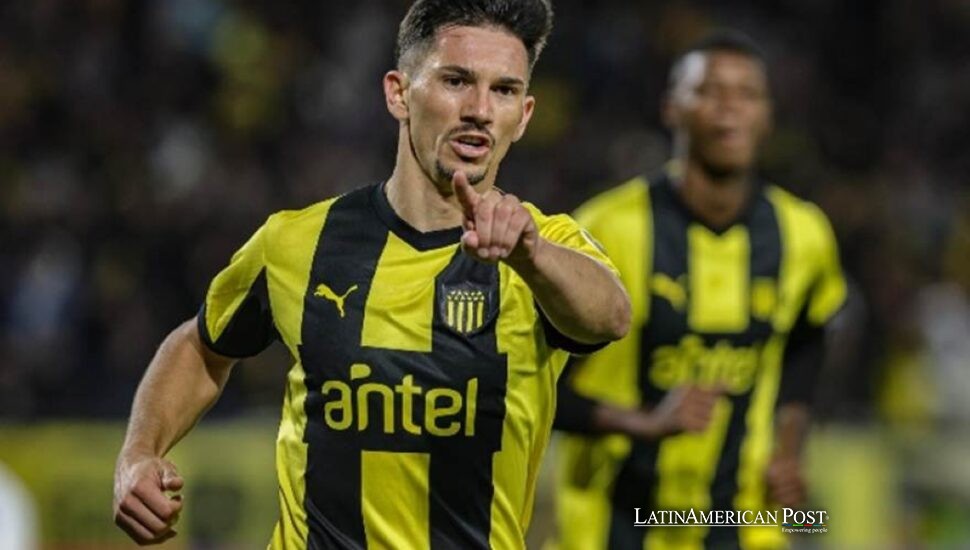
When Maximiliano Silvera crossed from Peñarol to Nacional, Montevideo didn’t just get a new striker; it got a fresh argument about loyalty, class, and memory. In the Uruguayan Clásico, changing shirts is never a footnote; it’s a referendum.
A City That Remembers Every Stitch
The Uruguayan Clásico is the country’s most important football rivalry and one of the fiercest on the American continent, contested by Club Nacional de Football and Club Atlético Peñarol, the two most popular clubs in Uruguay, both anchored in Montevideo. Their first meeting dates to 1900, making it one of the oldest rivalries outside Great Britain, and the earliest chapter already carried a sharp edge: CURCC won that first match 2–0.
The story begins even earlier, with Uruguay building modern life around railroads, ports, and migration. Peñarol began as the Central Uruguay Railway Cricket Club (CURCC) in 1891, composed of English immigrants representing the Central Uruguay Railway (Ferrocarril Central del Uruguay), based in the Peñarol district on the outskirts of the city. Nacional was formed in 1899 as a club for “purely native” players at a time when football clubs were almost exclusively the domain of European immigrants. Over time, the Clásico became a civic mirror: one badge born from the world of foreign capital and rail lines, the other from a national desire to claim the game as its own.
By 2018, the rivalry’s dominance was almost total. Together, the clubs had won 96 of the 115 Uruguayan Primera División titles, along with international trophies, including a combined eight Copa Libertadores. Numbers like that are repeated in Montevideo the way families repeat the dates of births and deaths, because in this city, football history is personal history, and the Clásico is the country’s loudest memory.
That memory is why the arrival of Maximiliano Silvera at Nacional, coming directly from Peñarol, jolted the old nerves again. A transfer here is not merely a career move. It is the moment you discover how much of the rivalry is love of your own side, and how much is a fear of becoming the other.
The Players Who Lived On Both Sides
Some footballers who wore both shirts became rare bridges, admired for their talent even by those who swore they would never forgive. Others found that a hero’s status dissolves fast the moment the colors change. The Clásico does not just measure your goals; it measures your story.
Luis Cubilla remains the classic example of a man who somehow survived the crossing. For Peñarol, he played 146 matches between 1958 and 1961, scoring 48 goals, including 4 against Nacional. He won the Copa Libertadores twice, became Intercontinental champion in 1961 with a victory over Benfica, and captured four Uruguayan Championships. Then he wore Nacional’s shirt from 1969–1974 and again in 1976, playing 249 matches and scoring 64 goals, including 7 against Peñarol. With the Tricolor, he won four Uruguayan Championships, and in 1971, he took the Copa Libertadores, the Intercontinental Cup, and the Copa Interamericana, a sweep that reads like proof that the rivalry can’t fully erase greatness.
Pablo Forlán built his main legacy at Peñarol, appearing in 303 matches and scoring 9 goals across 1963–1970 and 1976, including one against Nacional. With the Aurinegro, he won three Uruguayan Championships, and in 1966, he won the Copa Libertadores and the Intercontinental Cup, defeating Real Madrid in the final. His move to Nacional in 1977 was brief, 12 matches, one goal, but in the Clásico, even brief chapters become permanent stains or badges, depending on who is doing the remembering.
Venancio Ramos logged 300 matches for Peñarol between 1977 and 1984 and again in 1988, scoring 95 goals, 4 against Nacional, while winning three Uruguayan Championships and, in 1982, both the Copa Libertadores and Intercontinental Cup. Later, he played 92 matches for Nacional between 1990 and 1992, scoring 13 goals, including one against Peñarol, the kind of detail that fuels bar arguments in Montevideo for decades.
Silvera’s Move And The Politics Of Belonging
Carlos Aguilera offers another portrait of how the Clásico turns careers into folklore. With Nacional from 1983 to 1987, he played 143 matches, scored 70 goals, including 2 against Peñarol, and won a Uruguayan Championship. With Peñarol from 1994–1999, he played 193 matches, scored 87 goals, netted one against Nacional, and left with five Uruguayan Championships, part of the famed quinquenio sealed in 1997. The numbers look like a clean success story, but the emotional record is never clean in a rivalry built to punish ambiguity.
Antonio Alzamendi split his time almost like a cautionary tale: 22 matches and 5 goals for Nacional in 1983, winning a Uruguayan Championship, then 22 matches and 15 goals for Peñarol in 1985, scoring one against his traditional rival and winning another Uruguayan Championship. The Clásico forces fans to decide whether that is professionalism or betrayal, and the answer usually depends on which crest you grew up kissing.
For Juan Carlos de Lima, the crossing carried trophies on both sides. He played for Nacional in 1986 and again in 1988–1989, winning the Copa Libertadores and Intercontinental Cup in that latter period, scoring 14 goals. He joined Peñarol in 1997 and stayed through 2000, scoring 22 goals in 66 matches and winning two Uruguayan Championships, including one that sealed the Aurinegro quinquenio.
And for Luis Romero, the Clásico became personal arithmetic: 221 matches for Peñarol across 1994–1998 and 2000–2001, 84 goals, and 10 scored against Nacional in 22 clásicos. Then 58 matches for Nacional in 2004–2005, two more Uruguayan Championships, 8 goals, and 2 in a Clásico comeback that ended 3–2 after Nacional had trailed by two.
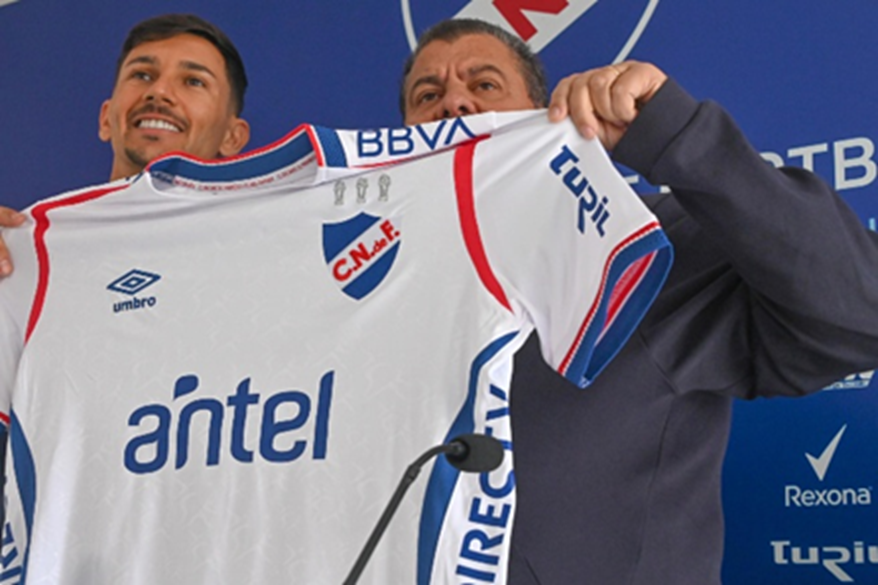
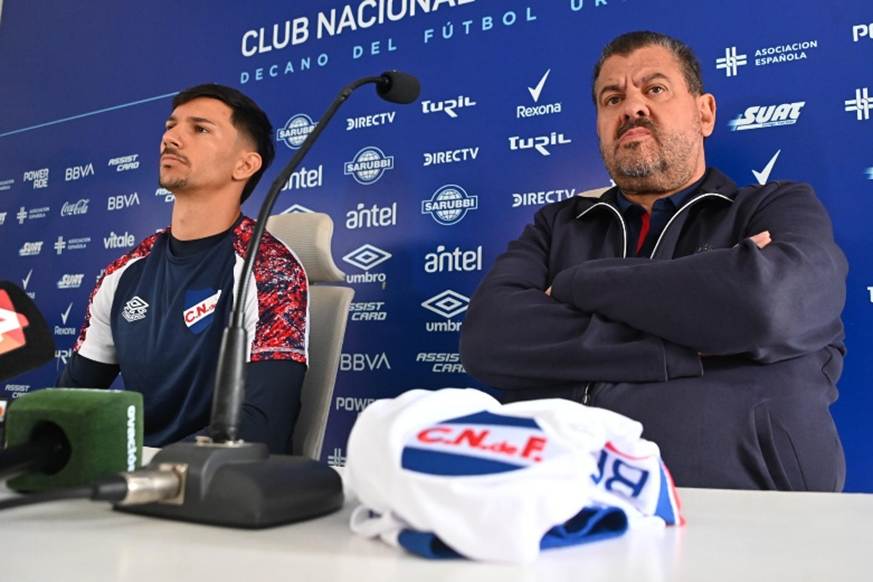
Against that history, Silvera’s move lands with predictable force. He joined Peñarol in 2024, played 102 matches, scored 33 goals, 3 against Nacional, won a Uruguayan Championship, and announced his departure at the end of 2025. This Friday, Nacional made his arrival official, placing him in the small, combustible category of players who wear both shirts, especially those who cross directly, without a foreign chapter to soften the change.
In Uruguay, football has always been a way to talk about what the nation fears losing: identity, dignity, control over its own narrative. The Clásico began in the age of railways and immigrants and hardened into a contest over belonging. That is why a transfer still feels like politics. It is not just that Silvera changed clubs. It is that in Montevideo, a man who changes colors forces everyone else to explain who they are.
Also Read: Argentine Messi Tour Turns Latin Cities Into Pre-World Cup Temples